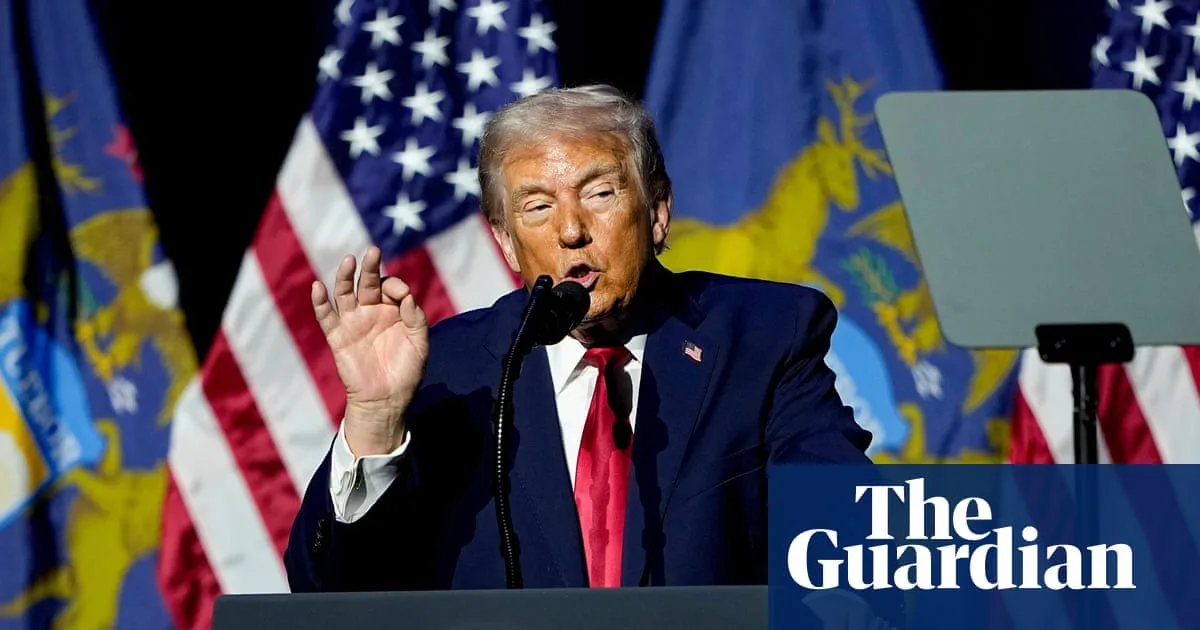
Donald Trump has revived his stalled push to cut federal funding for a number of Democratic-run states, announcing that any with a perceived 'sanctuary city' status will not receive payments after 1 February. The president made the statement during a freewheeling address at the Detroit Economic Club on Tuesday night.
'Starting February 1, we are not making any payments to sanctuary cities or states having sanctuary cities because they do everything possible to protect criminals at the expense of American citizens,' Trump said. Critics immediately called the move 'unconstitutional and immoral'. The Department of Homeland Security (DHS) sought to justify the pronouncement by complaining that sanctuary jurisdictions 'won't let us in their jails to arrest the violent criminal illegal aliens in their custody'.
Trump's previous efforts to use sanctuary cities as a tool to withhold money to political rivals have run into trouble. In August, a district judge in San Francisco called the Trump administration's push to deny funding to more than 30 cities 'a coercive threat' and issued a preliminary injunction blocking it. A federal appeals court is currently weighing that ruling.
Trump's comments indicate a renewed approach by denying money not only to sanctuary cities themselves, but any state that contains one. A justice department list identifies 11 states and the District of Columbia, all under Democratic control, as places that materially impede enforcement of federal immigration statutes. Brandon Johnson, the Democratic mayor of Chicago, promised legal action, saying the move is 'blatantly unconstitutional and immoral'.
Trump has escalated his financial assault on blue states in recent days, last week freezing more than $10bn in federal childcare and family assistance funds to California, Colorado, Illinois, Minnesota and New York. That order was blocked temporarily by a district court judge. In October, the Trump administration moved to cancel $7.6bn in grants to support clean energy in 16 states that voted for Kamala Harris in the 2024 election.