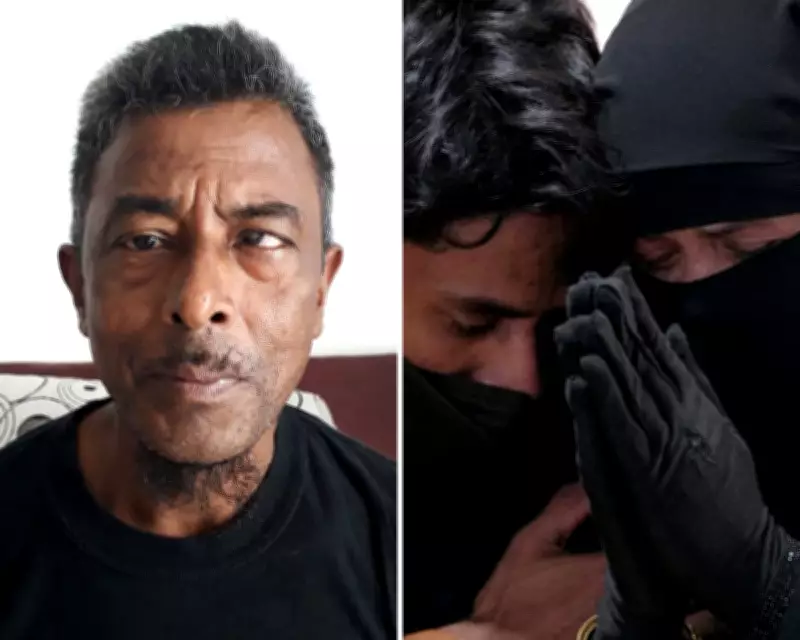
Family Demands Answers After Homicide Ruling in Rohingya Refugee's Death
On the second day of Ramadan, Mohamad Faisal Nurul Amin and his family gathered for pre-dawn prayers in their Buffalo apartment, anticipating a long-awaited reunion. His father, Nurul Shah Alam, a 56-year-old nearly blind Rohingya refugee, was scheduled for release from the Erie County detention center. "For the first time since we arrived in America, I felt happy," said Fatimah Abdul Roshid, Shah Alam's wife, through an interpreter. "I thought my husband would be with our two sons and me for Ramadan."
A Tragic End to Hope
Shah Alam never returned home. Five days later, on February 24, his body was discovered four miles from where US Border Patrol agents had left him, without notifying his family or attorneys. He wore only the orange detention booties issued in custody, with no warm jacket or shoes, as Buffalo temperatures plunged below freezing. "It broke our home," Amin said, his voice trembling.
On Tuesday, the Erie County medical examiner's office ruled Shah Alam's death a homicide, citing "complications of a perforated duodenal ulcer precipitated by hypothermia and dehydration." The report noted that "homicide" includes deaths resulting from negligent acts or omissions by others.

Systemic Failures and Accountability
"The Erie County medical examiner's report confirms our understanding that Shah Alam was placed in a hostile environment from which he could not reasonably be expected to extricate himself," said Terrence Connors, attorney for the family. "Border Patrol had the ability to place him in a non-hostile environment. That is why the manner of death was ruled a homicide."
The Department of Homeland Security disputed the findings, calling them "another hoax being peddled by the media and sanctuary politicians to demonize our law enforcement" and asserting the death "had nothing to do with Border Patrol."
However, advocates argue the case highlights broader concerns about immigration detention practices. "A homicide finding means this wasn't just a tragedy. It points to neglect or wrongful action," said Michelle Brané, executive director of Together and Free and former immigration detention ombudsman at DHS. "These practices seem almost intentionally cruel."
A Life of Persecution and Displacement
Shah Alam's death has shaken Buffalo's small Rohingya community of about 2,000 members, many of whom fled ethnic genocide in Myanmar. The Rohingya, described by the United Nations as the world's most persecuted minority, have faced decades of violence and statelessness.
Roshid and Shah Alam married in 1990 in an arranged union. "I met my husband at our wedding," she recalled. "I didn't know what he looked like, but I was thankful. He was very kind and loving." Renewed violence triggered cycles of migration, separating the family for years before they reunited in Malaysia in 2013.
After extensive vetting, the family gained refugee status for resettlement. Roshid and two younger sons moved to Buffalo in December 2024, while Shah Alam and three older sons awaited admission. Their hopes were dashed when President Donald Trump signed an executive order suspending refugee admissions indefinitely on his first day in office.
The Incident and Aftermath
On February 15, Shah Alam was arrested after wandering into a residential backyard while nearly blind and unable to speak English. Body-camera footage shows Buffalo police using a Taser and tackling him. He faced felony charges but accepted a plea deal for reduced offenses on February 9.
On February 19, Border Patrol agents took custody after his release and dropped him at a closed Tim Hortons at 8:18 PM. Neither family nor attorneys were notified. "At no point does it appear that anyone considered his needs as a human being," said Beth Haroules of the New York Civil Liberties Union. "All of these characteristics – that he was disabled, visually impaired, brown, and unable to communicate or defend himself – worked against him."
After days of searching, Shah Alam was found deceased. The homicide ruling has intensified scrutiny, with Democratic lawmakers calling for investigations and New York Attorney General Letitia James opening a formal probe.

A Family's Devastation
For Shah Alam's family, the loss has reopened years of trauma. "We don't speak good English, but when I learned how my father died, it made my mother, my brothers, all of us very devastated," said Amin. "It is cruel. It is inhuman. I never thought it would happen in this country."
Roshid remembers her husband's unwavering wish: "His lifelong wish was always unity. To stay together as a family." She paused. "Even in his final moments, he didn't have his children by his side. Not even at his funeral." What remains, she said, is hope. "My husband died with that hope. I'm still here, hoping we can all be reunited one day."