
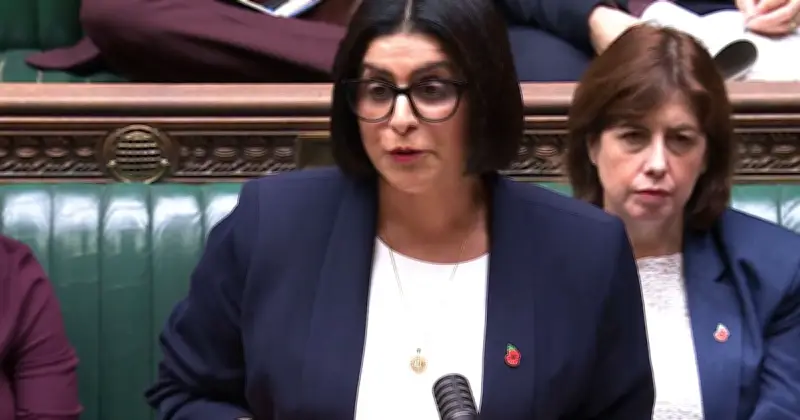
Home Secretary Shabana Mahmood has announced a U-turn on immigration policy that will allow thousands of Boriswave immigrants and their dependents to remain in Britain, with estimates of up to £10 billion in potential welfare costs.
Under Mahmood's original plan, care worker migrants would have had to stay for 15 years before applying for permanent residency. That period has now been cut to five years, meaning 300,000 people could be eligible to stay.
Farage criticises the decision
Reform leader Nigel Farage said: "That it is a very major U-turn in the position of the Home Secretary is clear. That it will cost this country a vast amount of money is clear."
He added: "Normal countries don’t give out work visas, allow you to bring dependents, automatically give you indefinite leave to remain, and then one year later citizenship. We are uniquely stupid in doing this, and we’ve been uniquely stupid in doing this for far too many years."
Conservative record under scrutiny
The article notes that under the Conservatives, net migration reached 2.6 million from 2021 to 2024, with one in 30 people living in the UK arriving between 2021 and 2025. The then government let in just over 600,000 immigrants between 2022 and 2024 alone, more than half of which were dependents.
Of the 679,523 visas issued between 2022 and mid 2026, 61% were for dependants. The article states that 1.6 million people are on track to be granted indefinite leave to remain between 2026 and 2030, with numbers peaking at 450,000 in 2028.
Impact on welfare and public services
Mahmood's plans will also allow small boat illegal immigrants to settle after 30 years unless they work or study, which could see settlement time cut. In total, 1.4 million out of the 1.9 million Boriswave immigrants will be eligible for indefinite leave to remain after five years.
The article claims a typical care worker ends up being a net drain of £36,000 on the state, whilst their dependent family members each consume £67,000 more in welfare and public services than they contribute in tax.




