

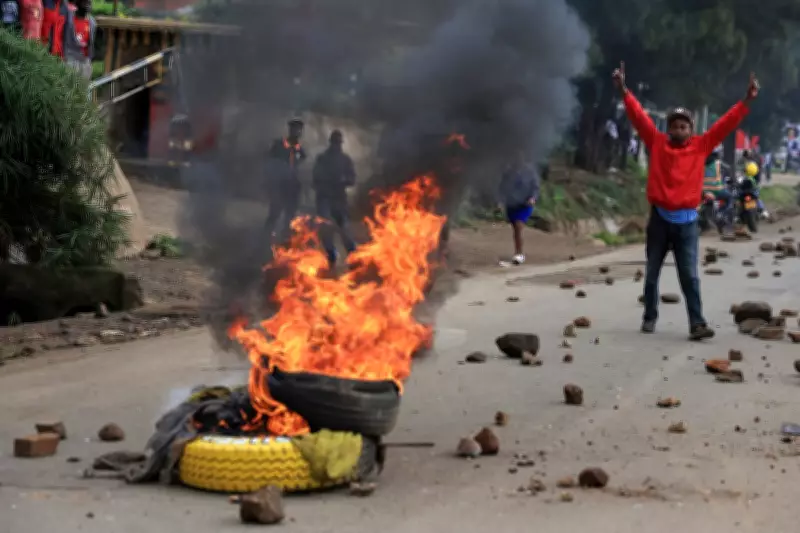
Protests erupted in Kenya's capital Nairobi on Monday as a nationwide public transport strike began, sparked by a sharp rise in fuel prices. Demonstrators lit bonfires on major roads, burning tires and causing significant disruption.
Commuters Stranded as City Center Empties
Commuters were left stranded in various suburbs as the city center remained largely deserted. Many private vehicle owners chose to stay home to avoid the unrest, while protesters blocked key thoroughfares. The Kenya Association of Private Schools advised its members to assess student safety, leading most schools to switch to online learning.
Record Fuel Prices Trigger Anger
Kenya's fuel prices hit a record high on Friday, with diesel increasing by 23.5% and gasoline by 8%. President William Ruto, currently out of the country, has not commented on the latest increases. In April, he attributed previous price hikes to the Iran war but reduced taxes to prevent a sharper rise.

The Kenya National Chamber of Commerce and Industry warned that the elevated fuel costs would impact all commodities and services. In a statement, the chamber noted: "The April–May comparison shows that while global crude oil prices increased by about 10.7%, Kenya's diesel price rose by 23.5% over the same period. This points to the continued role of domestic cost buildup."
Political Blame and Regional Comparisons
Former Deputy President Rigathi Gachagua, who joined the opposition after his impeachment in October 2024 on corruption charges, blamed the price surge on corrupt businesspeople seeking higher profit margins. He contrasted Kenya's fuel prices with those in neighboring landlocked countries like Uganda, which rely on Kenyan ports for fuel imports yet have lower prices.
Kenya serves as a major transport hub for goods imported through the port of Mombasa and transported by road across the region.






