
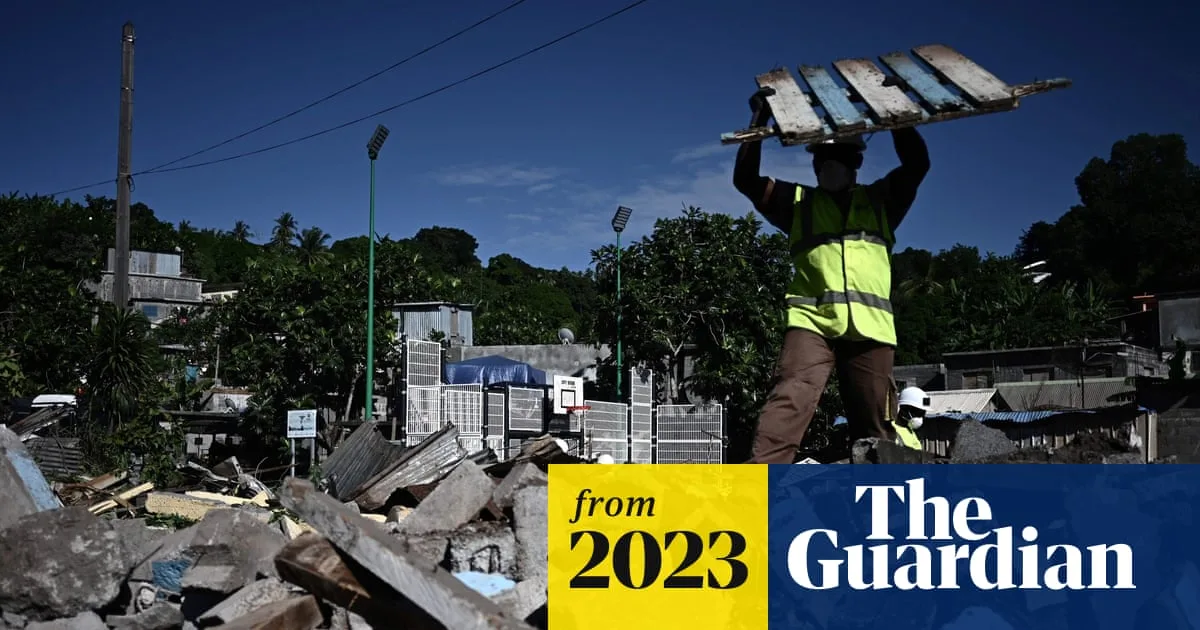
French authorities have begun razing shantytowns in Mayotte, a French overseas territory in the Indian Ocean, as part of Operation Wuambushu, or 'take back'. The first demolition, of the Talus 2 slum, destroyed 162 informal homes within 24 hours, leaving hundreds homeless. The operation, backed by far-right groups and local officials, aims to deport up to 20,000 undocumented migrants and demolish 1,000 makeshift dwellings, where 40% of the island's population live.
President Emmanuel Macron approved sending 510 additional police officers to Mayotte in February to target 'gangs, substandard housing and irregular immigration'. Police have used live rounds and arrested suspected gang members, with at least one teenager shot. The operation has revived debate on the poorest department in France, which already carries out the majority of deportations on French territory.
Residents describe a climate of fear. Océane*, 37, who fled domestic violence in the Comoros in 2015, lives without papers in Mayotte. Her landlord has told her to leave due to the operation. 'I'm not going to wait for the authorities to arrest me,' she said. 'I failed. I didn't get my papers.' She regularly avoids police by crossing fields to take her daughter to school, and hides with neighbours when police patrol.
Human rights groups, such as La Cimade, say Mayotte has become a police state, with identity checks based on profiling and routine unannounced raids. Océane says her landlord was pressured not by police but by citizen collectives, who have held pro-Wuambushu rallies and blocked hospitals treating foreigners. These groups have threatened to block ports if ships do not take undocumented migrants to Comoros.
Many migrants cross the 70km channel from Comoros for healthcare unavailable there. While Mayotte benefits from EU resources, its best medical staff leave for France. The Comoran government initially refused to accept deportees, but reopened its port after the Comoran president visited France. The operation has crystallised violent anti-Comoran sentiment, with a local official saying on television that it 'might be necessary to kill some' Comoran youths.




