
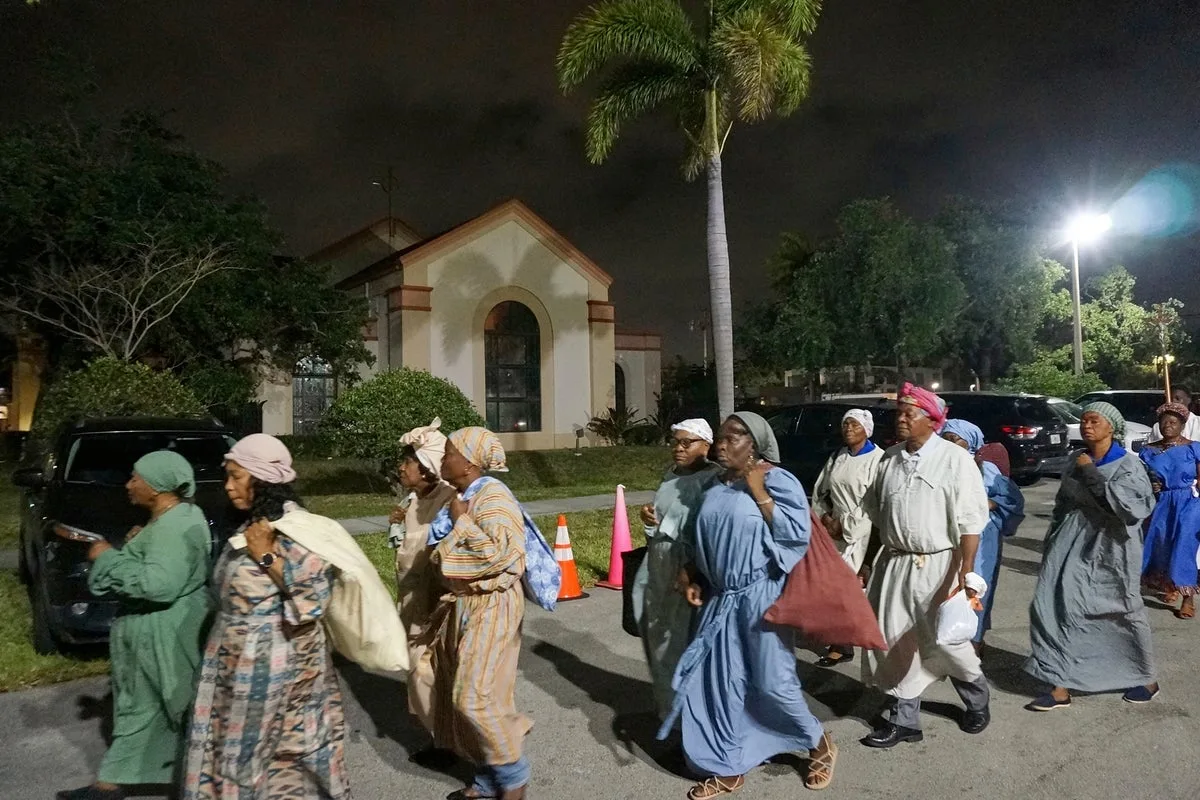
Faith leaders across the United States who support and minister to anxious immigrants are preparing for a difficult year ahead, as President Donald Trump intensifies his harsh rhetoric and policy proposals against migrants. Many in religious circles fear that 2025 could bring even greater challenges than the previous year.
Trump has blamed immigrants for issues ranging from crime to housing shortages, and in a social media post demanded “REVERSE MIGRATION.” Haitian communities, including those in Springfield, Ohio, who fled gang violence, and Afghans who assisted the US in Afghanistan before the Taliban takeover, now worry their refuge may end. Somali Americans, particularly in Minnesota’s Twin Cities, feel targeted after Trump referred to them as “garbage.”
Bishop Daniel Garcia of Austin, Texas, chair of the Catholic bishops conference’s subcommittee on racial justice, urged public officials to avoid dehumanising language. “Each child of God has value and dignity,” he said. “Language that denigrates a person or community based on his or her ethnicity or country of origin is incompatible with this truth.”
The Temporary Protected Status (TPS) programme, which allows many Haitians to remain legally in Springfield and elsewhere, expires in early February. Pastor Carl Ruby of Central Christian Church described the potential lapse as “an economic and humanitarian disaster.” Ruby and community leader Viles Dorsainvil visited Washington to seek congressional help but found little optimism. “Every single legislator we’ve talked to has said nothing is going to happen legislatively. Trump’s rhetoric keeps getting harsher,” Ruby said. Despite the bleak outlook, faith communities are uniting. “There are more and more churches in Springfield saying we will provide sanctuary,” he added.
Trump suspended the US refugee program on the first day of his second term, affecting hundreds of faith-based organisations. Lutheran Social Services of the National Capital Area lost 68% of its budget and laid off two-thirds of its staff, shrinking from nearly 300 to 100 employees. Many of its clients are Afghans who worked with the US in Afghanistan and fled after the Taliban takeover. CEO Kristyn Peck noted increased fear among Afghan staff following an incident where an Afghan national was suspected in a shooting of National Guard members. “A whole group of people have now been targeted and blamed for this senseless act of violence,” she said. Volunteers have stepped in to provide services, including English-language and job-skills training for Afghan women.
World Relief, a global Christian humanitarian organisation, has joined left-of-center religious groups in denouncing the crackdown on Afghan refugees. The organisation called on the administration to reconsider its policies, highlighting the moral and humanitarian stakes. As the new year unfolds, faith leaders remain resolute, determined to protect and support immigrant communities despite mounting obstacles.




