
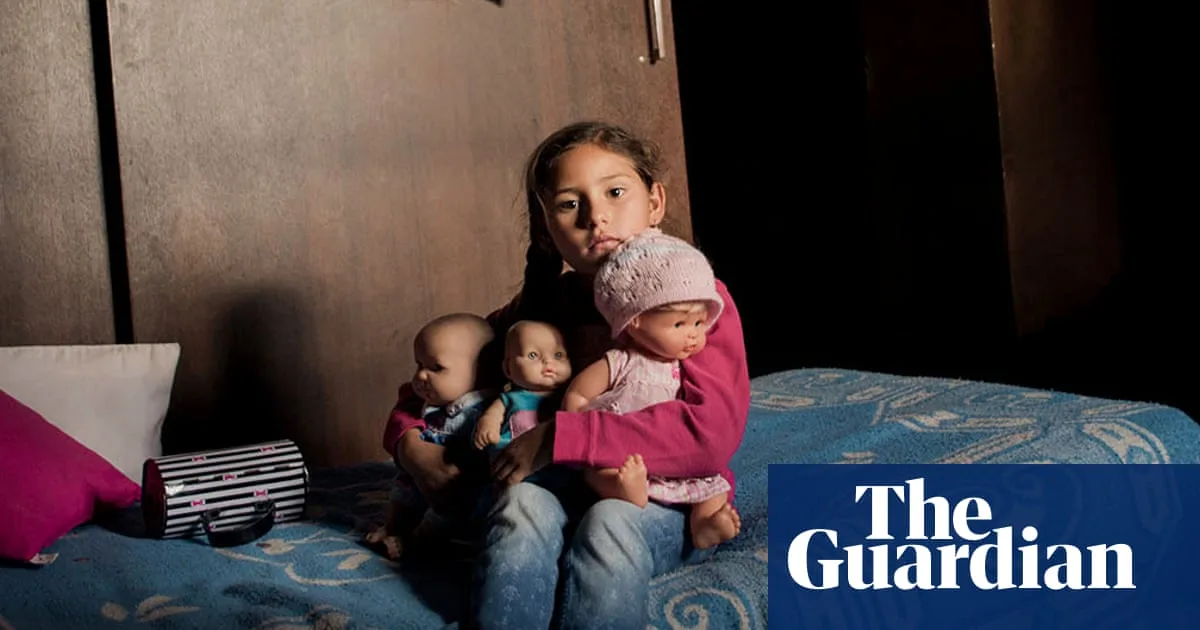
Six months ago, 16-year-old Valentina was watching television with her cousin and younger brother at home in Quito when her mother, Ivonne, called to say she had been arrested again. The 33-year-old, who had been living with Valentina since her last prison sentence ended in 2023, was taken to Ambato women’s prison, 150km south of the capital, on suspicion of possessing 500 grams of marijuana.
For Valentina, the news was devastating. “I had gotten used to being with her,” she says. Over the following months she regularly burst into tears, at home, with friends, and even during school lessons. “I dreaded going to school.” Ivonne, speaking by phone from prison, said she felt equally heartbroken: “I felt horrible. I cried and I cried.”
Their separation reflects a wider crisis across Latin America, where women’s incarceration rose by 186% between 2000 and 2024, according to the Institute for Crime and Justice Policy Research. In Ecuador, roughly 2,660 women are in prison, a 290% increase since 2002. Most are held for drug offences, and 75% have children under 18, according to a 2023 state census.
Silvana Tapia Tapia, an Ecuadorian lawyer and professor at Birmingham Law School, says these women are often single mothers from marginalised backgrounds who turn to drug selling alongside informal work such as street vending to support their families. “Incarceration will inevitably worsen those circumstances,” she says, adding that the system is “designed to produce the worst possible outcomes in terms of breaking the social fabric.”
Ivonne has already served two three-year sentences for unlawful possession of narcotics. Her first term began in 2013, when Valentina was three; her second in 2020, after she lost a courier job during the pandemic and began selling small quantities of marijuana again. Throughout, Valentina has lived with her aunt. She says she still remembers the anger she felt when her mother was taken away, and the pair now face another long separation, which Ivonne describes as “like a slow death.”




