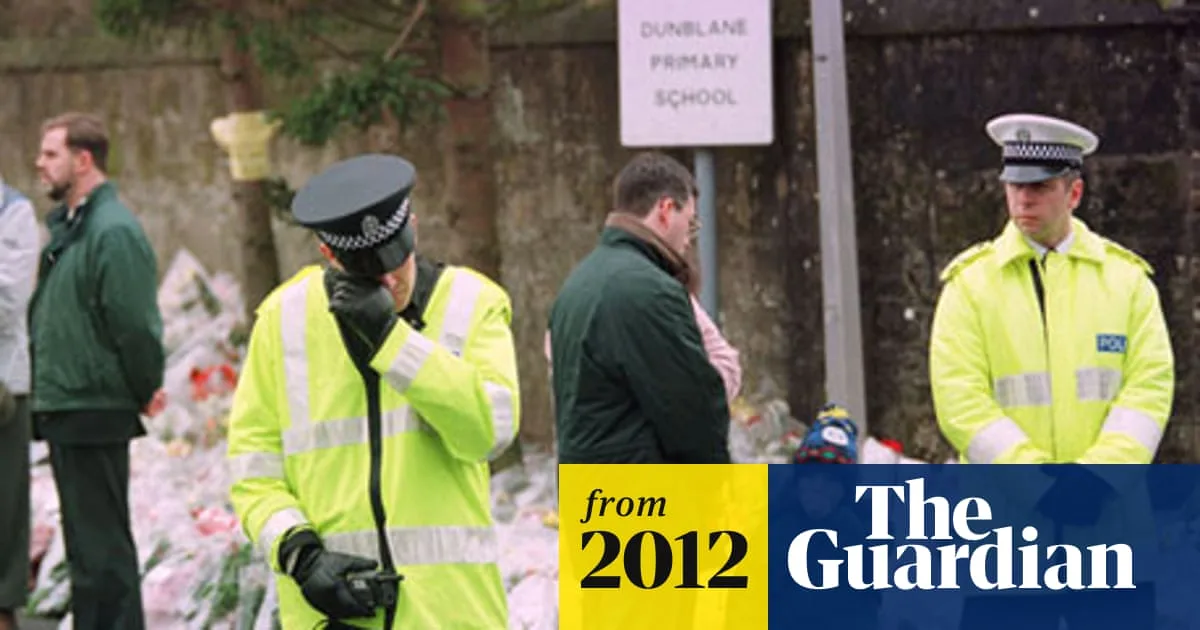
Dunblane Survivor Recalls Horror as Gunman Opened Fire on Primary School Class
Dunblane Survivor Recalls Horror of School Shooting 30 Years On

In a chilling new BBC documentary, a physical education teacher has recounted the terrifying moment she was shot when the Dunblane gunman stormed into a gymnasium and opened fire, killing sixteen young children and their teacher. The horrific events unfolded at Dunblane Primary School on March 13, 1996, leaving a permanent scar on the small Scottish town and the entire nation.

The Day That Shocked Britain

Thomas Hamilton, a 43-year-old former Scout leader, executed a premeditated attack that morning. He first severed the school's telephone lines before entering the gym hall armed with four legally-owned handguns and hundreds of rounds of ammunition. Inside, twenty-eight Primary 1 pupils, aged just five or six, were preparing for their PE lesson with teacher Gwen Mayor.

A Survivor's Harrowing Account

PE teacher Eileen Harrild, now 73, described the immediate chaos. "I was aware of the gym door being banged open and a man came in, dressed in combat gear with earmuffs on, and immediately started to shoot," she recalled. "He targeted the adults first. He shot me first and then he turned his gun on the two other adults in the gym and then started on the children."

Mrs Harrild emphasized the gunman's deliberate actions. "The shooting was continuous and rapid, and he had intent in his eyes. After about three or four minutes there was silence. Just silence." She was shot in both arms, her right hand, and left chest, requiring urgent hospital treatment.

Aftermath and Anguish

While awaiting surgery, Mrs Harrild's first concern was for the children. "I did say: 'How many children survived?'. I really wanted to know that. That was really important to me. I felt responsible because it was my class and suddenly this had happened. I needed to know how many were going to be surviving it."

In the immediate aftermath, she stumbled into an adjacent store area, followed by injured children whom she tried to comfort. Hamilton ultimately turned a gun on himself, ending his own life after killing sixteen children, Gwen Mayor, and injuring fifteen others.

The Fight for Legislative Change

The massacre prompted widespread outrage and a determined campaign for stricter gun control. Parents of the victims, including Kenny Ross whose five-year-old daughter Joanna was killed, met with then Labour leader Tony Blair to push for a comprehensive handgun ban.

A Father's Emotional Plea

Mr Ross, 62, described a tense meeting where he confronted Blair directly. "I finally said to him, 'Have you got any children?' and he said 'yes' and I said, 'Well, I had a daughter, she's now six foot under. That is why you have to do something about these gun laws'."

He recalled the reaction. "And then there was total silence. You could have heard a pin drop. I was starting to think 'Have I said the right thing? Have I said the wrong thing?'. It was to get his attention as to how serious this is and hopefully it hit home."

Political Response and Lasting Legacy

Prime Minister John Major's Conservative government initially implemented a partial ban that excluded .22 calibre weapons. However, after Tony Blair's election in May 1997, one of his first acts was to invite Dunblane families to Downing Street and announce a total handgun ban.

Sir Tony Blair reflected on the meeting. "I remember meeting them and part of the shock for me was that my children were a little bit older but they were still at school. This demand in this way wasn't about money, it wasn't about priorities. It was just about a terrible, terrible event that the country was determined should lead to a change."

Personal Reflections and Memorials

Mrs Harrild expressed anger about the legal status of Hamilton's weapons. "When I realised that until he banged that gym door open, with his gun outstretched, everything he had done was legal, he held them in his house, these guns were legal, I was really angry. I felt angry, actually."

Mr Ross shared his ongoing grief. "She was just a lively wee girl. She was a daddy's girl, she definitely was a daddy's girl. What I miss most is, I can't remember what she sounds like. This was before the time of videos, mobile phones. We have plenty of photographs but no videos of her and I have forgotten her voice."

The gymnasium was demolished and replaced with a memorial garden, while a separate memorial stands at Dunblane Cemetery where many victims are buried. The documentary 'Dunblane: How Britain Banned Handguns' airs on BBC Scotland and BBC Two, marking thirty years since the tragedy that transformed British firearms legislation.




