
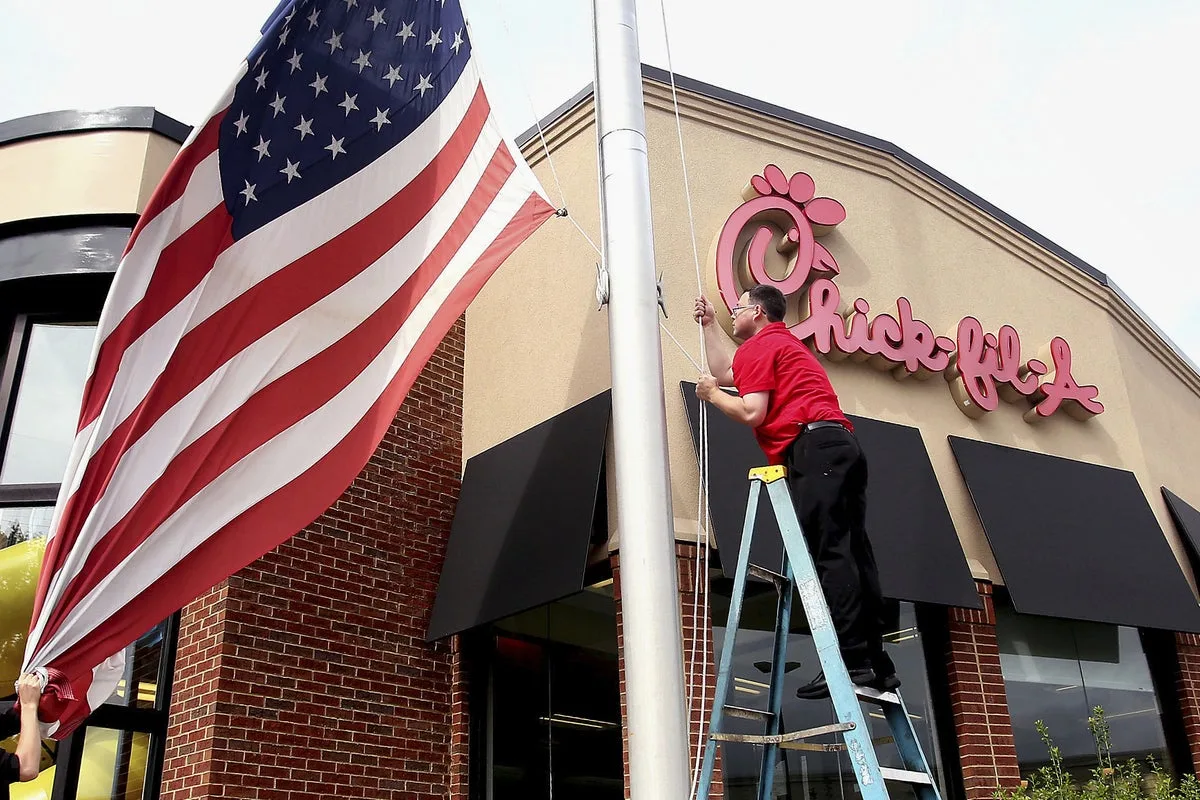
Chinese students and workers in the United States hoping for a successful visa application have embraced an unusual good luck charm: Chick-fil-A. The fast-food chain, which has no branches in China, has become popular because its name sounds like 'check files' in Mandarin, a phrase associated with visa processing.
Zhou Yilu, an AI software engineer in Wilmington, Delaware, said he felt 'one step closer to the green card' after eating a Chick-fil-A meal. He turned to the poultry purveyor after a roller-coaster experience with his visa status, including a last-minute approval. The superstition has spread through the Chinese student community, especially for the H-1B visa lottery, which has become harder to win.
Some students 3D-print the Chick-fil-A logo on coasters, embroider it into keychain pendants, or set it as their social media profile picture, sometimes changing the colour from red to green to symbolise a green card. The trend reflects a broader Chinese tradition of wordplay, such as eating apples on Christmas Eve because 'apple' sounds like 'peace' in Mandarin.
Fan Wu, a data scientist in Indianapolis, changed his profile picture to the Chick-fil-A logo and even travelled to Hawaii to pray at a Japanese Taoist temple, but still did not win the H-1B lottery. 'I was forced to turn to these mysteries,' he said. The lottery is a matter of chance, and we need another mystery to echo it.'
The demand for good fortune has spawned a new profession: agents who pray at temples in China on behalf of visa seekers. Meng Yanqing, 24, in Beijing, offers services through the social media platform Xiaohongshu, praying at the Lama Temple with clients' personal information and sending consecrated bracelets to the US. 'I truly hope the best for them,' he said.
The superstition highlights the difficulties immigrants face in obtaining legal work status in the US, even with prestigious backgrounds. In 2024, more than 46,000 Chinese applicants were approved for H-1B visas, accounting for 11.7% of the total, the second-largest group after India. Some experts argue that employer sponsorship of green cards is key to attracting top talent.




