California Woman Returns Home After Trump Administration Deports Her to Mexico
A U.S. resident of 27 years, who was deported to Mexico by the Trump administration earlier this year, has finally returned home to Sacramento following a federal judge's intervention. Mexican citizen Maria de Jesús Estrada Juárez, 42, was reunited with her daughter this week after a tumultuous separation that lasted several weeks.
Sudden Deportation and Family Separation
Estrada Juárez was among hundreds of thousands of individuals protected from deportation under the Obama-era Deferred Action for Childhood Arrivals (DACA) program. This program allows people brought to the United States as children to remain in the country provided they maintain good behavior. However, her protected status changed dramatically on February 18 when she appeared for an immigration hearing and was immediately arrested by U.S. Immigration and Customs Enforcement (ICE). She was deported to Mexico the following day.
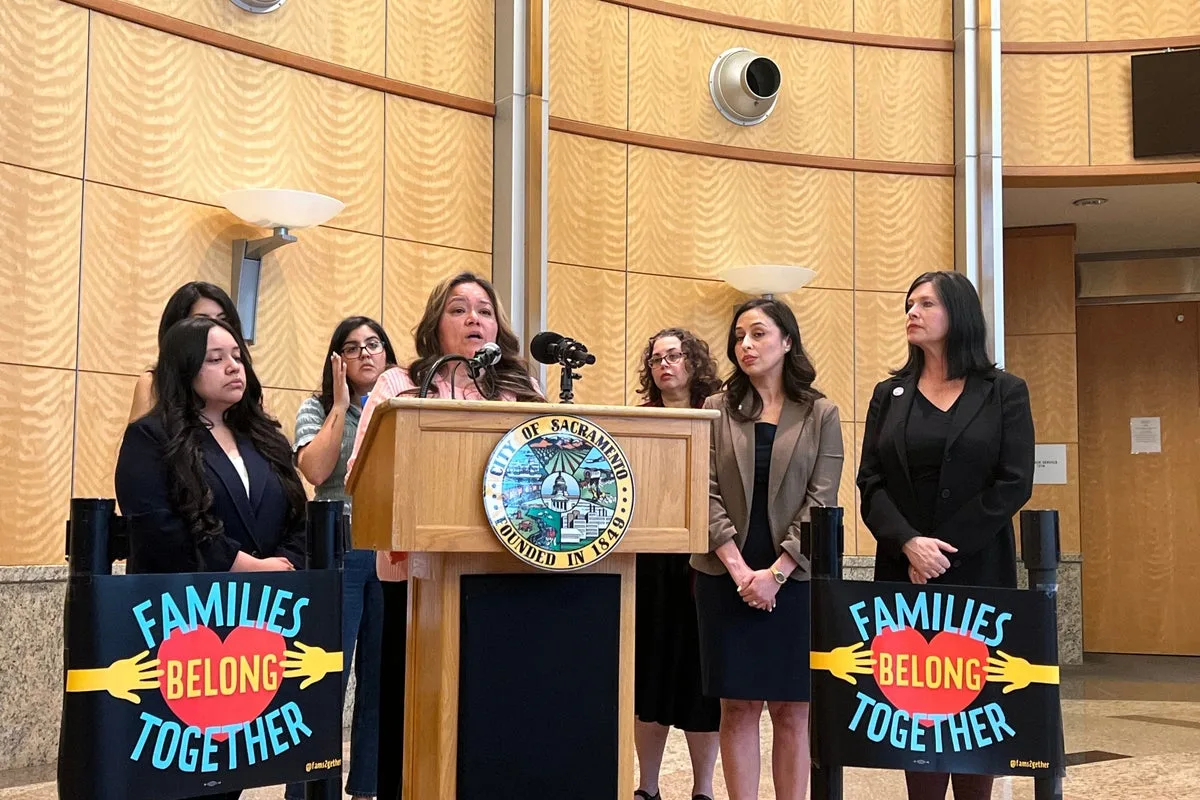
"I didn't get to say goodbye," Estrada Juárez stated during a news conference in Sacramento on Tuesday. "It all happened so fast. This has been one of the most painful experiences of my life." Her daughter, Damaris Bello, 22, described the emotional toll, saying, "It's hard to describe what it feels like to lose your mother so suddenly, especially when you believed she was safe. It was like grieving someone who was still alive."
Legal Battle and Judicial Intervention
The federal government has deported dozens of DACA recipients during President Donald Trump's second term, according to the U.S. Department of Homeland Security. Estrada Juárez's case stands out as a rare instance where a judge ordered a person's return to the United States after deportation. U.S. District Judge Dena Coggins, appointed by former President Joe Biden, issued a temporary restraining order on March 23, giving the federal government seven days to facilitate Estrada Juárez's return.
Judge Coggins ruled that the deportation constituted a "flagrant violation" of Estrada Juárez's DACA protections and infringed upon her due process rights. Immigration attorney Stacy Tolchin, based in Pasadena, California, emphasized, "DACA gives you a vested right to not be deported once it's granted. I really don’t understand what they’re doing."
Background and Government Defense
Federal officials stated that Estrada Juárez was deported due to a 1998 removal order issued when she was a teenager, shortly after arriving in the U.S. She was sent to Mexico at that time but returned weeks later and had held DACA status since 2013. The Trump administration reinstated the 1998 order in February after her arrest. However, Estrada Juárez's lawyer argues that the order was not final, and she was unaware of it.
The Department of Homeland Security defended the deportation, with a spokesperson asserting, "ICE follows all court orders. This is yet another ruling from a Biden-appointed activist judge." This statement reflects the ongoing political tensions surrounding immigration policy.
Broader Implications and Advocacy
Immigration advocates highlight that Estrada Juárez's removal underscores the urgent need for more permanent protections for DACA recipients, often called "Dreamers." Talia Inlender, deputy director of the Center for Immigration Law and Policy at the UCLA School of Law, noted, "But, perhaps unsurprisingly, it feels like this is happening with more frequency under the current administration which is prioritizing speed and quotas, rather than fairness and process, in facilitating removals."
Estrada Juárez spent her time in Mexico with relatives, stressed about the separation from her daughter. "You can’t enjoy life when the most important part of your life is not there," she lamented. Upon reuniting with her mother on Monday night, Bello expressed relief and hope, stating, "Having her back home means everything to me. It means we can begin to heal, to rebuild and to move forward together as a family."
This case illustrates the complex and often harsh realities of U.S. immigration enforcement, particularly under the Trump administration's policies, and raises critical questions about the future of DACA and due process rights for long-term residents.






