Migrants in Calais Receive Daily Ramadan Food Packs from British Charities
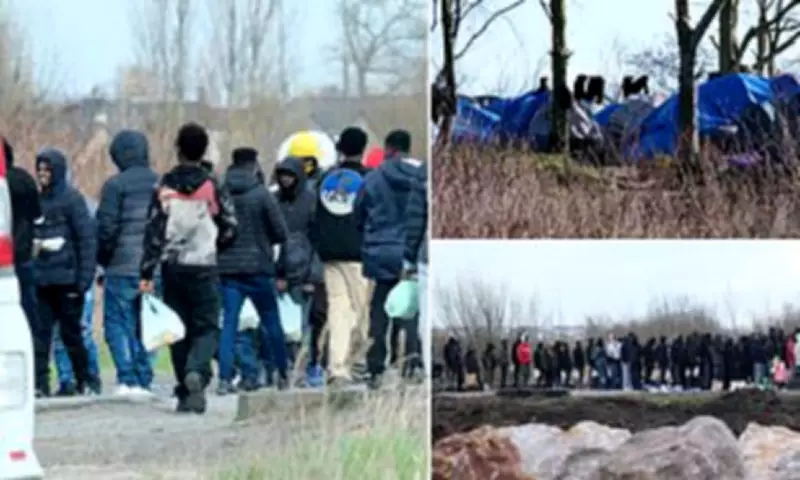
In the French port of Calais, a heavily-bearded migrant swings an orange lifejacket in one hand and a special charity food bag in the other, preparing to cross the Channel to Britain during the Islamic holy month of Ramadan. He is among hundreds of Muslim men from across Europe gathering at a new shanty camp of bell tents near the main hospital, where British charity workers distribute hundreds of Ramadan food packs daily.
Daily Distribution of Iftar Meals
The migrants carry these packs, containing tinned fish, bread, nuts, biscuits, and boiled eggs, back to the muddy camp to await sunset, when they break their daytime fast with the evening meal known as Iftar. Over the weekend, observers noted hundreds queuing near the hospital to collect the bags, largely funded by British donations.
A 17-year-old Sudanese teenager named Abdul proudly displayed his bag on Saturday morning, stating, ‘I will wait to eat this until I can have my Iftar meal at my tent this evening. I was in Italy at the start of Ramadan, but came here by train, and then a bus, for the chance of something regular to eat, and a boat to Britain.’

Abdul and two friends, also devout Muslims from Sudan, smiled as they explained their attraction to the port. ‘The charities give us our tents, and there are plenty of lifejackets for sale on the streets and in the migrant camps which make the boat crossings safer for us,’ they said. ‘Without the food we could not live well or remain strong during Ramadan.’
Charity Efforts and Social Media Backlash
They then retreated into the camp, which has expanded since February 17, the start of Ramadan. However, a social media backlash has grown over the handout of Ramadan charity meals. One commentator on X claimed they actively draw Muslim men to Calais for boat crossings, while another accused charities of ‘fattening up’ migrants for the 21-mile journey in open rubber boats to illegally enter Kent ports.
Care4Calais, one of the most active British migrant-help charities on the French coast and in UK towns housing migrants, proclaims on its website that Ramadan is a time for compassion and generosity. It calls for donations to finance ‘hundreds’ of Islamic-approved food packs for distribution in Calais.
The charity states: ‘Muslims across the world are observing Ramadan with loved ones. But for refugees, far from home and family, living in appalling conditions in Calais, Ramadan can be a difficult and lonely time.’ It adds that distributing special food for those fasting makes a difference in allowing them to observe Ramadan with dignity, with each pack costing £6.90.
Ben Cottam, 36, from Exeter in Devon, runs Refugee Community Kitchen, another Calais-based charity supplying food packs for Care4Calais handouts. It has requested donations on JustGiving for items ‘suitable for later consumption’ per Ramadan fasting rules and controversially called for donations for a special Eid meal marking the end of Ramadan this Thursday.
Local Reactions and Non-Muslim Migrants
Queues for food, packed in white plastic bags, were monitored outside what locals now call the ‘Ramadan camp.’ A Frenchman in his 40s, living near the hospital camp, said, ‘Migrants are coming to Calais from all over France to get the meals. They are being enticed here. The numbers waiting to cross the Channel to get to the UK are growing because of these meals.’
The Mail also found Christian migrants near the camp who had set up tents elsewhere in Calais woodlands to avoid living with Muslims. Hailing from Eritrea in east Africa, they watched the queues from a roundabout near the hospital. One named Biniam, in his early 20s, said, ‘We are not allowed the special meals because we are not Muslim and not fasting. We get chicken and beans instead, but we are still fed by Care4Calais and other charities during Ramadan. We go to a different charity van.’

Channel Crossing Statistics and Asylum Context
In the past week, Government figures show 384 migrants arrived in the Kent port of Ramsgate from France on five traffickers’ boats. Since 2018, over 196,000 migrants have crossed the English Channel to enter Britain without permission. Many recent arrivals are housed in Home Office hotels and other rent-free government accommodation as they await asylum claim processing.