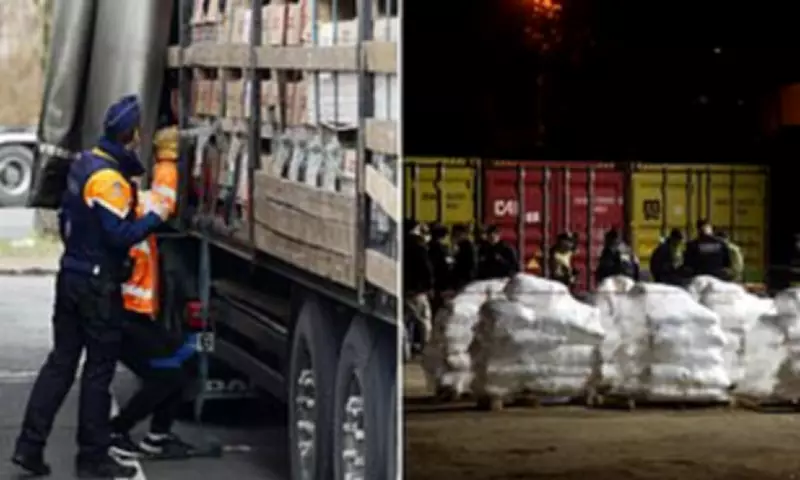
A senior judge in Belgium has issued a stark warning that the nation is dangerously close to transforming into a 'narco state', as drug-related criminality has escalated beyond control. The president of the Antwerp court of appeal, Bart Willocx, highlighted that Belgium's strategic ports, particularly Antwerp and Rotterdam, serve as primary European gateways for cocaine smuggling, with approximately 70% of the continent's cocaine supply flowing through these hubs.
Ports as Major Cocaine Entry Points
Belgium's ports, especially Antwerp, have long been favoured by international drug cartels for importing cocaine into Europe. The steady influx of fresh fruit crates provides an ideal concealment method for contraband. Most of these narcotics originate from South American nations such as Colombia, Ecuador, Panama, Paraguay, and Brazil, often transported by Albanian criminal networks to Europe's second-largest seaport.
Record Seizures and Concealed Volumes
In 2023, cocaine seizures across Europe reached a record high for the seventh consecutive year, with authorities confiscating 419 metric tonnes. Belgium led these efforts with 123 tonnes seized, 116 tonnes of which were intercepted in Antwerp alone. Spain followed with 118 tonnes, and the Netherlands with 59 tonnes, meaning these three countries with major ports accounted for 72% of the total seizures.

However, by 2024, seizures in Belgium dropped to 44 tonnes, a decline the EU drugs agency attributes to improved concealment techniques by criminals and a shift towards smaller, less monitored ports. Alarmingly, experts estimate that seizures likely represent only 10-20% of the total cocaine circulating, with gangs fully anticipating that a portion of their shipments will be discovered.
Corruption and Societal Instability
Judge Willocx emphasised the profound dangers posed by the immense financial resources involved in the drug trade. 'The amount of money that is involved – to influence people, to corrupt people and to bribe – it is so big that it is really a danger for the stability of our society,' he told the Guardian. He acknowledged Belgium's efforts to avoid becoming a narco-state but warned, 'But it is an evolution and it is a pressure – it is a threat.'
The scale of corruption extends to vulnerable groups, including children as young as 13, who have been bribed by gangs to steal cocaine from ports. Willocx stressed the urgent need for increased investment in staff and resources to combat this pervasive issue.
Violence and Intimidation Tactics
The drug trade has unleashed a wave of gruesome violence across Belgium. Port employees who resist gang demands face severe intimidation, including threatening letters, photographs of their children, and attacks on their homes using homemade explosives. Several horrific cases illustrate the brutality:
- In October 2023, the dismembered body of a 25-year-old man from Alkmaar was found in a Belgian holiday home, with reports linking his death to a drugs dispute.
- In 2022, a 46-year-old man was tortured to death in Brussels for allegedly stealing cocaine, suffering burns, beatings, and sexual assault.
- That same year, a 17-year-old had his earlobe cut off, tendons severed, and a toe piece removed after being suspected of tipping off a rival gang about cocaine hidden in East Flanders.
- In a particularly tragic incident, an 11-year-old girl was shot dead in Antwerp in 2023 after being caught in crossfire between warring drug traffickers while having dinner with her family.
Judicial System Under Siege
The judiciary itself is not immune to the threats. Guido Vermeiren, prosecutor general for the Antwerp and Limburg regions, confirmed that several individuals, including the author of an anonymous letter from an Antwerp judge, are under permanent protection. 'From one day to another, you have to leave your house, you have to leave your family and you are going to live somewhere where nobody knows where you are,' Willocx described.
Judges in Antwerp have been waiting for two years for security scanners to be installed in courthouses to screen convicted criminals for dangerous items. Underfunding is a critical issue, raising doubts about adequate resources to ensure safety.

Pressure on Legal Proceedings
Vermeiren and Willocx both expressed concerns that the scale of threats could influence judicial decisions, with court officials potentially making procedural errors to avoid convictions out of fear. 'It could happen,' Willocx admitted. 'There is too much pressure on prosecutors or judges. What you see is that if we go on like this, a number of judges will prefer not to work in criminal affairs because of safety reasons, because of the enormous pressure.'
Calls for Reform and Awareness
The anonymous letter from an Antwerp judge, published last October, warned that mafia groups had become 'a parallel force that challenges not only the police, but the judiciary.' This letter was part of a campaign by Antwerp courts to raise awareness about the crisis engulfing the Belgian justice system.
Judges have proposed 100 reforms, advocating for safer courts, higher pay, and measures to tackle prison overcrowding. Without immediate and decisive action, innocent civilians with no connection to the criminal underworld risk becoming entangled in the escalating violence, further destabilising Belgian society.