
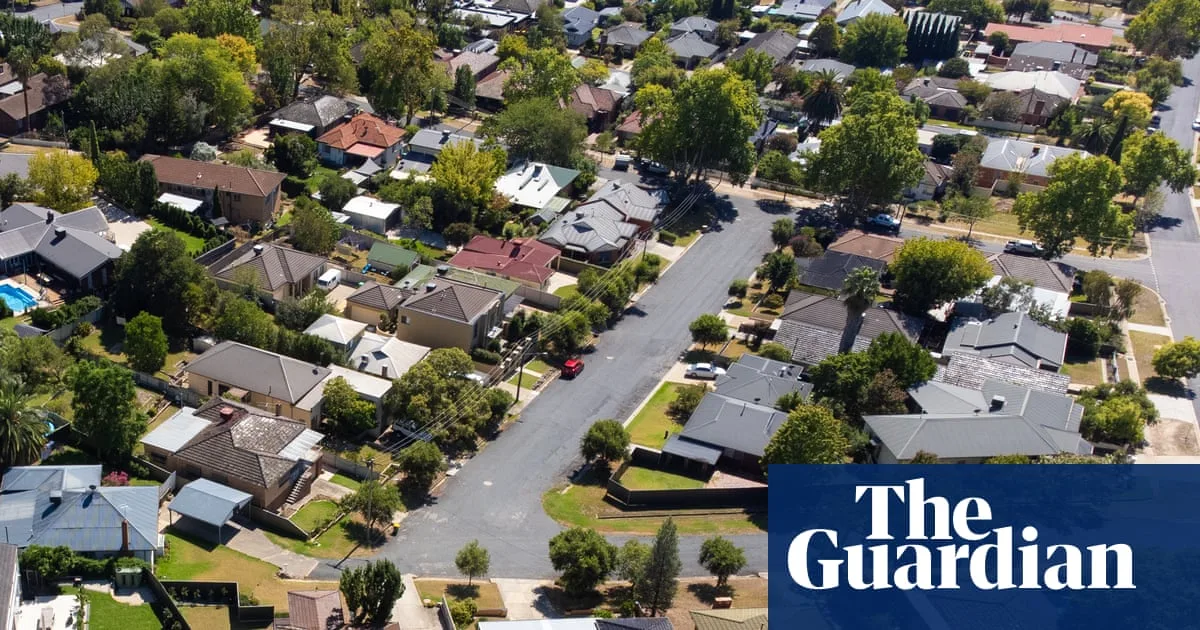
Economic modelling by KPMG has revealed that eliminating migration for a decade would leave Australian house prices 2.3% higher by the mid-2030s compared to a scenario with continued migration. The finding challenges the popular notion that reducing migration would ease housing affordability.
The modelling, conducted for Guardian Australia, compared a 'no migration' scenario with a base case of net migration continuing as expected. Under the no-migration scenario, population growth would slow to 0.4% annually, resulting in 29 million residents by 2035 instead of 31.2 million. The economy would be 2.4% smaller, but wages would be 7.5% higher due to a tighter labour market.
KPMG chief economist Brendan Rynne said the results show that 'pulling back population growth to just natural increases for the next decade is not a great outcome for Australia.' He noted that while the initial impact may not be 'diabolical', losses widen over time, and with a fertility rate below replacement level, the population would eventually shrink, threatening economic stagnation similar to Japan and Italy.
The modelling also indicates that lower population growth would worsen the federal budget deficit, which would widen to $87 billion by the mid-2030s, with total debt surpassing $2 trillion—$437 billion more than under the base case. Rynne explained that the house price increase occurs because reduced demand for housing is outweighed by a drop in construction workers, while higher wages fuel inflation.
Rynne emphasised that migration is not a cure-all but that a well-managed program does more economic good than harm in the long run. The findings come amid heightened public sensitivity to migration, with a JWS Research survey showing 67% of Australians support reducing migration to ease housing pressure.




