

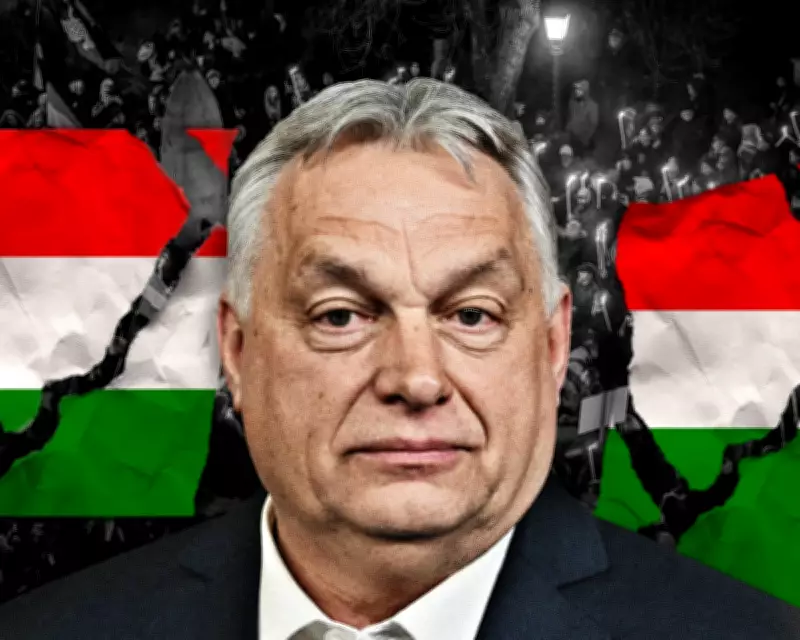
Young Hungarian Voters Poised to Challenge Orbán's 16-Year Rule in Pivotal Election
As Hungary approaches a critical general election on 12 April, a seismic shift is underway among the nation's youth, with polls indicating that 65% of voters under the age of 30 are planning to cast their ballots against Prime Minister Viktor Orbán. This emerging movement, dubbed Generation Orbán, represents the first cohort to have come of age entirely under the rightwing populist's 16-year grip on power, which has transformed Hungary into what critics label an "illiberal democracy" and the EU's most corrupt member state.
A Generation Defined by Orbán's Reign
Ákos, a 20-year-old aspiring teacher, embodies this generation's frustrations. He was just four years old when Orbán first took office in 2010, and his entire conscious life has been shaped by Hungary's decline in press freedom rankings, accusations of becoming an "electoral autocracy," and widespread corruption. "If things remain the same, or get even worse, I can't see a future here," Ákos confessed, expressing a sentiment echoed by many young Hungarians who feel their opportunities have dwindled under Orbán's rule.
Boldi, a 22-year-old student, highlighted the stalled social mobility and lack of prospects for youth, stating, "I think anything is better than a party that had 16 years to change things and just made it worse." This disillusionment is fuelling what political analysts describe as the most powerful driving force for change in modern Hungarian politics.

The Unprecedented Challenge from Péter Magyar
The election pits Orbán's Fidesz party against an unprecedented challenge from Péter Magyar, leader of the Tisza (Respect and Freedom) party, who has galvanised young voters with a message focused on economic stagnation, fraying social services, and anti-corruption. Most polls currently show Orbán trailing in voter support, with Fidesz's backing among under-30s plummeting to below 10% in reliable surveys.
Nóra Schultz, a Budapest-based political analyst, explained, "Even before Tisza came on to the scene, there was definitely a mood for change among youngsters. But when Péter Magyar started running his party, there was a complete shift." She attributed this to a combination of domestic concerns—such as the cost of living and housing access—and a pro-EU stance that clashes with Orbán's drift towards Russia.
Social Media and Youth Mobilisation
Social media has played a crucial role in this transformation, with independent journalists and opposition politicians carving out spaces that circumvent Fidesz's tight control over 80% of traditional media. On platforms like TikTok, young Hungarians have embraced Magyar's campaign, posting videos lip-syncing to his speeches or showcasing nail designs featuring Tisza's branding—a grassroots enthusiasm notably absent for Fidesz.
Schultz noted the contrasting approaches to youth outreach: "Magyar treats young people as political actors. Orbán is more like: 'Be happy about what you've been getting,' whereas Péter Magyar is: 'Come and join me.'" This has resonated with voters like Betti, a 24-year-old cashier who witnesses the rising cost of living daily and feels depressed by propaganda narratives, such as claims that "Ukraine is coming for us."
Cautious Optimism Amid Deep Divisions
Despite the momentum, many young voters express caution. Jani, a 21-year-old film student, clarified, "It's not like all the youngsters are Tisza activists. It's more like everybody is against this system and Tisza is the only option we have. I don't sympathise with Péter Magyar at all, but I have no choice so I will vote for him." This sentiment underscores a vote driven more by opposition to Orbán than wholehearted support for Magyar.
Concerns also persist about electoral fairness, with accusations that Orbán has remade the system to favour Fidesz through gerrymandering and vote-buying. Additionally, Fidesz maintains strong support among voters aged 65 and over, as well as in rural areas, complicating the opposition's path to victory.

Looking Beyond the Election
Young Hungarians are also anxious about Orbán's potential reaction to a loss, given his strongman approach that has inspired figures like Donald Trump. Betti speculated, "I think they've already realised that it's over for them, but I don't think they will go down without a fight. They will try something." Even if Magyar succeeds, she acknowledges that undoing Orbán's legacy will be arduous: "We know that, even if we change governments, the next four to eight years are going to be hard because they just absolutely took the country to shit."
Yet, optimism persists. Ákos, reflecting on his generation's hopes, said, "I'm pretty hopeful. Like most of my generation, I'm awaiting change. Change in the government, change in the system, and a change in people's thinking." He emphasised the need for unity: "I would certainly hope that the divisions between Hungarians will diminish over time, so that we realise that we are not each other's enemies. And that we have to share this country and work to make it a better place together."
As Hungary stands at a crossroads, the youth vote could prove decisive in determining whether Orbán's long reign continues or a new chapter begins, with profound implications for the country's democratic future and its place in Europe.





