
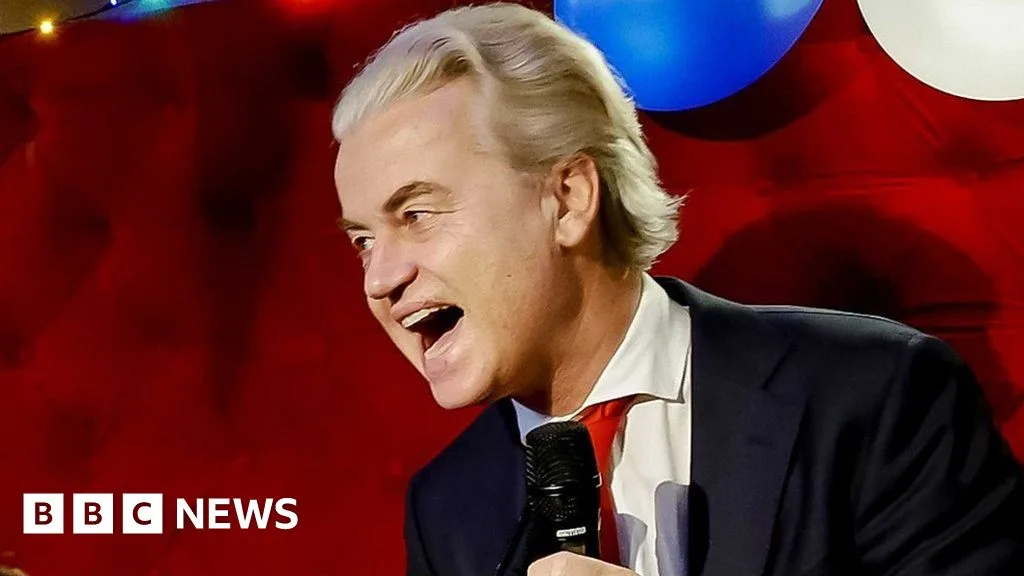
Anti-Islam populist Geert Wilders has secured a dramatic victory in the Dutch general election, with his Freedom Party (PVV) projected to win 37 seats in the 150-seat parliament. This puts him well ahead of the left-wing alliance led by Frans Timmermans, which is set to take 25 seats. The result has sent shockwaves through Dutch politics and across Europe.
In his victory speech, Wilders declared, 'The PVV can no longer be ignored. We will govern.' He later told the BBC he was willing to negotiate and compromise with other parties to become prime minister. However, to reach the 76-seat majority needed, he must persuade at least one major party to join a coalition. Before the vote, three other big parties ruled out working with him, but the scale of his victory may change calculations.
Timmermans ruled out any cooperation, vowing to defend Dutch democracy and the rule of law, stating, 'We won't let anyone in the Netherlands go. In the Netherlands everyone is equal.' The centre-right liberal VVD, under new leader Dilan Yesilgöz, and the New Social Contract party of Pieter Omtzigt have both congratulated Wilders. Yesilgöz doubts he can form a government but left the door open for her party to decide, while Omtzigt said his party is 'available to turn this trust into action.'
Wilders tempered his anti-Islam rhetoric during the campaign, putting plans to ban mosques and Islamic schools 'in the fridge' and focusing on migration. He promised to tackle a 'tsunami of asylum and immigration,' capitalising on widespread discontent over net migration exceeding 220,000 last year and a shortage of 390,000 homes. The previous government collapsed over asylum rules, further boosting his appeal.
International far-right leaders praised his win, with France's Marine Le Pen saying it 'confirms the growing attachment to the defence of national identities.' Wilders advocates a 'Nexit' referendum to leave the EU but acknowledges no national mood for it, making it a difficult sell to potential coalition partners. Political scientist Martin Rosema noted that excluding radical right parties often backfires, as seen in this election.




