
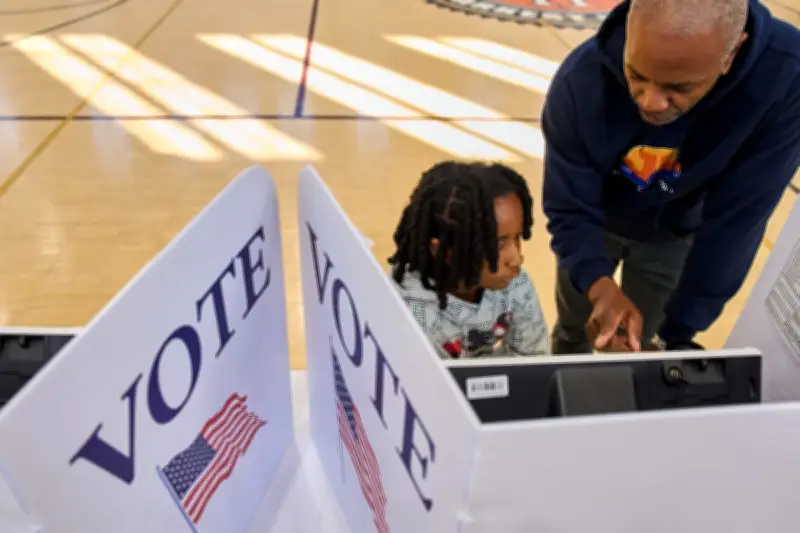
Millions of US voters have gone to the polls in elections which will decide the balance of power in Washington and shape the last two years of Donald Trump's presidency.
The midterms, which will determine which party controls Congress, are being seen as a referendum on the controversial Republican leader, who urged people to pretend he was on the ballot paper.
While the Democrats were tipped to retake the House of Representatives from the Republicans, the fight for the Senate remains on a knife edge.
Democrats expected to gain House seats
The challengers are expected to benefit from voter discontent over the cost of living, tariffs and high energy prices fuelled by the Iran war, which Mr Trump launched with Israel earlier this year.
The president held rallies in traditional Republican strongholds in a bid to shore up support and boost turnout, and promised every adult US citizen 5,000 dollars (£3,721) if his party kept control of both the House and Senate.
However, the Democrats have faced their own challenges during the campaign with internal divisions, underlined by a public fallout in the Michigan Senate race.
Key races and turnout
Democrats need a net gain of four seats in the 100-member Senate to win a majority, while in the 435-member House, they need three.
A string of state governorships are also being contested, including in California, where the long-shot Republican candidate is Steve Hilton, a former top aide to David Cameron.
High turnout was expected in the hotly contested congressional races, which are the most expensive in US history.
Trump's expectations and possible disputes
Despite predictions, Mr Trump said on Tuesday: "I think the results are going to be better than you think."
Given his previous claims about voter fraud, the president may seek to dispute the outcome of some races that go against his party.
Were the Democrats to gain control of even one chamber, they would be able to frustrate Mr Trump's time left in office and launch investigations into the conduct of his administration.
However, the president would still have executive authority in key areas, as well as veto power.
The election outcome will also influence the debate and party strategies in the run-up to the 2028 presidential race.




