Democrats won control of the House and Senate in the US midterms, flipping numerous states and curbing Donald Trump's power after facing few limits from a compliant Republican-controlled Congress.
Voters punished Mr Trump and his allies in swing states such as Georgia, Michigan, New Hampshire and North Carolina. The Democrats even took the Republican strongholds of Texas, South Carolina and Kansas. The flipping of Texas, Kansas, Iowa, Ohio, North Carolina, South Carolina and Maine in particular helped crush Mr Trump's party.
Historic wins for Democrats
Republican losses allowed Democrats to make history in Georgia, where Democrat Keisha Lance Bottoms became the first black woman elected governor in US history. In Texas, Democrat Gina Hinojosa will become its first Latina governor.
New Hampshire Democrat Chris Pappas won his Senate race, making him the first openly gay man in the Senate. In Michigan, Democrat Abdul El-Sayed won despite an ugly row within his own party in recent days. He will become the first Muslim senator.
Republicans react to losses
Outgoing Florida Governor, Ron DeSantis, a Republican, said on Wednesday: "Let's just be clear about what happened last night. This is close to an extinction-level event for Republicans in many parts of the country."
The extent of the Republicans' losses threaten to shake the party's foundations as well as potentially the Democrats as internal struggles for control are unleashed. Mr Trump becomes a lame duck president as a consequence of the midterms, with his ability to pass laws severely constrained. Likewise, the President has already made clear he would veto any measures Congress puts forward.
Voter sentiment and outlook
While Mr Trump's party suffered bruising losses, the results do not necessarily mean the Democrats won. A poll by the Associated Press found about half of voters have a "very" or "somewhat" unfavourable opinion of the Democratic Party, while about six in 10 view the GOP negatively.
Nevertheless, the electoral thrashing signals that Mr Trump's political strength has hit a fresh low two years before his term ends. He may no longer be able to rely on Republican colleagues to acquiesce to his demands, with some in his party likely to be more critical in public.
Republicans Mr Trump wanted on the ballot and campaigned fiercely for, including Darline Graham in South Carolina, Michael Whatley in North Carolina and Ken Paxton in Texas, lost. The coalition of young, black and Latino voters who propelled Mr Trump to the White House two years ago swung decisively to Democrats.
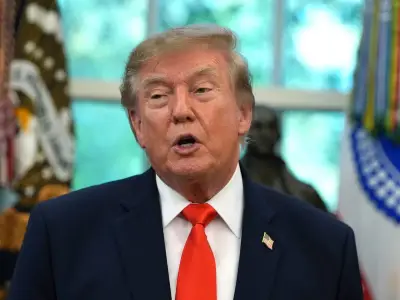
Mr Trump struck a conciliatory tone, suggesting he could work with the Democrats, and acknowledged the Iran war impacted the midterm elections, suggesting voters were frustrated by surging fuel prices which have been a by-product of the now eight-month-old conflict. The President said he was not considering replacing Defence Secretary Pete Hegseth, despite voter dissatisfaction with the war and the threat of impeachment proceedings against the Pentagon chief. He said Mr Hegseth was "doing a great job."
Vice President JD Vance, often seen as Mr Trump's likely successor at the White House, pointedly blamed the president's war in Iran for the midterm drubbing. He wrote on X: "The reason we lost is the war." Others argue the midterms were a referendum on Mr Trump, who had encouraged voters to consider he was on the ballot.