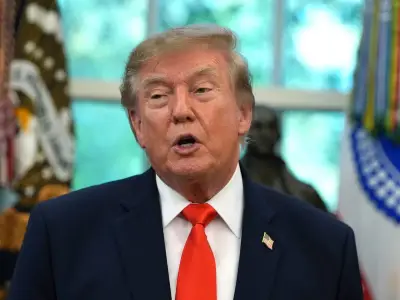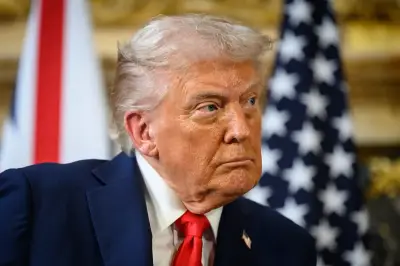
US voters roundly rejected Donald Trump's alternate reality in the midterm elections, with economic concerns and the Iran war overshadowing his claims of a new "golden age of America."
In his final pitch before the vote, Trump repeatedly declared that a new "golden age of America" was underway, insisted the war in Iran was not really a war because "we've done very little fighting," and claimed the stock market had hit 88 all-time highs. He told supporters that on his watch the US had become "the hottest country anywhere in the world."
In an extraordinary speech at Washington's Lincoln Memorial reflecting pool on the last day of the campaign, he claimed: "We've achieved more in less than two years than any administration in American history, and I've kept every single promise I made – except far more. I've actually kept far more promises than I made. We've done much more than I promised."
Voters reject the narrative
As Americans prepared to vote in hundreds of congressional races, Trump implored them to "pretend I'm on the ballot" and vote on the policies he had enacted. This "mirror world" – his constructed reality casting enemies as democracy-stealing villains and himself as savior – was a central pillar of his victorious 2024 bid. As votes were counted on Tuesday night, it became clear the mirror had shattered.
Americans, including those who previously went for Trump, were not buying his narrative. They did not approve of the Iran war and were not experiencing a "golden age" as they filled up their cars and paid for groceries. However, voters did accept one element of his alternate reality as they entered polling places: they considered his administration and agenda to be on the ballot, much to the devastation of Republicans running for office.
Tom Galvin, a Republican on the Maricopa county board of supervisors in Arizona, said "one by one, everything that was important" to the coalition that carried Trump back to power in 2024 fell by the wayside. "For example, if you wanted the Epstein files, that didn't happen," he said. "If you wanted to address inflation because Biden had runaway inflation, well, that didn't happen. If you wanted to see a relief in gas prices, that didn't happen. If you didn't want us to get into foreign wars or senseless wars, that didn't happen."
Economic concerns dominate
Voters explained that the economy – particularly their inability to afford their lives – was central to their decisions. Corruption under Trump, the Iran war, tariffs, datacenters, healthcare costs and the administration's aggressive deportation scheme also weighed into their votes.
Jim Conrad, a voter in Ohio, told the Guardian: "There's a war that nobody wants right now." Ron Miller, in Kansas, said he was for Trump but acknowledged the president "hasn't done anything" to lower the cost of living. Todd Cox, in Maine, cited "the disregard for the rule of law," while Linda Olson, in Kansas, a previous Trump voter, said the president was now working to "make himself richer instead of really helping the people."
Rather than acknowledge voters' woes, Trump tried for months to explain or dismiss them. Affordability, he said last year, was a "con job" perpetrated by Democrats. Fuel prices may be high for consumers, but "the United States oil and gas business is making hundreds of billions of dollars," he said in October. People who do not want datacenters in their communities will end up "backwards and poor," he said this summer.
Paul Bentz, an independent pollster and strategist at HighGround, an Arizona public affairs firm, said: "You don't see the stock market on the side of the road. But you drive down a street, you see the gas prices. The tone-deaf nature of his approach on things, talking about issues that other folks don't care about, ignoring and pretending like there aren't struggles going on, just was not the right strategy."
Republicans feel the impact
Jim Abeler, a Republican state senator in Minnesota who lost his reelection bid, knocked on the doors of about 80% of the homes in his district. He encountered "outright hostility" toward Trump over gas prices and the Iran war, and half of the people he talked to were "unforgiving." One woman who usually voted for Democrats but had voted for Abeler previously said she could not do it this year. "She said, 'I'm sorry, it's just a bad year to be you,'" he recalled.
Chris Madel, a Minneapolis attorney who dropped out of the Republican primary for Minnesota governor and criticized his party over the deportation onslaught into the state, said he knew in January – amid the Operation Metro Surge crackdown – that this would end poorly for Republicans. "The tone deafness was really without equal," he said.
Democratic candidates said for months that voters, including those in red-leaning areas, just wanted to feel heard. Rebecca Cooke, a Democrat running for a Republican-held congressional district in western Wisconsin, said just before the election that people "don't feel that the federal government really gives a damn about them." She won.
Erin Klaus, who owns a small business in Cooke's district that will close at the end of this year, said it felt like the message from the government was that her problems were not really happening. "The federal government can say that the prices are going down, and inflation is going down. But, I mean, that's just not true in our daily lives," she told the Guardian in October.
Bob Brooks, a Democrat who flipped Pennsylvania's 7th congressional district, said voters were "frustrated with a guy who was promising them one thing" but gave them "something completely different." In short, "they felt lied to by the Trump organization, anybody that supported him, and they're looking for change," he added. "The status quo is not OK."
Looking ahead
After epic losses, Republican party leaders are searching for what comes next and considering how tied their futures are to Trump. Galvin said the people in his party who stayed home or voted the other way were trying to send a message: stop excusing corruption and trafficking in election lies, and get to work on real issues.
Joe Pitts, a Republican who leads Arizona think tank 1912 Institute, said he is not ready to count out Trump or his influence in the party. "So long as Trump is president and frankly, so long as Trump is alive, he will exercise significant influence over the Republican Party."
Democrats have been careful not to interpret the results as a broad endorsement of their party, but a sign that people are sick of politics as usual – including the way the president talks about the issues that affect them directly. "People are just tired of nonsense. They're tired of people performing in front of them," said Brooks. "People are tired of the show. I don't want to be a show. I just want to help people."
Christine Hunschofsky, a Florida state representative and the incoming House Democratic leader in the state, said elected officials in both parties should see the results as a call to listen to voters and address their concerns, or they will be voted out. "Every elected official has such a responsibility right now to restore that trust," she said. "Because once that trust is gone, I have even bigger concerns for our country."