
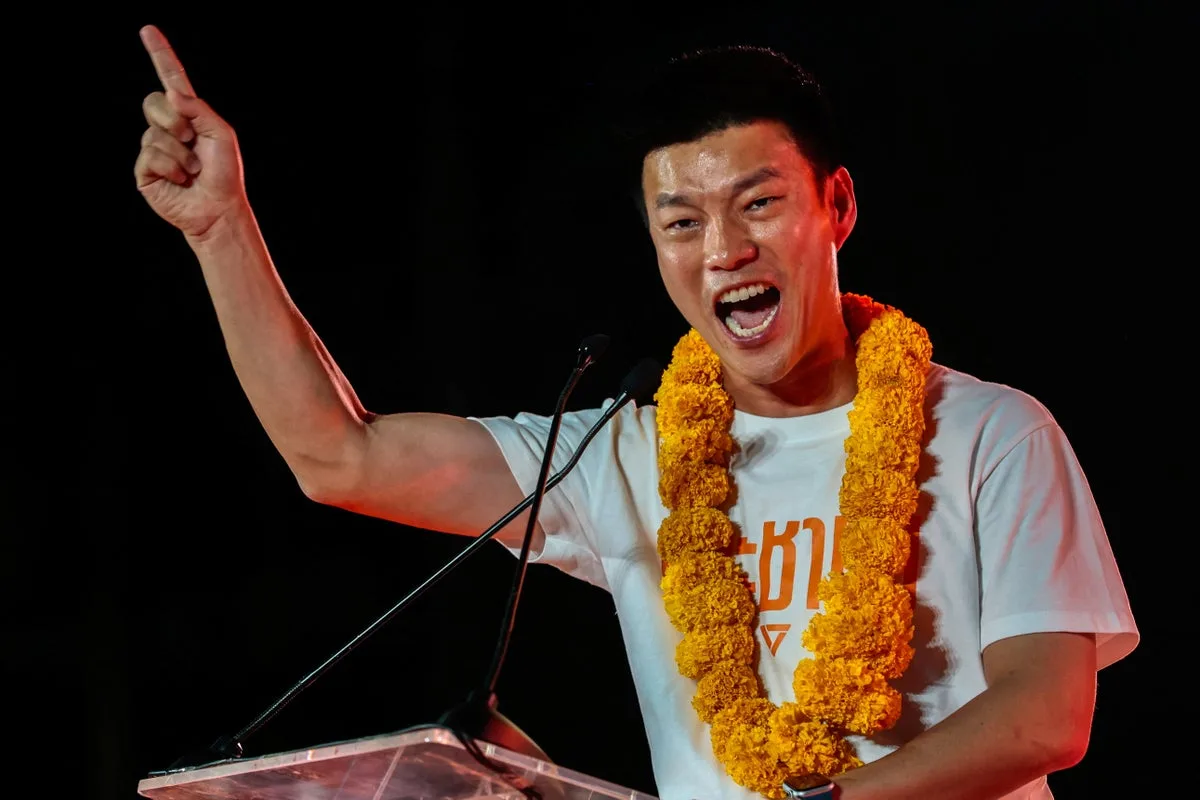
Thailand goes to the polls on Sunday, with opposition candidate Natthaphong Ruengpanyawut leading opinion polls ahead of a vote that could reshape the country's turbulent politics. The 38-year-old progressive is the prime ministerial candidate for the People’s Party, which two major surveys last week placed in pole position, ahead of caretaker Prime Minister Anutin Charnvirakul's Bhumjaithai Party.
The election, called after Mr Charnvirakul dissolved the lower house of parliament in December to avoid a no-confidence vote, is seen as a three-way contest. The royalist-military establishment is represented by Bhumjaithai, while the populist Pheu Thai party, linked to the powerful Shinawatra clan, also competes against the progressive opposition. More than 53 million eligible voters will choose members of the 500-seat House of Representatives, with 400 seats decided by constituency races and 100 by proportional representation.
Thailand has experienced 12 successful coups since 1932, and the latest democratic setbacks have drawn international scrutiny. The advocacy group V-Dem categorised the country as an electoral autocracy in its 2025 Democracy Report, while Freedom House rated it “Not Free”, citing the dissolution of the Move Forward Party and the removal of Prime Minister Srettha Thavisin by the Constitutional Court in August 2024. Mr Charnvirakul, 59, became the third prime minister since 2023 after his predecessor, Paetongtarn Shinawatra, was removed by the courts over a leaked phone call with a Cambodian leader.
Unlike the 2023 election, the Senate will have no role in choosing the next prime minister, after its veto power expired in 2024. That year, the military-appointed Senate had blocked the reformist Move Forward Party despite its election victory. The new prime minister will be selected by a simple majority of elected lawmakers, though close to 270 votes are needed to form a stable government.
In a separate referendum on the same day, voters will be asked whether a new constitution should replace the 2017 charter drafted under military rule. A “Yes” vote would give parliament a mandate to draft a new national charter, while a “No” vote would keep the current constitution intact. The outcome will test whether Thailand can break a cycle of instability that has lasted more than a decade, marked by short-lived governments toppled by the military and the courts.




