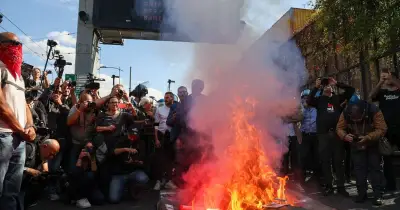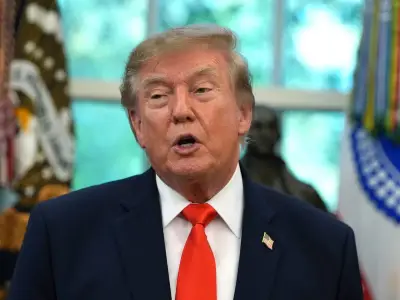
Crowds gathered in Tehran on Wednesday to celebrate what was described as a tragic day in American history. Singing and waving Iranian flags, they marked the anniversary of the student takeover of the US embassy and celebrated Donald Trump's midterm election defeat.
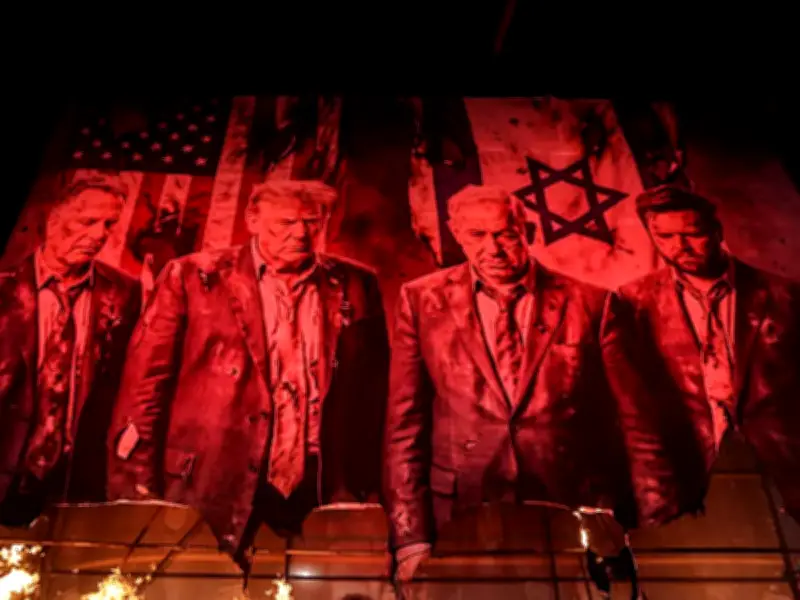
A poster depicting US President Donald Trump, Vice President JD Vance, special envoy Steve Witkoff and Israeli Prime Minister Benjamin Netanyahu burned into the night. The burning coincided with a bitter defeat for Republicans, attributed in part to Mr Trump's war in Iran.
Reasons for the Republican loss
Tehran mocked the US president over his party's midterm result, while his allies discussed what they believed were the reasons for the Democratic Party's win.
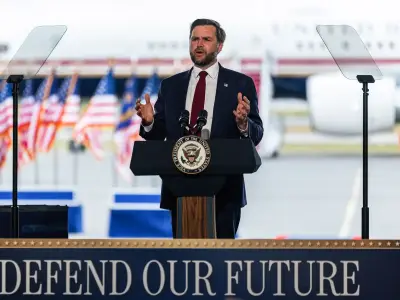
Vice President JD Vance said in a social media post that, according to a pollster, the top four reasons for the major loss were the war, cost of living/inflation, needing to put 'America First' and changing the US' relationship with Israel. President Trump's oldest son, Donald Trump Jr, agreed in a lengthy social media post that blamed Republicans' losses on the Iran war.
Concern over possible US strikes
Tehran lauded the midterm results as evidence that voters opposed the war launched by Mr Trump, but worry remains that the US could still carry out strikes. Two senior Iranian sources told Reuters that while Iranian leaders welcomed the Democrats' victory, Tehran was concerned that Mr Trump could seek to compensate for it with a military strike. It remained on high alert.
Iran's judiciary chief, Gholam Hossein Mohseni Ejehi, echoed Iranian sentiment in a post on X. He said: "Trump failed both in war and in politics. We will certainly impose even more defeats upon him."
The poster burning took place during a state-organised rally commemorating the student takeover of the US embassy in Tehran during the 1979 Islamic revolution. Radical students stormed the embassy and held 52 Americans hostage there for 444 days. The crisis cemented the divide between Tehran and Washington, and to this day the two have no formal diplomatic relations.