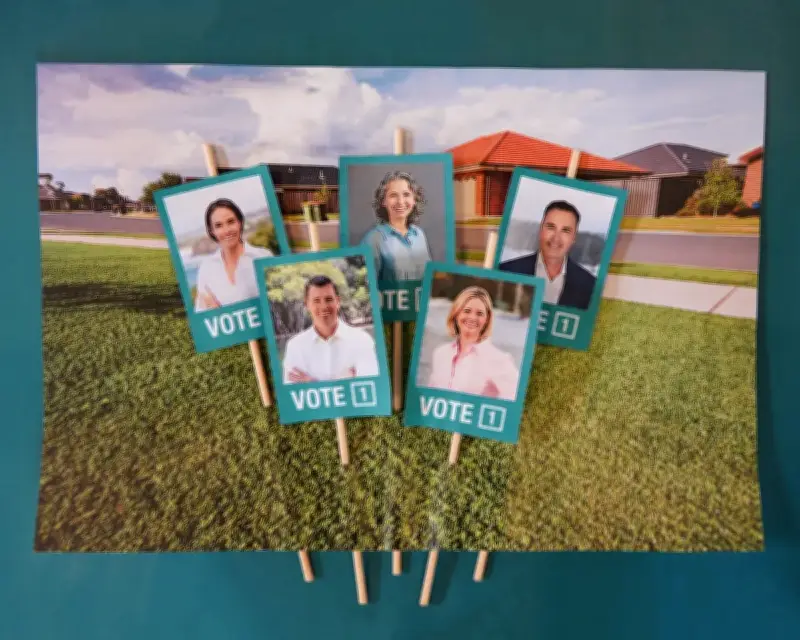
Progressive independents, supported by the community activists behind the federal teal wave, are preparing to challenge Liberal-held heartland seats on Sydney's north shore, adding to the NSW Coalition's electoral pressures as it also confronts a surging One Nation before the March state election.
The emerging challenge has remained largely under the radar, even as the Coalition has moved right on issues from gun control to law and order, and the NSW Nationals have abandoned climate targets altogether. That shift has created an opening for progressive independents in urban seats typically held by Liberal moderates, with several candidates about to launch their campaigns.
New Independent Candidates Enter Fray
This weekend, Amelia Loye, a management consultant specialising in stakeholder and community engagement, will announce she is running in the seat of Willoughby. She will attempt to oust Liberal MP Tim James, who holds the seat on a 2.6% margin. Loye is backed by community group Willoughby Votes, which came close to securing an independent in the 2023 election with 47% of the two-party preferred vote.
“Willoughby has already shown it is ready for an independent,” Loye said. “Nearly half of voters backed one last time. I want to earn their support, and the support of those still deciding.”
She joins high-profile candidate Elouise Massa, a small business owner who became a household name after campaigning for Northern Beaches hospital to return to public hands following her toddler's death in emergency. Massa will run in the Sydney seat of Manly against Liberal Adelaide Cuneo, who is seeking to replace the retiring MP, James Griffin.
Broader Challenge on the North Shore
The independent deputy mayor of Mosman, Michael Randall, announced last weekend he will run in North Shore as a community independent, with several people behind former independent federal MP Kylea Tink's campaign supporting him. Monica Wulff, another independent, has announced a run in Davidson.
Voters on the northern beaches have already sent two independents to Macquarie Street, and both have a good chance of being returned. At the federal level, teal independents Sophie Scamps, Zali Steggall and Nicolette Boele hold McKellar, Warringah and Bradfield respectively, while Tink held North Sydney for one term before the seat was abolished.
The NSW Liberal party is not giving up on the northern beaches and the north shore despite the trend. “We'll keep making our case directly to voters, including why we oppose Labor's gun buyback that targets law-abiding owners rather than criminals and terrorists,” a Liberal spokesperson said.
Labor Premier's Tactical Support
This time, the independents have a boost in the form of NSW Labor premier, Chris Minns. During the final weeks of parliament before the NSW election, Minns joked that independent Jacqui Scruby, who won Pittwater at a byelection, should be known as “the member for Mona Vale road” for her tenacity in seeking an upgrade. It is now being fast-tracked by the Minns government. Minns has also appeared with Massa and praised her advocacy.
But Minns, described as a shrewd political operator, is hedging his bets. A year ago, with the Liberals languishing in the polls, Labor could have expected to increase its majority in 2027. With One Nation storming to a primary vote as high as 30% in some polls, that prospect has dimmed.
In the current parliament, Labor relies on three independents – Greg Piper, Joe McGirr and Alex Greenwich – to ensure confidence and supply for its minority government. An expanded crossbench would give more options and provide a buffer for Labor losses to One Nation in western Sydney, the Hunter and possibly the Central Coast. If all independents were successful, almost the entire north shore region would go to state independents, except the seat of Wahroonga.
Coalition's Regional Strategy Risks Alienating Urban Voters
Most commentary about the 2027 election has focused on the likely losses facing the Nationals, who could lose as many as eight or nine of their 11 seats in the regions. But a teal wave also remains a threat to the Liberal party, especially as the Coalition positions itself to fight One Nation in the regions with policies that do not sit well with urban voters.
One Nation could also help independents if it makes good on its promise to run candidates in every seat, as it is more likely to shave votes from the Liberal primary vote, making it easier for independents to overtake the Liberal on preferences from Labor and the Greens. NSW's optional preferential voting makes it hard to predict how strong preference flows will be, and it depends on what parties advocate on how-to-vote cards. In 2023, only 41% of One Nation voters nominated preferences, compared to 70% of Green voters and 49% of Labor voters.
The opposition leader, Kellie Sloane, has not ruled out either a preference deal or a post-election arrangement with One Nation, describing such options as “hypothetical”. If they do end up preferencing One Nation, it may alienate moderate Liberals and ultimately work against them.