
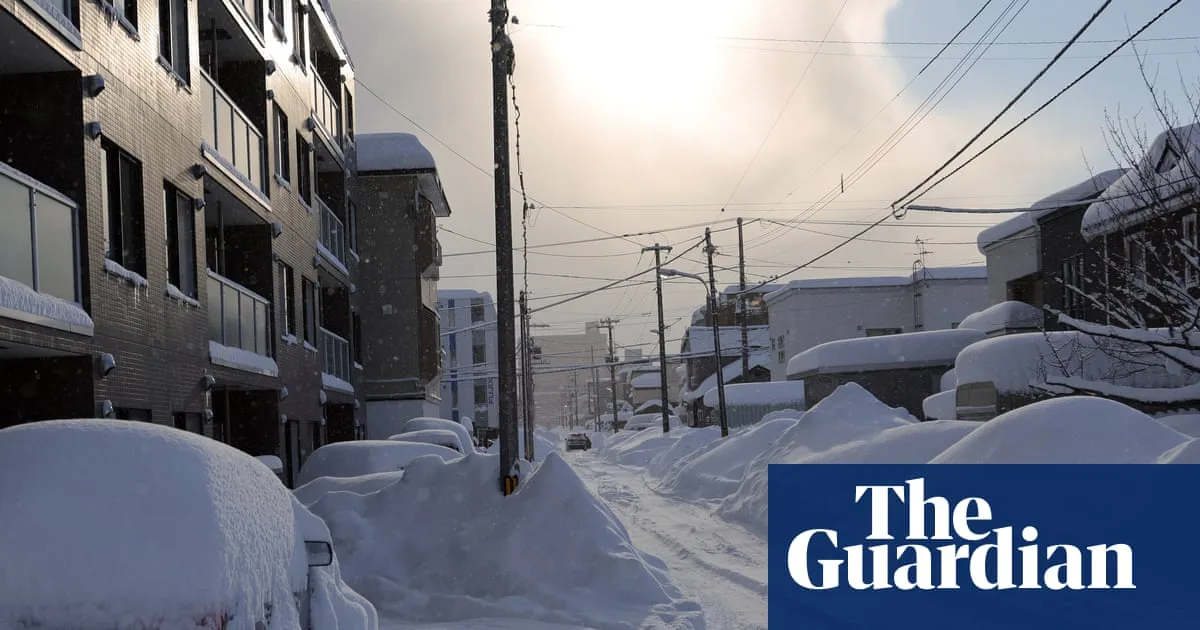
Japan’s snap general election, called by Prime Minister Sanae Takaichi just four months into her term, is facing significant disruption from heavy snowfall and freezing temperatures, raising fears of low voter turnout.
Record snowfalls in parts of the country have buried campaign billboards and forced authorities in Aomori prefecture to reduce the number of display sites to 97, compared with 621 during last summer’s upper house election. Ten people have died in the past week due to the severe weather along the Sea of Japan coast.
The shortened 16-day campaign period, the shortest in living memory, has added to logistical strains. Local municipalities are struggling to arrange polling stations, and police have warned that pocket hand warmers could trigger metal detectors installed after the assassination of Shinzo Abe. Female officers and staff have been assigned to conduct body checks at campaign events.
Observers suggest that a combination of cold weather, Takaichi’s high approval ratings, and a weak opposition could suppress turnout. Writer Satoru Ishido said all conditions for low turnout are in place, noting that the Liberal Democratic Party can no longer rely on its former coalition partner Komeito to mobilise voters.
Younger voters appear more willing to vote, with over 58% of those in their 20s and 30s accepting the election timing, compared with 47.5% of older age groups. However, in snow-prone north-east Japan, 61% opposed the February date, which is the first lower house poll in that month since the 1990s.
Takaichi has acknowledged that the weather could challenge voters, and the internal affairs ministry has launched a task force to provide mobile polling stations and transport for election day.




