
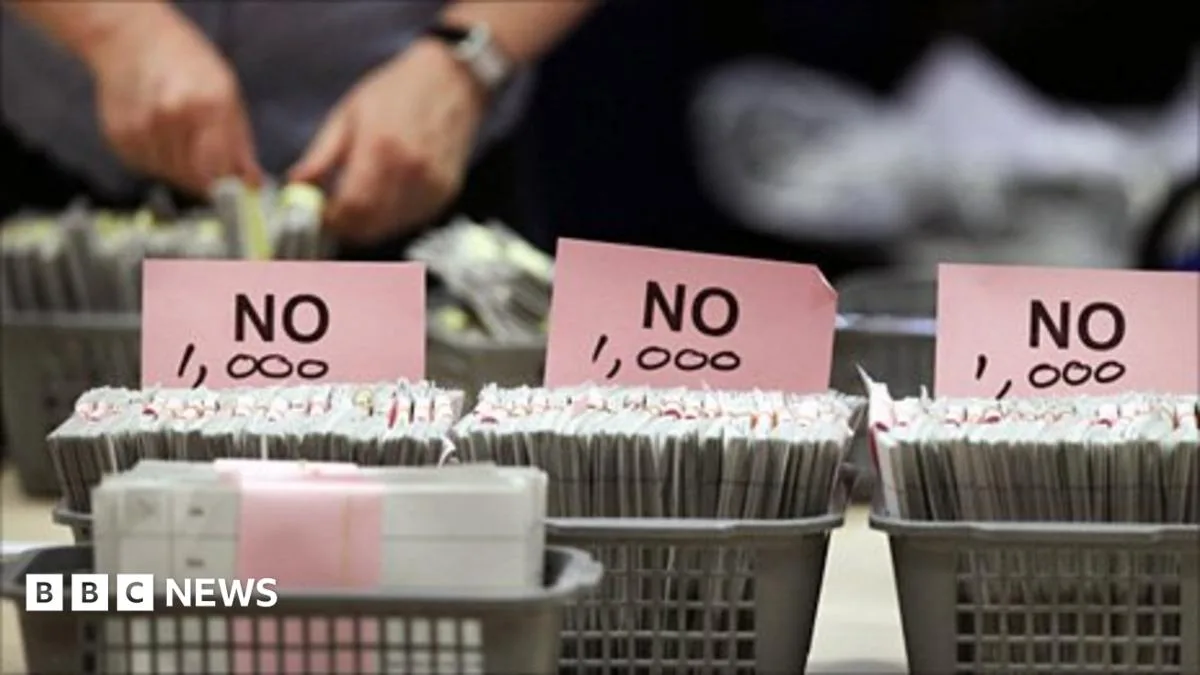
The United Kingdom has voted decisively against adopting the Alternative Vote (AV) system for parliamentary elections, with 67.9% of voters rejecting the change. The final tally showed 13,013,123 votes against AV, against 6,152,607 in favour, on a turnout of 41%—the second UK-wide referendum in history. The result dealt a heavy blow to Deputy Prime Minister Nick Clegg, who had championed electoral reform, and compounded Liberal Democrat losses in local elections.
In Scotland, the Scottish National Party (SNP) secured an historic victory, winning a majority in the Scottish Parliament for the first time since its establishment in 1999. Leader Alex Salmond's party humbled Labour in one of its traditional strongholds, paving the way for a future referendum on Scottish independence. Scottish Labour leader Iain Gray announced he would stand down in the autumn.
Labour made significant gains in English local elections, particularly in the north, and in the Welsh Assembly, where they won 30 seats, just one short of an outright majority. The Conservatives also increased their council seats and gained control of two new councils. However, the Liberal Democrats bore the brunt of public anger over coalition spending cuts, losing nearly half of their councillors up for election.
Prime Minister David Cameron, whose Conservative Party campaigned to keep the first-past-the-post system, called the result a "resounding answer that settles the question" of electoral reform. Mr Clegg acknowledged the defeat, stating, "The result is very clear... you have got to accept it." No campaign director Matthew Elliott said he was "astonished" by the scale of victory, predicting the debate over electoral change would be settled for a generation.
In Northern Ireland, the Democratic Unionist Party (DUP) and Sinn Fein are expected to remain the largest parties in the Assembly, though counting was marred by controversy. Meanwhile, Labour held Leicester South in a parliamentary by-election with an increased majority, while the Liberal Democrats held second place. Sir Peter Soulsby, who stepped down as MP, won the contest to become Leicester's mayor.




