

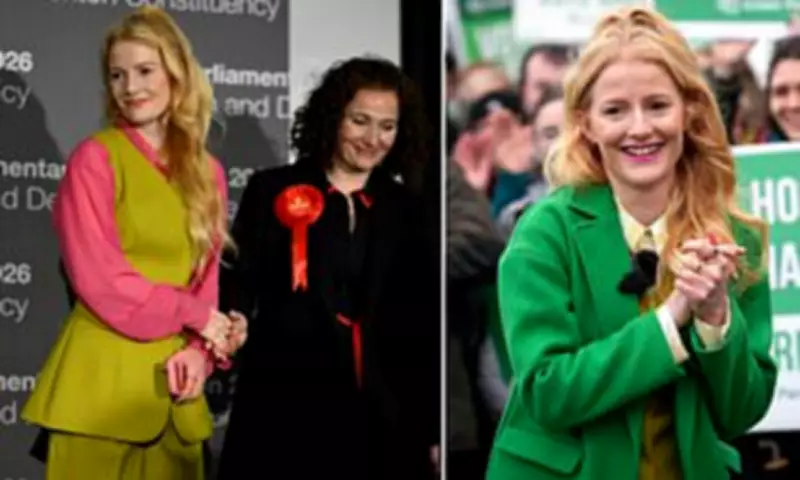
Four thousand miles and two continents separate Manchester from Pakistan, but last week that vast distance collapsed to nothing within the polling booths of Gorton and Denton. Nigel Farage, in The Mail on Sunday, made the explosive claim that Reform UK had been deprived of a by-election victory by what he termed 'foreign-born voters'. He described this as the most glaring example yet of the consequences of mass immigration and questioned the legitimacy of certain voting rights in British elections.
A Personal Perspective on Political Sectarianism
These are powerful accusations. As someone who fled Pakistan to escape Sharia-compliant laws that treat women as second-class citizens, I view with alarm the Greens' overt pursuit of the Muslim vote and the sectarianism it fosters. Their winning candidate, Hannah Spencer, wore a red-and-black keffiyeh before an Islamic centre, while leader Zack Polanski met with Muslim elders in a mosque, and the party distributed Urdu pamphlets and videos.
This raises critical questions: How engaged can voters be in British politics if their English is poor? What role should mosques play in election campaigning? The answer, learned from Iran's theocratic mullahs, is none. The same principle applies to Judaism or Christianity; while MPs might use church halls for surgeries, actively courting religious leaders to marshal congregations for votes is unacceptable.

The Threat of Family Voting and Religious Blocs
Block voting based on religion undermines British values of open democracy and individual liberty. Equally concerning is 'family voting', where relatives coerce voting choices, which emerged in Manchester last week. Democracy Volunteers reported the highest level of family voting in its decade-long history, with 32 cases across 15 of 22 monitored polling stations.
Given many constituents have Pakistani roots, this is believable. In traditional Pakistani households, politics is male-dominated; women often vote as instructed by husbands, sometimes with supervision in the booth. This distorts political representation and suppresses women's voices, contradicting freedom of expression.
Broader Implications for British Democracy
Both Pakistani and UK authorities have outlawed family voting, yet it persists. Having escaped patriarchal bigotry to find it in Britain is deeply troubling. The Greens' pandering risks leading them to morally repugnant positions, such as championing the hijab, while Polanski's shifting stance on Iran—from supporting protesters to condemning US and Israeli strikes—raises questions about consistency.
Religion has no place in politics. Blurring this line debases the common values that protect us from sectarian chaos. As British politics navigates these challenges, vigilance is essential to preserve democratic integrity and individual freedoms.






