

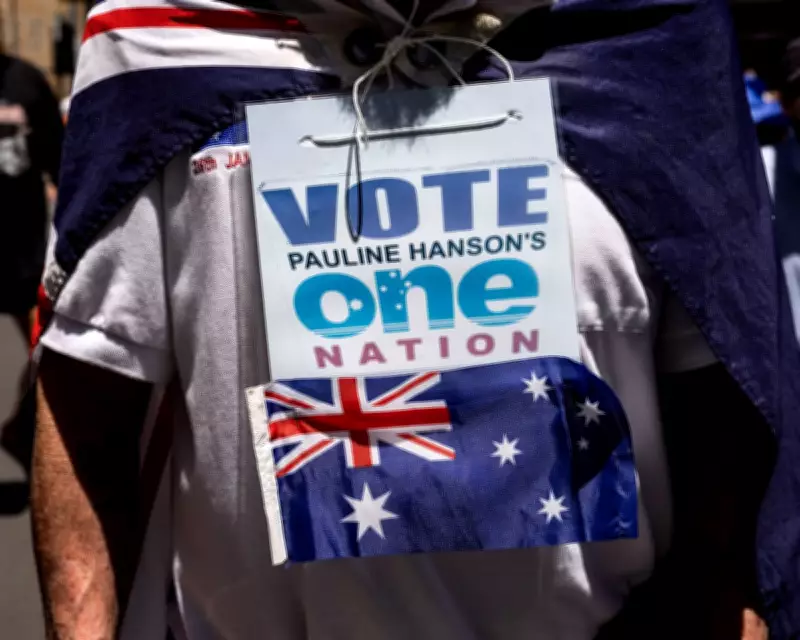
One Nation's Popularity Climbs Amidst Growing Controversies
A recent Guardian Essential poll has uncovered a significant trend in Australian politics, showing that more than half of Australians are open to voting for the rightwing populist party One Nation at the next federal election. This surge in support persists despite mounting controversies surrounding the party, including leader Pauline Hanson's inflammatory comments about Muslims and her provocative actions in the Senate.
Polling Data Reveals Widespread Openness to One Nation
The poll, conducted last week with 1,002 respondents, indicates that 58% of Australians would either definitely vote for One Nation or are open to doing so in the upcoming election, due by 2028. Specifically, 25% of all respondents stated they would definitely back the party, while 33% expressed openness to it. Only 28% ruled out voting for One Nation entirely, with 14% remaining undecided.
One Nation's primary vote remains steady at 22%, unchanged from previous polls, while Labor's primary vote stands at 30% and the Coalition's at 26%. The Greens hold 11%, with independent or other groups at 7% and 4% undecided.

Cross-Party Appeal and Major Party Concerns
The poll highlights alarming trends for both major parties. Among Coalition voters, 17% said they would definitely vote for One Nation next time, with a striking 51% open to the idea. Similarly, among Labor voters, 12% would definitely support One Nation, and 33% are open to it. This cross-party appeal has raised concerns within the government and opposition about the growing influence of rightwing populism.
Peter Lewis, executive director of Essential Media, emphasized that traditional strategies of isolating One Nation are no longer viable. "With populists gaining traction around the globe, rather than cancelling her we need to understand what is driving her surging popularity," he stated.
Angus Taylor's Leadership Impact and Policy Context
The polling period coincided with Angus Taylor's first full week as Liberal leader, following his ousting of former opposition leader Sussan Ley. However, his appointment has done little to boost the Coalition's electoral fortunes. When asked about Taylor's influence, 26% of respondents said they would be more likely to vote Liberal, while 19% were less likely, and 14% were unsure.
One Nation's rise occurs despite a lack of detailed policy proposals, including vague plans to deport immigrants, reduce visas, and abolish key federal agencies. Prime Minister Anthony Albanese commented that the increase in support reflects "people expressing frustration with the system they think isn't working for them." He contrasted this with Labor's focus on cost-of-living support, noting One Nation's opposition to such measures.
Historical Context and Future Implications
One Nation's primary vote has surged from 6.4% in the May 2025 election to nearly a quarter in recent polls, worrying major parties. Former federal Labor president Wayne Swan has warned of the potential for a drop in Labor's primary vote below 30%, akin to the rise of Nigel Farage's Reform UK in Britain. He urged Labor to better engage with voters, particularly lower-income and lower-educated Australians, by focusing on basic services like housing, health, and tax.
As controversies continue, including Hanson's refusal to apologise for comments about Muslims and scrutiny over her relationship with billionaire Gina Rinehart, the Essential poll suggests that One Nation's appeal is resilient. This trend underscores a broader shift in Australian politics, where populist movements are gaining ground despite ethical and policy challenges.






