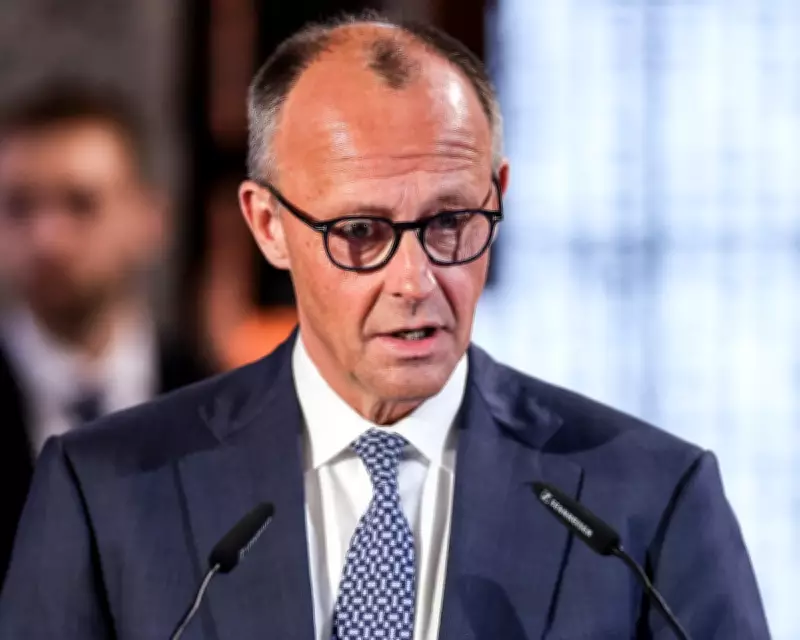
Friedrich Merz, the German chancellor, said on Thursday that Russia's heavy bombardment of Ukraine's capital, Kyiv, demonstrated Moscow was 'banking on escalation rather than negotiation,' contradicting Vladimir Putin's claims that the war is nearing an end.
Massive Russian Attacks on Kyiv
Kyiv bore the brunt of almost continuous heavy attacks on Ukraine, according to Peter Beaumont. Emergency services reported at least 16 people killed in the capital, including two children. Mayor Vitali Klitschko declared Friday a day of mourning. Ukrainian President Volodymyr Zelenskyy stated that Russia had launched 1,567 drones since the start of Wednesday. At least 22 civilians were killed over Wednesday and Thursday, officials said.
Putin's Claims Contradicted by Actions
Putin said on Saturday that the war was 'coming to an end,' but Zelenskyy countered: 'These are definitely not the actions of those who believe the war is coming to an end.' Merz added: 'Kyiv and its partners are ready for negotiations aimed at a just peace. Russia, for its part, is continuing the war.' While Ukraine and Europe 'want to help end this terrible war as quickly as possible,' the Russian attacks 'speak a different language' to Putin's suggestions.

Rejection of Mediation Offer
In a pointed rejection of Putin's suggestion that former German chancellor Gerhard Schröder could mediate between Russia and Europe, Merz declared: 'We Europeans decide for ourselves who speaks for us. No one else.'
Aftermath and Wider Impact
More than 1,500 rescue workers were deployed across Ukraine, including nearly 600 in Kyiv. Zelenskyy said 180 facilities had been damaged, including over 50 residential buildings. A UN vehicle came under fire from drones during a humanitarian mission in Kherson city. In Kharkiv, 28 people, including three children, were wounded, and civilian infrastructure was targeted. Ukraine's energy ministry reported electricity disruptions in 11 regions. Strikes also targeted port infrastructure in the southern Odesa region and railways.
Latvian Government Collapse
Latvia's prime minister resigned after her government collapsed over Ukrainian drones straying into Latvian territory from Russia. Evika Siliņa lost her governing coalition majority after forcing out her defence minister, Andris Sprūds, who resigned after Siliņa said the defence sector had 'failed to fulfil its promise of safe skies over our country.' MPs from Sprūds's party quit the coalition, collapsing the government. Ukraine says the drones, intended for Russian targets, are driven over the border by Russian electronic warfare.
Nuclear Safety Concerns
The UN nuclear watchdog warned of 'intensified' military activities near several Ukrainian nuclear sites, posing significant safety risks. The IAEA named the Khmelnitsky, Rivne and South Ukraine operational nuclear plants and the Chornobyl disaster site. There had been 'a major increase in drone activity with more than 160 UAVs recorded flying in the vicinity of the sites,' the IAEA said. Director General Rafael Grossi expressed deep concern and urged 'all parties to exercise maximum restraint.'
Russian Border Region Attacks
Ukrainian drone attacks killed one person and injured three on Thursday in Russia's Belgorod border region, a frequent target of Ukrainian strikes aimed at military sites. A drone hit a private house in the town of Graivoron, killing a man and injuring another. In a second incident, a drone detonated in a village near the border, injuring two people. The governor of Belgorod region was one of two regional officials to leave their posts on Wednesday. Putin appointed Alexander Shuvaev, a highly decorated veteran, as acting governor.
Corruption Case in Ukraine
Ukraine's anti-corruption court ordered the arrest of Andriy Yermak, a close ally of Zelenskyy and former head of his administration, on money-laundering charges. The court set bail at 140 million hryvnias (US$3.19m), allowing Yermak, who has denied the allegations, to be released pending a final ruling.