

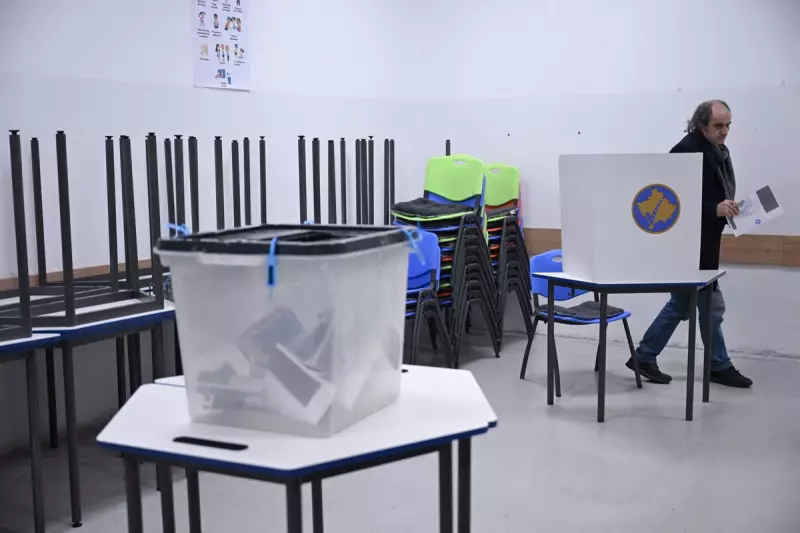
Kosovo Election Crisis Deepens with Mass Arrests Over Vote Tampering
Kosovo authorities have detained 109 individuals following serious allegations of vote manipulation that have now triggered a full recount of last month's early parliamentary election. The arrests, announced on Friday, alongside what is expected to be a weeks-long recount process, have significantly intensified concerns that the Balkan nation's year-long political crisis will persist and potentially worsen.
Prosecutors Detail Extensive Fraud Allegations
Prosecutors in the southern town of Prizren have confirmed that the suspects face a range of serious charges including falsifying election results, exerting pressure on voters, issuing threats, and engaging in bribery. Chief local Prosecutor Petrit Kryeziu revealed the staggering scale of the alleged fraud, stating it affects 68,017 ballots in Prizren municipality alone, representing a substantial portion of the electoral process in that region.
The December election saw a 44 per cent turnout from Kosovo's 1.9 million eligible voters, with authorities not ruling out further detentions as investigations continue. State election authorities had previously ordered a complete recount of the 28 December vote due to widespread irregularities reported across multiple constituencies.

Political Implications and Historical Context
Despite the extensive nature of the alleged manipulation, officials do not expect the overall election outcome to change dramatically, as the fraud is believed to relate primarily to individual candidates within specific parties rather than wholesale result alteration. Prime Minister Albin Kurti's Vetevendosje, or Self-Determination, party swept the vote in December, winning approximately 51 per cent of the ballots according to initial counts.
This development occurs against a backdrop of persistent political instability. The same party previously failed to form a government despite also winning the most votes in an election in February 2025, which led to a months-long political deadlock and ultimately necessitated the early election held in December.
Consequences for Governance and International Relations
There are growing fears that the ballot recount will significantly delay the formation of the new parliament and government, thus prolonging the political crisis that has gripped the nation. Kosovo already finds itself without a budget for this year, creating immediate governance challenges. Furthermore, if lawmakers miss an early March deadline to elect a new president, constitutional provisions would mandate another snap election, creating a potentially endless cycle of political uncertainty.
Kosovo, which declared independence from Serbia in 2008 following the 1998-99 war, maintains one of the poorest economies in Europe. The nation represents one of the six Western Balkan countries actively striving to eventually join the European Union, making political stability particularly crucial for its international aspirations and economic development.
The current situation highlights the fragile nature of democratic processes in the region and raises important questions about electoral integrity, with international observers likely to monitor developments closely in the coming weeks as the recount proceeds and legal proceedings against those arrested begin.






