

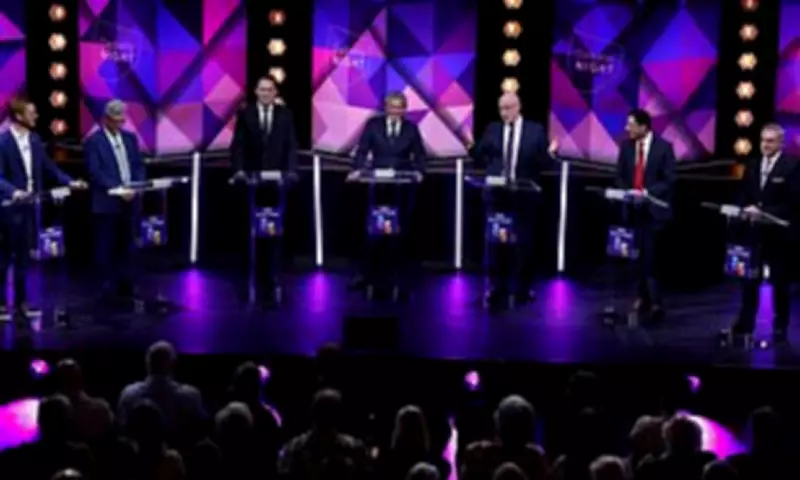
The Holyrood 2026 election is all over bar the counting, and what a crashing bore it was, a personality contest in search of a personality. After 19 years of SNP government, and with the Nationalists forecast for another five, it was difficult for anyone to get excited about what seemed to be a foregone conclusion.
A Campaign of Thin Gruel
The parties could at least have put in some effort, but each ladled up the thinnest of gruel to the electorate, much of it the same old slop they pushed in the last parliament. Where there were any bold policies, they were either uncosted, such as a food prices cap, or harebrained, like abolishing prisons. No wonder the voters were unenthused about their choices when most of those choices led back to the same clapped out political establishment and moribund remedies.
Lacklustre Leadership
Lacklustre leadership is the bane of Scottish politics, and the election drew attention to the inadequacies of the party bosses. John Swinney has never been the most colourful creature at Holyrood, but even the cut and thrust of televised debates were unable to draw out anything resembling a character. His performances were so soporific they should have come with a warning to avoid operating heavy machinery. Say what you like about Nicola Sturgeon, but at least she had a bit of oomph about her. Swinney has no personal vote. He was simply in the right place, at the right time, and wearing the right colour of rosette.

Anas Sarwar’s Missed Opportunity
This should have been Anas Sarwar’s election to lose, and he seemed to put his all into doing so. Openly at odds with Keir Starmer while assuring voters Labour had their best interests at heart, Sarwar struggled to establish himself as a potential first minister. Not only that, but he was caught out badmouthing Reform in public while in private he was accused of scheming for Reform’s support to make himself first minister.
Reform’s Gaffes
Reform’s man in Scotland, Malcolm Offord, blundered his way through a series of self-inflicted gaffes, running the gamut from his dislike for Catholic schools to his fondness for obscene after-dinner jokes about a widower consuming the remains of his dead loved one. Offord is a gifted entrepreneur, no doubt about it, but as the figurehead of a political party he leaves a lot to be desired. His one contribution of note was volunteering the extent of his wealth during a TV debate. In describing his finances and the vast sums of revenue he had paid in tax, Offord pressed Ross Greer to say whether he wanted more or fewer self-made men like him.
Greens’ Anti-Prosperity Prejudice
When the Scottish Greens’ co-leader snidely snapped back that he wanted fewer Offords, it was a mask-off moment. Here was the Greens’ chippy anti-prosperity prejudice made flesh. For all that he poses as an insurgent against elite politics and the status quo, the Green co-leader was only too happy to indulge in the same headline-grabbing photo ops as his rivals. Democracy is a nice idea in theory, but the sight of Ross Greer in a wetsuit is enough to make anyone long for a starched-uniform military dictatorship.
Lib Dems’ Tone Policing
As for Lib Dem leader Alex Cole-Hamilton, his whole purpose in the campaign seemed to be as chief superintendent of the tone police, shaking his head forlornly as he scolded opponents with a sigh of, ‘We deserve better than this.’ He wasn’t wrong in his assessment of the party leaders, only in his presumption that he belonged to some higher grade of politician.
A Dearth of Ideas
In fact, mediocrity proved to unite the party leaders almost as much as dullness. These people couldn’t set the heather alight with a flame thrower and a tanker of kerosene. They offered little in the way of personality but even less in the way of policy. Anyone hoping to hear a big idea, something groundbreaking or transformative, was sorely disappointed. There was no end of populist, vote-buying giveaways, but sober analysis of Scotland’s fiscal predicament and credible correctives were in short supply.

Reform’s Reluctance to Reform
Even Reform showed little enthusiasm for, well, reform. Its big idea for fixing the NHS was giving doctors a tax cut, all the while Offord disavowed any suggestion that the service might need a root-and-branch overhaul. This is a failing institution that every party, from the Left all the way to the Right, will continue to allow to fail because anything else would involve a bit of leadership and political courage.
Denial of Fiscal Reality
An outside observer could have been forgiven for assuming the Scottish exchequer is awash with revenue, such was the competition to make ever-costlier spending pledges. There was scarcely a hint of the Scottish Government’s actual financial situation. This election was brought to you in association with the number five billion and the letters D-E-N-I-A-L. A £5 billion black hole in the national budget and party leaders were too busy bribing us with our own money to outline a credible plan for balancing the books.
An Unserious Election
Yes, this was a dull election and, true, it was one devoid of policy, but worse than any of that, it was an acutely unserious election. Big, structural challenges were met by small men with small ambitions. The gravity of the moment, with global instability driving up the cost of living, was not reflected in the tenor or platform of any party. On the same day as the Holyrood contest, English voters elected their local councils, but if asked to judge which was the more parochial, I wouldn’t point to the elections down south.
Hope for the Future
When the votes are counted, we can only hope the parliament which emerges will look back on this election with sufficient embarrassment to rise to the occasion from now on. The next five years will be pivotal for Scotland’s prosperity and the efficiency and effectiveness of its public services. They call for leadership, character and courage, not the banal assemblage of lightweights we are likely to get.





