
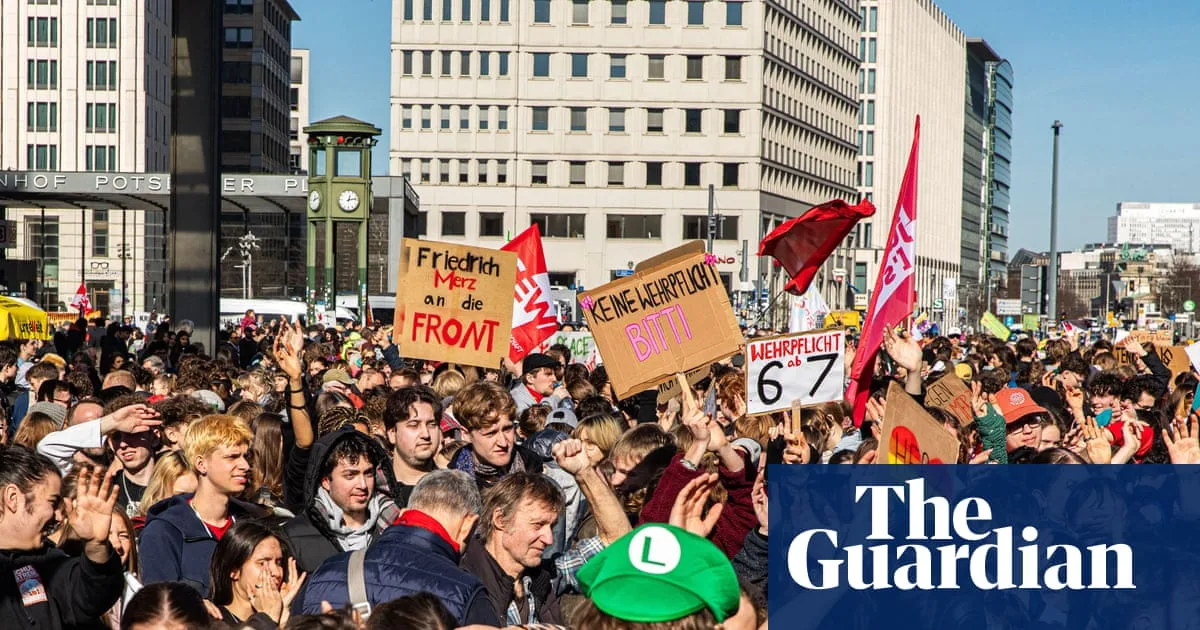
More than 50,000 pupils across Germany are expected to boycott school on Friday in a nationwide protest against the government's rearmament policy, which organisers say is turning young people into 'cannon fodder'. The strike, the third in five months, coincides with the anniversary of VE Day, marking the end of World War II in Europe.
Organisers of the Schulstreik gegen Wehrpflicht (School Strike Against Conscription) movement say they anticipate participation at least as high as the estimated 50,000 who attended each of the first two protests. Despite threats of penalties and expulsion from teachers' associations and education ministries, students plan to take to the streets to oppose the Military Service Modernisation Act.
The legislation, passed in December, introduces mandatory questionnaires for all 18-year-olds to assess their willingness and suitability for military service, with compulsory medical tests from next year. It also includes a clause requiring men aged 17 to 45 to obtain permission from the armed forces for travel abroad exceeding three months. While not reintroducing conscription, Defence Minister Boris Pistorius has indicated it remains an option if recruitment targets are not met.
Hannes Kramer, the movement's main spokesperson, said the protest reflects unrest in homes and classrooms across Germany. 'The government and industry are preparing for war and we, the young, are supposed to become the cannon fodder. Neither have we even been consulted,' he told the Guardian. The German government plans to spend €779bn on defence by 2030, roughly doubling previous spending, to meet Nato targets of 3.5% of GDP.
Chancellor Friedrich Merz has framed the rearmament as essential for Germany's and Europe's long-term security, stating that 'if you want peace, prepare for war'. However, Kramer warned that the rhetoric of German ambitions for global influence through military might is dangerous. 'We are very afraid that we have not learned the lessons from our history,' he said, noting that the date of the protest, 8 May, marks the defeat of Nazi Germany.




