

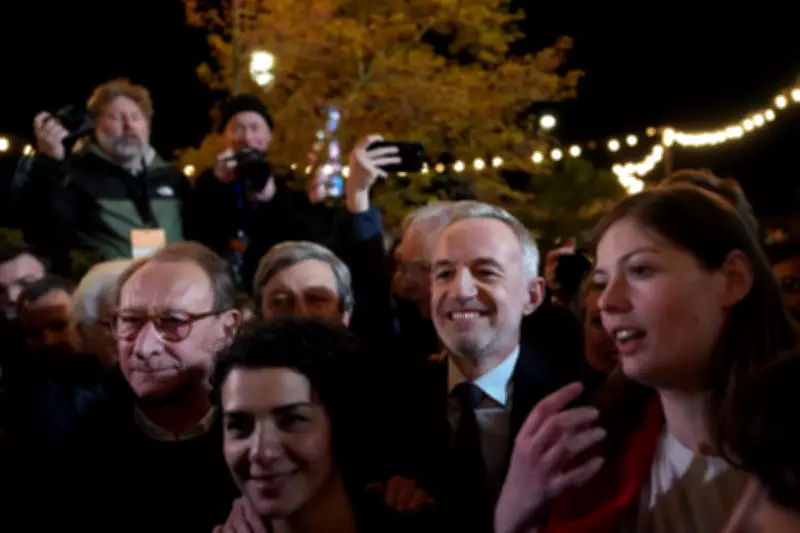
French Socialists Strengthen Urban Dominance in Municipal Elections
France's municipal elections have concluded with significant outcomes for traditional political factions, as the Socialist Party reinforced its control over several major urban centres. The elections, which serve as a pivotal indicator of political sentiment ahead of the 2027 presidential contest, witnessed a voter turnout of just over 48 per cent by 5pm local time, reflecting moderate public engagement.
Socialist Victories in Key Cities
In a notable triumph, Socialist candidate Emmanuel Grégoire secured the mayoral position in Paris, succeeding his party colleague Anne Hidalgo. This victory ensures the continuation of Socialist leadership in the French capital, bolstering the party's influence in one of the nation's most prominent cities. The win underscores the enduring appeal of traditional left-wing politics in urban areas, despite broader political shifts across the country.
Far-Right's Mixed Results
While the far-right achieved a significant victory in Nice, with Eric Ciotti, an ally of Marine Le Pen's National Rally, taking control of the city, this success did not translate into a wider breakthrough. The far-right faced setbacks in key target municipalities, including Marseille, Nîmes, and Toulon, where they were unable to secure wins. This outcome suggests that while the far-right maintains a stronghold in certain regions, its expansion into other major urban areas remains limited.

Implications for Future Political Landscape
The results of these municipal elections are widely viewed as a crucial test of the balance of power in France. The Socialist Party's ability to tighten its grip on major cities like Paris indicates resilience and strategic positioning, potentially influencing voter perceptions leading up to the 2027 presidential race. Conversely, the far-right's struggle to achieve broader gains highlights challenges in expanding its urban support base, which could impact its national campaign strategies.
Overall, the elections have reinforced the dominance of traditional parties in key urban centres, while also revealing the persistent but contained influence of the far-right in specific locales. As France looks ahead to future political contests, these municipal outcomes will likely shape party tactics and public discourse in the coming years.






