

French Local Elections Enter Decisive Second Round with Key Cities at Stake
Voting has commenced across France in the second round of local elections, widely viewed as a critical indicator for the upcoming 2027 presidential race. Major urban centres, including Paris and Marseille, remain fiercely contested, with both the radical left and far right aiming to secure significant gains. These elections involve over 35,000 communes, with the first round held last Sunday determining councils in many areas, but the second round will be decisive in tighter races, particularly in larger cities.
Electoral Alliances Shape Outcomes in Paris and Beyond
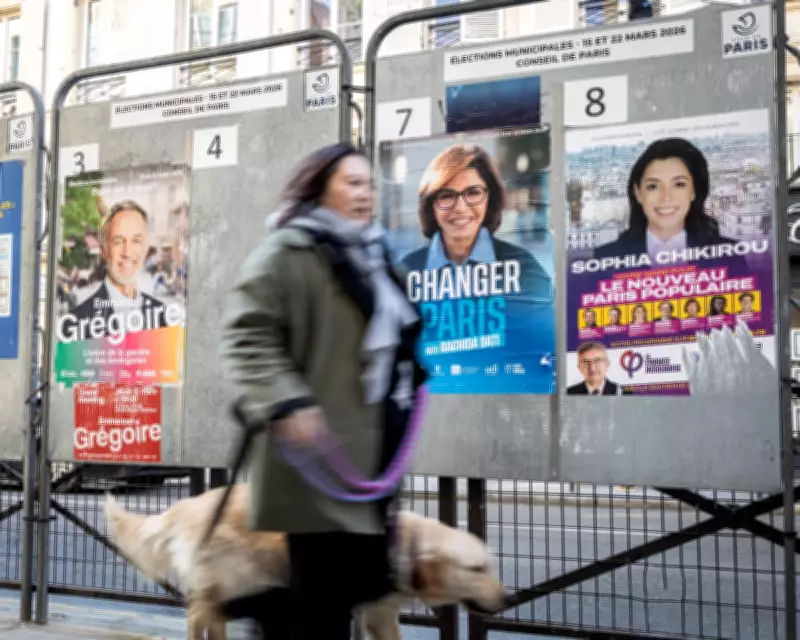
In the French capital, the mayoral race is intensely competitive. The centre-left candidate Emmanuel Grégoire, representing the Socialist Party (PS), led the first round with 38% of the vote, ahead of conservative contender Rachida Dati at 25.5%. Three other candidates qualified for the runoff, but strategic shifts have altered the landscape. Moderate rightwinger Pierre-Yves Bournazel has merged his list with Dati's, while far-right candidate Sarah Knafo has withdrawn, potentially consolidating the right-wing vote in Paris.
On the left, Grégoire has declined to form an alliance with Sophia Chikirou of the radical-left France Unbowed (LFI), a party many in the mainstream left avoid due to allegations of extremism, antisemitism, and violence. This sets up a three-way contest that could either reinforce the mainstream left's stance against LFI cooperation or, if Grégoire loses, bolster the right's argument for broader conservative alliances.

Marseille's Unique Dynamics and National Implications
The situation in Marseille, France's second-largest city, presents a different scenario. Far-right National Rally (RN) candidate Franck Allisio finished just one percentage point behind outgoing centre-left mayor Benoît Payan in the first round. Payan, like Grégoire, ruled out an alliance with LFI, but its candidate Sébastien Delogu withdrew to prevent an RN victory. A conservative candidate remains in the race despite RN calls for her to step down, adding complexity to the outcome.
Analysts emphasize that while local issues often influence these elections, they carry substantial lessons for national politics. Frédéric Dabi of the polling institute Ifop noted, "They create momentum, provide a boost and establish a narrative." Beyond gauging voter sentiment ahead of the 2027 presidential election—where the far-right RN sees a prime opportunity with Emmanuel Macron stepping down—these local contests may preview tactical alliances at the national level.
Broader Electoral Landscape and Key Races to Watch
The RN, currently the largest party in the French parliament, also has high aspirations in cities like Toulon and Nice. In Nice, Éric Ciotti, running as a joint candidate for his breakaway conservative party and the RN, is the frontrunner. Bruno Retailleau, leader of the main conservative party Les Républicains (LR), has refused to support the incumbent centre-right mayor against Ciotti, potentially paving the way for a conservative and far-right alliance in future elections.
In other regions, the radical left is perceived as the primary opposition. For instance, in Strasbourg, the PS has merged its list with Macron's centrists to counter an LFI threat, while in Lille, Socialists have united with the Greens to block the radical-left party. Conversely, local alliances between the mainstream and radical left could yield successes in cities such as Avignon, Brest, Nantes, and Toulouse, with LFI potentially winning Roubaix independently.
Another significant race is in Le Havre, where mayor and former prime minister Édouard Philippe is well-positioned for re-election. A victory could position him as a leading presidential contender against RN figures like Jordan Bardella or Marine Le Pen.
Polling stations opened at 8am local time and will close in major cities at 8pm, with results anticipated throughout the evening. These outcomes will not only determine local leadership but also shape the political narrative as France approaches a pivotal presidential election.






