

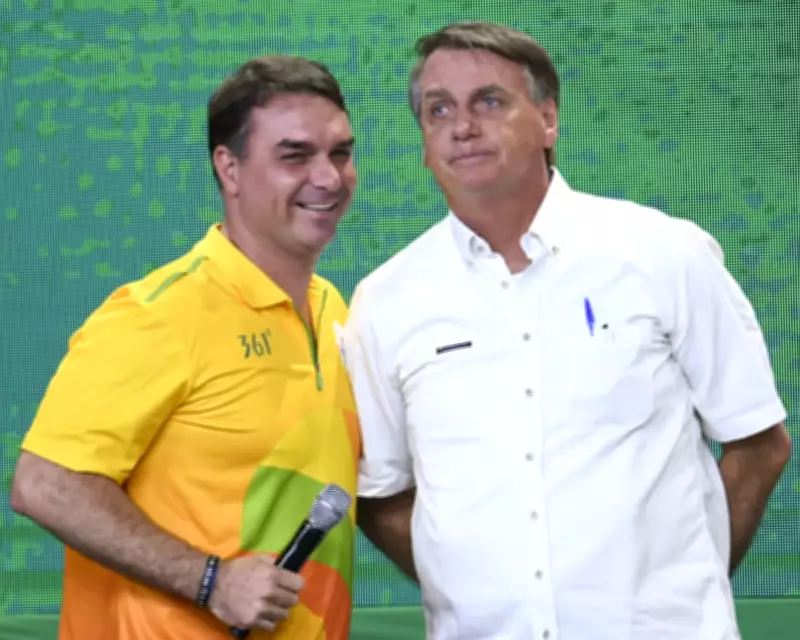
Flávio Bolsonaro's Calculated Move to Distance Himself from a Controversial Legacy
In a striking political maneuver, Flávio Bolsonaro, the eldest son of disgraced former Brazilian president Jair Bolsonaro, appears to be strategically downplaying his famous surname as he campaigns for the presidency. This tactic aims to shake off the heavy baggage associated with the Bolsonaro name, which many Brazilians link to anti-democratic actions and a catastrophic COVID-19 response that resulted in over 800,000 deaths.
The 'Flávio' Only Campaign: A Rebranding Effort
At a recent conservative conference in Grapevine, Texas, the 44-year-old senator was introduced and cheered solely by his first name, "Flávio," as he declared his presidential run to combat what he termed "radical environmental and woke" agendas. Political analysts interpret this as a deliberate strategy to reposition him as a moderate figure, distinct from his father's hard-right image. Campaign materials, including a jingle played at rallies, refer to him simply as "Zero Um" (Number One) and Flávio, omitting the Bolsonaro surname entirely.
This approach has sparked controversy, with leftwing opponents accusing it of being a cynical attempt to camouflage his hard-right roots. Many Brazilian newspapers have adopted the same style, using "Flávio" in headlines, which critics argue is not merely for brevity but part of a larger ploy to make him more electable.

The Weight of the Bolsonaro Name
Despite the rebranding, the Bolsonaro surname remains a double-edged sword. Jair Bolsonaro secured 58 million votes in the 2022 election, losing to Luiz Inácio Lula da Silva by a narrow margin of only 2 million votes. Polls indicate the 2026 contest could be similarly tight, suggesting the name still holds significant sway among conservatives. However, for many Brazilians, it evokes memories of misogyny, a failed coup attempt, and a bungled pandemic response that delayed vaccine purchases and exacerbated suffering.
Fabiana Moraes, a columnist for Intercept Brasil, notes that the strategy targets voters who are neither progressives nor diehard Bolsonaro fans, aiming to attract a broader base by distancing Flávio from his father's most polarizing actions.
Pushback from Political Rivals
Supporters of President Lula have quickly countered this rebranding effort. Congresswoman Luizianne Lins emphasized on social media that "It's Flávio Bolsonaro, not just Flávio. He must carry the surname of the dirtiest family in Brazil." Similarly, Edinho Silva, president of Lula's Workers' party, urged voters to recall the challenges Brazil faced under Bolsonaro family governance, particularly during the pandemic.
Moraes also points out that the reinvention may serve to obscure Flávio Bolsonaro's own controversies, including longstanding corruption allegations and documented ties to Rio de Janeiro's paramilitary underworld, such as his association with the late hitman Adriano Magalhães da Nóbrega.
Challenges to the Rebranding
Flávio Bolsonaro's recent speech at the Conservative Political Action Conference in Texas, where he questioned Brazil's voting system and called for international pressure to ensure a "free and fair" election, has undermined his moderate image. Critics, including the conservative Estado de São Paulo newspaper, have drawn parallels to his father's anti-democratic rhetoric, noting that "Bolsonarista coup-mongering seems to be genetic."
As the October election approaches, with six months remaining, the effectiveness of this surname-dropping strategy remains uncertain. It highlights a pivotal moment in Brazilian politics, where a candidate seeks to balance family legacy with electoral viability in a deeply divided nation.






