
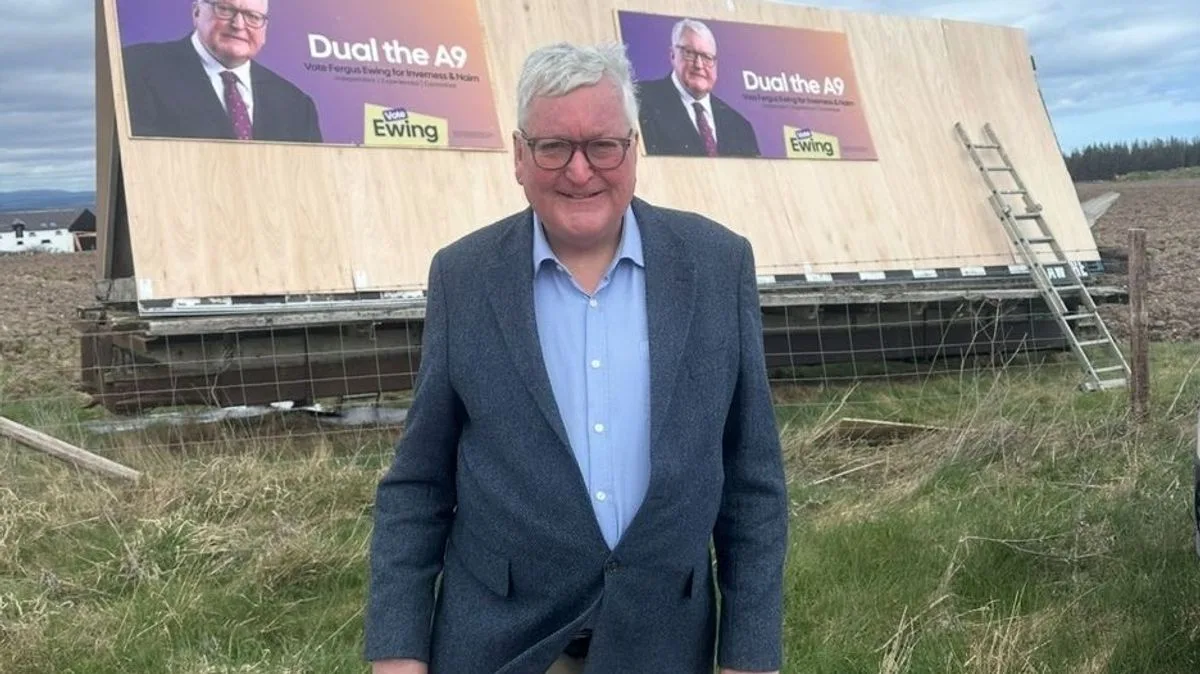
Fergus Ewing, the veteran independent candidate and son of SNP legend Winnie Ewing, has lost the Inverness and Nairn seat he held for nearly three decades. The 68-year-old stood as an independent after leaving the SNP last year, accusing the party of “letting Scotland’s people down”.
The SNP’s Emma Roddick won the seat with 11,162 votes, while Ewing finished third with 7,840 votes, behind Liberal Democrat Neil Alexander who polled 10,735. The result marks the end of a political dynasty that began when Winnie Ewing represented the area in the 1960s.
Ewing had centred his campaign on dualling the A9 and A96 roads. Speaking after the defeat, he admitted he thought he had “a sporting chance” of retaining the constituency. “I felt that despite having served for 27 years, there was still petrol left in the tank,” he told the Press and Journal.
Despite the loss, Ewing said he had “no regrets” about leaving the SNP, adding that the party had “moved away from the traditional position occupied in Scotland”. He congratulated Emma Roddick and described serving the area as “the greatest privilege of my life”.
Ewing hinted his political career may continue. “I’m not quite ready for the bath chair yet,” he said. “There’s still some life in the old dog, and we will see what path that takes after I have some time to dwell over it.”




