
Ben Habib’s decision to shelve the activities of his hard-right microparty, Advance UK, is a small but interesting development in the cause of “unite the right”. This seeks to bring together most of that wing of politics, stretching from centre-right figures such as Mel Stride and David Gauke, through Kemi Badenoch, Nigel Farage and Robert Jenrick and on to the likes of Stephen Yaxley-Lennon, commonly known as Tommy Robinson, and Elon Musk. Could it happen?
Another hard-right splinter group that came out of Reform UK following a sharp difference of opinion with Farage. Habib was once a Reform parliamentary candidate and even the party’s deputy leader until Farage sacked him. He then set up his own party, which met with limited electoral success. So now he has thrown in his lot with another splinter group, Rupert Lowe’s Restore Britain. Lowe, you may recall, was elected Reform UK MP for Great Yarmouth at the last election; after falling out with colleagues, including Farage, Lowe left.
Robinson runs Unite the Kingdom, which organises boisterous rallies and demonstrations but is not a political party. Controversial former actor Laurence Fox also has a party, Reclaim, but this has been fairly inactive lately. It’s a bit esoteric, not to say distasteful, to contemplate but immigration and “ethno-nationalism” (ie race) versus “civic nationalism” tend to be obsessions, with deportation being the current trendy cause. Fiscal responsibility and state ownership are also pressure points.
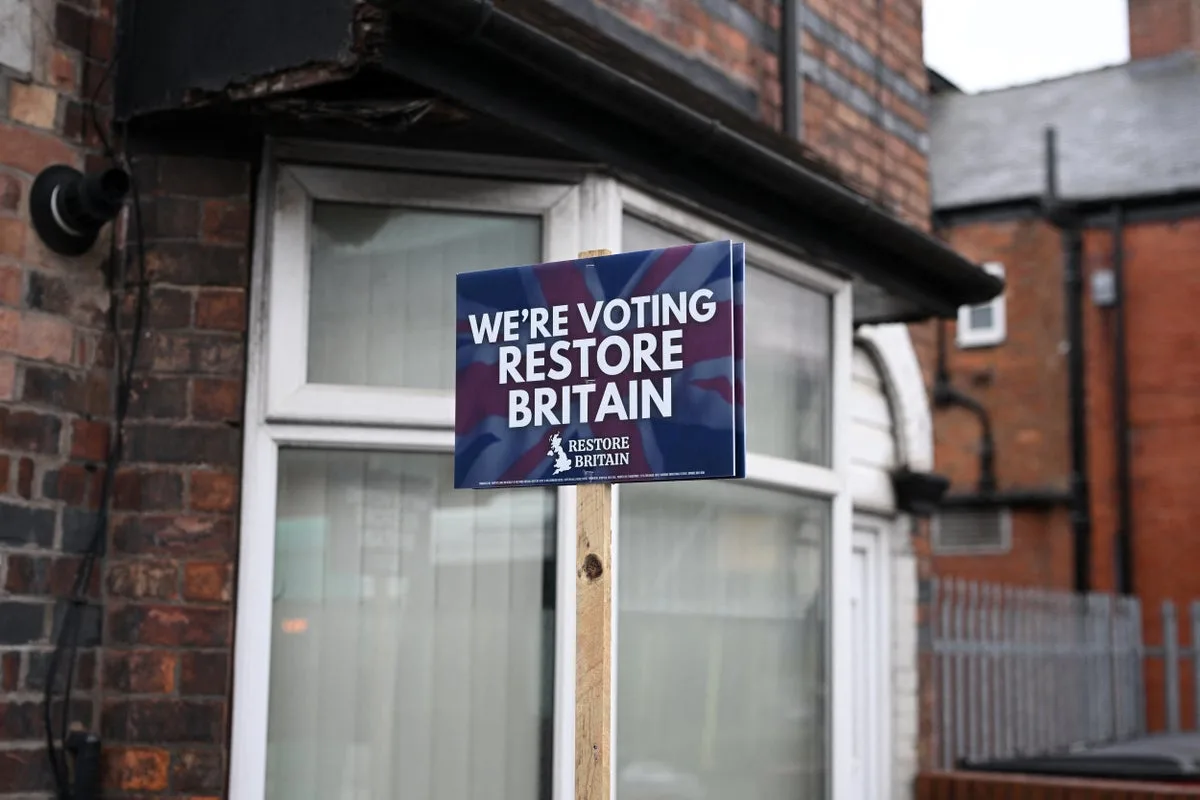
We shall soon see. Restore Britain has been picking up support, largely via its social media presence and the explicit support for Lowe offered by Elon Musk; it claims to have 96,000 members. Its actual electoral strength is disputed, with support ranging from 3 per cent to 10 per cent in opinion polls depending on methodology (such as whether the name of a party is mentioned in a question). The recent local elections confirmed Restore as the dominant player in Great Yarmouth; Lowe has high hopes of breaking out from his stronghold, thus the party is fighting the Makerfield by-election, with Rebecca Shepherd as candidate. Nobody much expects her to win, but in a tight contest between Labour’s Andy Burnham and Reform UK’s Robert Kenyon, the Restore Britain vote might be the difference between success and failure for Farage’s party.
It’s a debate. Jacob Rees-Mogg (still a Conservative) and, more quietly, Jenrick (Tory defector to Reform) have spoken of the desirability of uniting all “conservatives”, but the obstacles are obvious. Many on the more liberal wing of the Tory party, and its current leader, are bitterly opposed to any such move, insisting their beliefs, values and indeed electoral interests are incompatible with Farage’s party – a stance illustrated most recently by their different responses to the murder of Henry Nowak. Others put their differences in a less harsh perspective. Many would find the relatively autocratic machine dominated by Farage to be an easy place to thrive.
On the Reform side, there also seems to be a divide between those such as Zia Yusuf and Arron Banks, who vow to destroy the Conservatives, viewing them as virtual traitors to the country, and others, such as Jenrick, who are far more open to deals. It will be interesting to see how the Conservatives and Reform work together in local council chambers where the numbers don’t add up, and they’re forced to cooperate. Also of some significance is whether Farage maintains his declared ban on prominent Tories defecting to Reform; this supposedly came into force on 7 May. The Makerfield by-election result will be a good test of Restore’s potential and its ability to withstand a tactical squeeze from Reform UK.




