
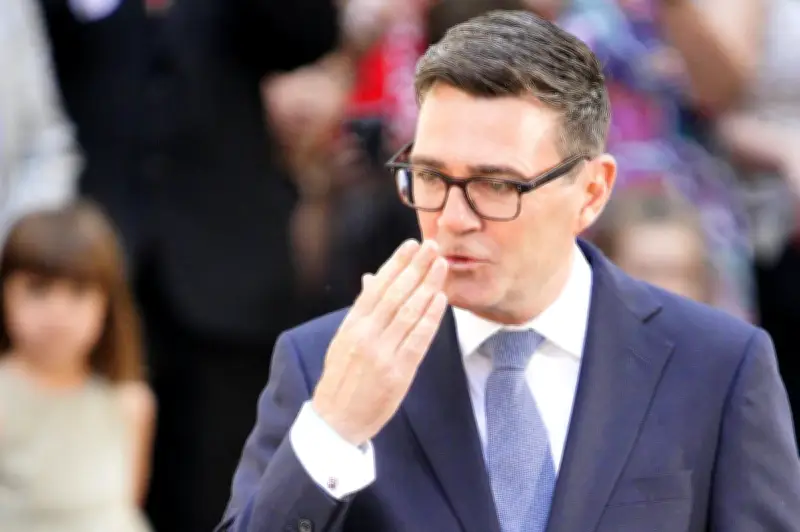
Burnham Takes Office with Major Cabinet Reshuffle
Andy Burnham became Prime Minister on Monday, immediately enacting the biggest change to British politics in 40 years by appointing John Healey as Chancellor and removing key allies of his predecessor, Sir Keir Starmer. Speaking outside No 10, Burnham promised a "new political model and a new economic model" for Britain, vowing to provide early "breathing space" for households struggling with the cost of living, end rough sleeping, and reindustrialise the nation.
Healey, the former defence secretary who resigned from Starmer's government over military funding disputes, was the first appointment announced. He replaces Rachel Reeves, who clashed with Healey over defence investment and left government after declining another role. Ed Miliband, widely tipped for chancellor, was instead named Foreign Secretary. Shabana Mahmood remains Home Secretary, while Louise Haigh, a key Burnham ally, becomes First Secretary of State and Chancellor of the Duchy of Lancaster, tasked with cross-government coordination.
Starmer Loyalists Ousted in Clean Sweep
A series of major Starmer-era figures were sacked, including former deputy prime minister David Lammy, chief secretary Darren Jones, business secretary Peter Kyle, attorney general Lord Hermer, technology secretary Liz Kendall, Welsh secretary Jo Stevens, Northern Ireland secretary Hilary Benn, paymaster general Nick Thomas-Symonds, and development minister Baroness Chapman. Starmer loyalist Steve Reed, who lost his housing ministry role, told Burnham: "I hope those who did not show loyalty to Keir will now show it to you."
Burnham acknowledged the turbulence that made him the seventh prime minister since 2016, calling for "reflection and new resolution" and stressing that "Britain needs to show the world that we can regain our stability once again." He admitted to public disaffection with politics, stating: "I know people at home are fed up with politics. I hear you and I want to be honest with you – we have not been good enough, and we need to be better. We will be."
Immediate Cost-of-Living Relief Promised
Burnham pledged to set out a 10-year plan later this year but offered more immediate help for squeezed household finances. "I can do something to give people some breathing space now, some help with the cost of living, and I will set out some of those measures starting tomorrow, including how we pay for them," he said. He later told reporters he was considering rent freezes, caps on bus fares, and help with energy bills, though no final decisions have been made.
His other promises include helping more young people into work through education reform, building more council homes, and creating a more "preventative state" that invests in people's success rather than paying for failure. He said: "That is the fair and sustainable way to bring the welfare bill down, to meet our fiscal rules, and to honour our commitments on defence to our international partners."
Economic Constraints and Market Calming
Burnham's ability to act is constrained by his commitment to follow the spending and borrowing rules set out by Reeves while she was chancellor, and his promise not to hike personal taxes for workers. He said he would use "any flexibility" within existing rules but stressed: "None of this is about taking risks with the economy." The appointment of Healey, rather than the more radical Miliband, as Chancellor signals an intention to calm markets. Burnham said his approach puts "the right values and the right standards" at the heart of government, urging Britons to "pull with me" to "build a new national sense of unity."
His first call as Prime Minister was with US President Donald Trump, with Downing Street saying Burnham hoped to show him "what Manchester had to offer during a visit in the future" amid speculation that next year's G20 summit could be held in the North West. Burnham entered Downing Street after being asked by the King to form a government following Starmer's resignation. In his final speech, Starmer praised the "greatness of Britain" and said: "I go with good grace, I go with a smile, and I go proud of everything that we have achieved."




