The Rising Clout of Billionaires in American Politics
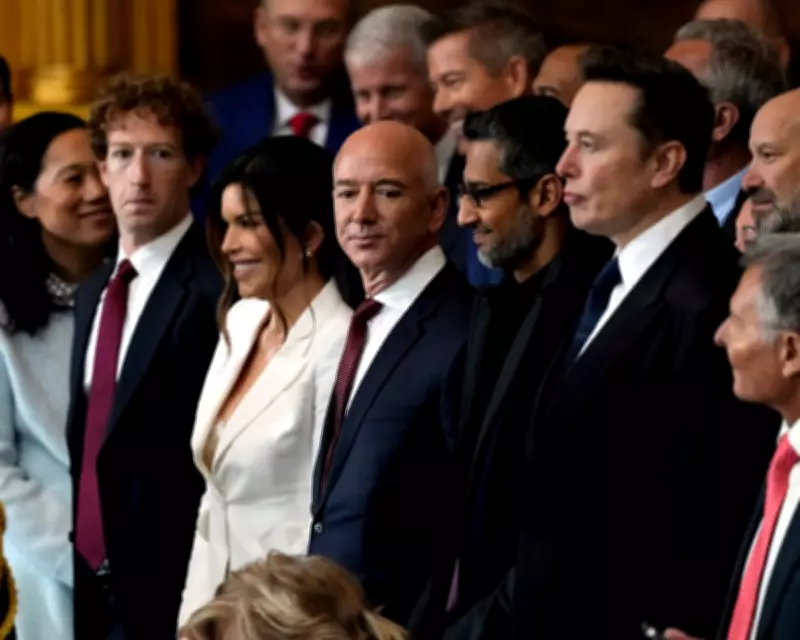
In a stark display of wealth and influence, eleven billionaires with a combined net worth of $1.35 trillion attended President Donald Trump's second inauguration or related events. This gathering underscores a broader trend in the United States, where the nation's 900-plus billionaires wield disproportionate power over elections, economic policies, and media narratives. As the country navigates what many describe as a new Gilded Age, concerns are mounting about the erosion of democratic principles and economic fairness.
Examples of Billionaire Influence
The impact of billionaires is evident across various sectors. For instance, Skydance, a company controlled by David Ellison and backed by his father Larry Ellison, the world's sixth-richest person, recently secured a $110 billion deal to acquire Warner Brothers. This move is expected to make Warner-owned CNN more favorable toward Trump, mirroring similar shifts at CBS News. Meanwhile, Mark Zuckerberg's Meta plans to spend $65 million on political campaigns this year to support candidates who oppose regulating the AI industry.
In the realm of media, figures like Rupert Murdoch and Elon Musk have pushed political discourse to the right. Musk transformed Twitter into a far-right echo chamber after purchasing it for $44 billion, while Jeff Bezos has steered the Washington Post toward a more Trump-friendly stance, including blocking an endorsement of Kamala Harris. Additionally, Musk's SpaceX and Bezos's Amazon have sought to challenge the constitutionality of the National Labor Relations Board, which oversees unionization efforts.

Political Donations and Policy Favors
Billionaire donations have played a pivotal role in shaping political outcomes. In the 2024 elections, the top six donors each contributed over $100 million, with nearly $1 billion in total donations, predominantly to Republican causes. Elon Musk led the list with more than $280 million, followed by Timothy Mellon at $197 million and Miriam Adelson at $147 million. Without these contributions, Trump might have lost to Kamala Harris, as billionaires accounted for 61% of outside spending praising Trump and 71% attacking Harris.
These donations have translated into policy favors. For example, Trump's Big Beautiful Bill included $2 trillion in tax cuts, with $750 billion reportedly benefiting the richest 1% of Americans. The law also allows businesses to write off private jet costs and increases tax-free inheritance limits for the ultra-rich. Furthermore, Trump appointed several billionaires to key positions, such as education secretary Linda McMahon and commerce secretary Howard Lutnick, after they donated over $450 million to his campaign.
Growing Inequality and Public Backlash
Inequality has worsened significantly, with the number of billionaires increasing by more than 50% since 2017. The richest 1% now owns 32% of the nation's wealth, more than ten times the share held by the bottom 50%. This concentration of wealth has fueled public discontent. According to a Harris Poll, 53% of Americans believe billionaires threaten democracy, and 71% support a wealth tax on top earners, including 64% of Republicans.
There is also growing dismay over billionaires' support for Trump, such as donations to his $250 million ballroom, and anger at tech billionaires for prioritizing AI development without addressing job displacement fears. Figures like James Talarico, a Democrat running for Senate in Texas, have vocalized this sentiment, arguing that billionaires have redesigned politics for their own profit.
Proposals to Curb Billionaire Power
To address this imbalance, several measures are being proposed. Overturning the Supreme Court's 2010 Citizens United ruling, which allowed unlimited political donations, is a key goal, though it faces significant hurdles. Alternatively, lawmakers in Montana and 11 other states are introducing legislation to limit corporate campaign donations. Congress could also pass laws requiring full disclosure of all campaign contributions to reduce dark money influence, which reached a record $1.9 billion in the 2024 elections.

Public financing laws, such as New York City's eight-to-one match for small donations, offer another avenue to amplify average citizens' voices. Additionally, support for a wealth tax is growing. Bernie Sanders and Ro Khanna have proposed a 5% annual wealth tax on billionaires, which could raise $4.4 trillion over a decade to fund healthcare, childcare, and housing. A similar initiative is being pushed in California by a healthcare union.
Building a Movement for Change
Economists like Paul Krugman warn that reducing extreme wealth concentration is essential to saving American democracy. Drawing inspiration from Franklin Roosevelt's efforts to curb "organized money" through progressive taxation and unionization, activists advocate for a broad movement involving Democrats, independents, and Republicans. The goal is to build enough momentum to enact a constitutional amendment overturning Citizens United and implement wealth taxes to break up billionaire power.
As more Americans voice their unhappiness, the push for reform gains traction. With proposals like Sanders' wealth tax shining a light on billionaire influence, the call for an economy that works for all, not just the 1%, resonates across the political spectrum. The challenge lies in overcoming billionaire resistance to ensure a fairer and more democratic future.