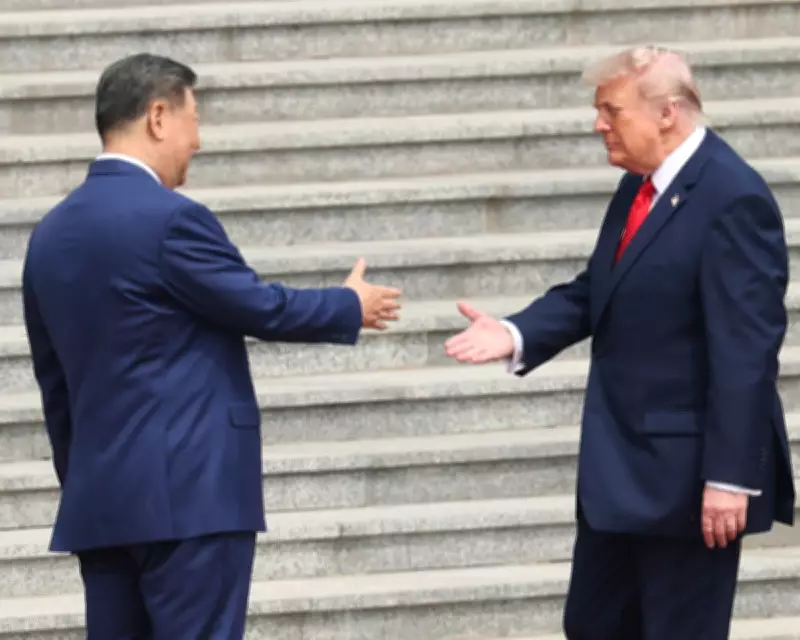
As Chinese President Xi Jinping and former US President Donald Trump prepare for a high-stakes meeting, tensions over Taiwan have reached a critical point. The talks, scheduled to take place in the coming days, are expected to address a range of issues, including trade imbalances, technology competition, and the status of Taiwan.
Taiwan at the Forefront
The status of Taiwan remains a central point of contention. China has consistently asserted its claim over the self-governing island, while the US has maintained unofficial ties and provided military support. Trump's previous administration took a hardline stance on China, but his approach to Taiwan has been unpredictable.
Experts suggest that the meeting could set the tone for future US-China relations. A potential agreement on Taiwan might involve mutual assurances: China not escalating military activities near the island, and the US reaffirming its one-China policy without explicitly endorsing Taiwan's independence.

Economic Stakes
Beyond geopolitics, economic issues are also on the agenda. The US has imposed tariffs on Chinese goods, and China has retaliated. Both leaders face domestic pressure: Trump from American manufacturers and farmers, and Xi from a slowing Chinese economy.
The meeting could lead to a temporary truce in the trade war, but long-term structural issues remain unresolved. Technology transfer, intellectual property, and market access are key sticking points.
Regional Implications
Allies in the region, including Japan, South Korea, and Australia, are closely watching the outcome. Any shift in US policy towards Taiwan could have ripple effects on security alliances and regional stability.
The meeting is a high-risk, high-reward opportunity for both leaders. A successful outcome could de-escalate tensions, but failure might lead to increased confrontation.