White House Declares Tehran in 'Weak Position' as Hormuz Standoff Intensifies
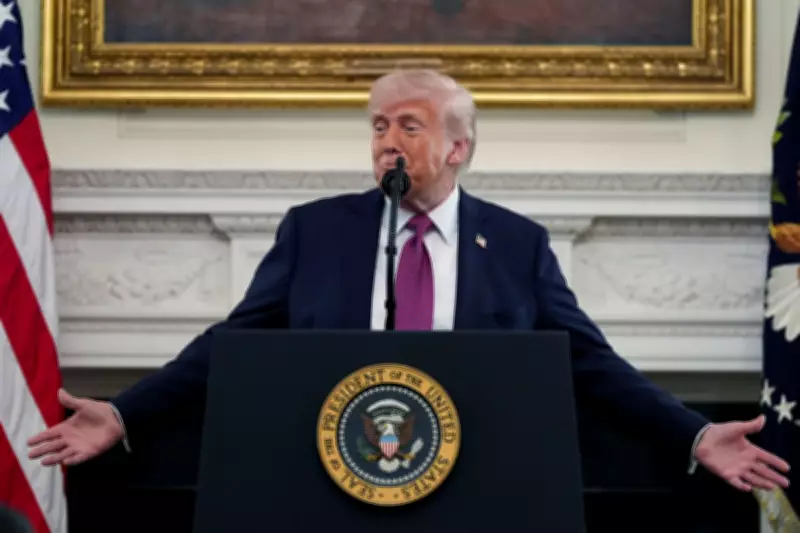
The White House has asserted that Tehran is in a "weak position" and that former US President Donald Trump "holds the cards" as Iran tightens its control over the strategic Strait of Hormuz by seizing two ships. Despite an extended ceasefire, the ongoing stand-off over this critical shipping route continues to inflict significant pain on the global economy, with energy prices soaring and costs of other goods hiked since joint US-Israeli strikes triggered the conflict in late February.
Blockade and Economic Strangulation
While Trump extended the fragile truce to allow Tehran to develop a "unified" proposal, he has maintained a naval blockade of Iran's ports, leading Iran to accuse the White House of a "flagrant breach of the ceasefire." White House press secretary Karoline Leavitt hailed the success of this blockade, stating, "We are completely strangling their economy through this blockade. They're losing 500 million dollars a day." She added that Iran's main oil export terminal is "completely full" due to the shipping bar.
Leavitt emphasized that the US maintains control and leverage over the Iranian regime, noting, "Not only have they been significantly weakened and obliterated militarily, but they are losing economically and financially every single moment that passes with this blockade." She concluded that Trump will dictate the timetable, satisfied with the naval blockade and understanding Iran's weak position.

Iran's Defiance and Diplomatic Moves
In response, Tehran has insisted the blockade must be lifted. Mohammad Baqer Qalibaf, speaker of Iran's parliament and chief negotiator, stated, "You did not achieve your goals through military aggression and you will not achieve them by bullying either. The only way is recognising the Iranian people's rights." In a show of defiance, large crowds attended a parade in Tehran where the regime displayed ballistic missiles, with banners proclaiming the strait is "Indefinitely under Iran's Control" and "Trump could not do a damn thing."
In a separate development, it was reported that a top envoy to Trump has asked FIFA to replace Iran with Italy in the upcoming World Cup, a move aimed at repairing relations between Trump and Italian Prime Minister Giorgia Meloni after his attacks on the Pope over the war.
Global Implications and Coalition Efforts
The stand-off means the Strait of Hormuz, a maritime pinchpoint, remains effectively closed, causing ongoing economic pain globally. The impasse has cast further doubt on prospects for talks aimed at securing a lasting end to hostilities. Meanwhile, military planners from a coalition of countries continued meeting in London on Thursday as part of plans for a UK and France-led defensive mission to keep the critical waterway open once the Iran war is over.
Foreign Secretary Yvette Cooper has said Britain wants to see a "comprehensive settlement" and a "full reopening" of the key shipping route without restrictions or tolls. With no new end date set for the extended ceasefire, the situation remains tense, highlighting the broader geopolitical and economic stakes involved in this protracted conflict.