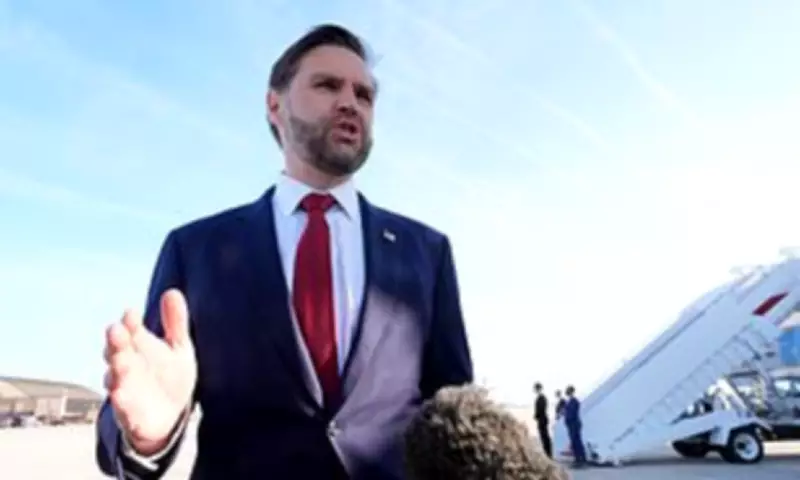
US Vice President JD Vance Accuses Iran of 'Economic Terrorism' Over Strait of Hormuz Blockade
US Vice President JD Vance has publicly accused Iran of engaging in what he termed 'economic terrorism' by obstructing maritime traffic through the critical Strait of Hormuz. In a stark warning, Vance declared that 'two can play at that game', signalling a potential escalation in the ongoing geopolitical standoff between the two nations.
Vance's Remarks Follow Tense Talks and a Fragile Truce
These comments come directly after Vance departed from talks hosted by Pakistan on Sunday, where he asserted that he had presented Tehran with the 'final and best offer' in diplomatic negotiations. Iran has countered by blaming Washington for making maximalist demands, yet its leadership has not outright dismissed recent efforts by global leaders to revive dialogue and bring both sides back to the negotiating table.
Crucially, a delicate two-week truce, agreed upon last Wednesday to allow time for establishing a lasting ceasefire, remains in effect. This is despite the initiation of a US naval blockade targeting Iranian ports at the Strait of Hormuz, a strategic waterway that Iran had effectively closed, heightening regional tensions.

Vance's Firm Stance on Fox News Interview
Speaking to Fox News on Monday, Vice President Vance elaborated on his position with forceful rhetoric. 'If the Iranians are going to try to engage in economic terrorism, we're going to abide by a simple principle that no Iranian ships are getting out either,' he stated, underscoring the US's readiness to respond in kind to Iran's actions.
Vance further emphasised that the onus is now on Iran to make the next move. 'I really think the ball is in the Iranian court, because we put a lot on the table. We actually made very clear what our red lines were,' he added, highlighting the clarity of US demands during the negotiations.
Addressing the core issue of nuclear proliferation, Vance drew a distinction between Iran's statements and verifiable actions. 'It's one thing for the Iranians to say that they're not going to have a nuclear weapon. It's another thing for us to put in place the mechanism to ensure that's not going to happen,' he remarked, pointing to the necessity of concrete safeguards over mere assurances.
The situation remains highly volatile, with the fragile truce providing a narrow window for diplomatic resolution as both nations navigate a complex web of economic pressures, military posturing, and international diplomacy.