

Fears are mounting that Donald Trump may be preparing for military intervention in Cuba as Washington intensifies its rhetoric against the island's communist government. The US president dramatically escalated tensions on Thursday, telling reporters he could be the leader who finally takes direct action against Havana after decades of failed threats from his predecessors.
"Other presidents have looked at this for 50, 60 years," Trump said. "It looks like I'll be the one that does it."
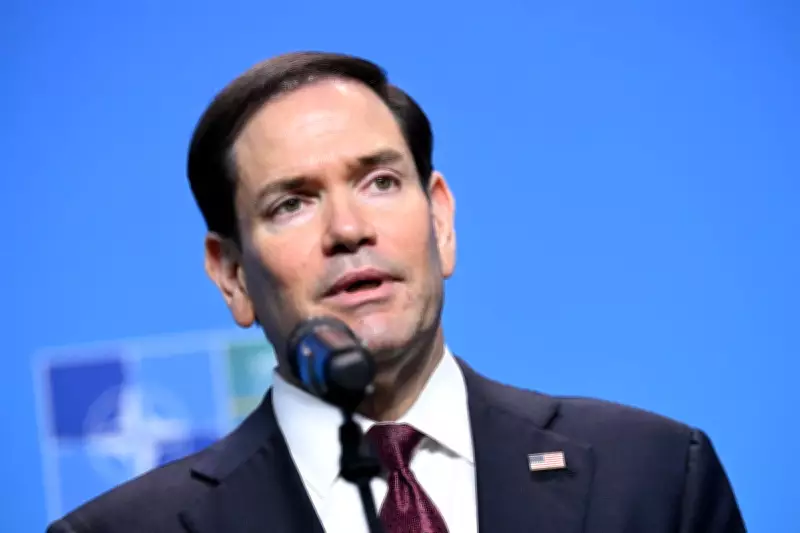
Separately, Secretary of State Marco Rubio, a longtime Cuba hawk and the son of Cuban immigrants, stated that the likelihood of a negotiated settlement with Havana was "not high" and framed the dispute as a threat to American national security. In response, Cuba's Foreign Minister Bruno Rodriguez accused Rubio of lying "to instigate a military aggression that would provoke the shedding of Cuban and American blood."

Escalation of Tensions
The escalation came just a day after the US charged Cuba's former president Raul Castro with murder over the downing of two planes in 1996, which resulted in the deaths of US nationals. Cuba's current president, Miguel Diaz-Canel, dismissed the charges as a "political stunt" designed to justify potential American aggression against the island.
Trump has openly discussed toppling Cuba's regime and demands vague political reforms. The dispute has drawn sharp criticism from Russia and China, urging Washington to stop threatening Cuba with force. Meanwhile, Cubans continue to endure a fuel crisis exacerbated by the US oil blockade, with citizens facing food shortages and recurring blackouts.
Mixed Messages from Washington
For months, Trump has been clear about his intentions regarding the Caribbean island. "I do believe I'll have the honour of taking Cuba," he told reporters in March. "That would be good… I think I can do anything I want with it." However, maintaining strategic ambiguity, Trump later said in a series of mixed messages on Wednesday that while "we have to help Cuban people," he could not specify what comes next for the island nation, adding that there "won't be escalation in Cuba."
Havana has responded forcefully to the threats, accusing Washington of "economic warfare" and dismissing suggestions that the US could "liberate" Cuba as cynical and hypocritical. Fresh sanctions on the Cuban regime were announced on 1 May by the White House, targeting entities and individuals complicit with alleged corruption and rights violations by the Cuban government and its security apparatus.
Official Statements
The US and Cuba have had strained relations for decades, stemming from the island's communist revolution and the disastrous Washington-backed Bay of Pigs invasion in 1961. Trump has pushed for regime change in Cuba, where communists have been in power since Fidel Castro led a revolution in 1959. Rubio insists the US would prefer a diplomatic solution. "That remains our preference with Cuba," he told reporters this week. "I'm just being honest with you, the likelihood of that happening, given who we're dealing with right now, is not high. But if they have a change of heart, we're here. And in the meantime, we'll keep doing what we need to do."
Cuban Foreign Minister Bruno Rodriguez accused Rubio of inciting military aggression and falsely labeling Cuba a state sponsor of terrorism. For months, the US has ramped up rhetoric against the regime, buoyed by the successful ousting of Venezuelan president Nicolas Maduro in January. Speaking in early March after launching the US-Israeli war on Iran, Trump told Fox News: "Cuba's next. They're going to follow this communist dictatorship in Cuba. Their days are numbered."
The White House has stated that the Cuban regime "aligns itself with countries and malign actors hostile to the United States, going so far as to facilitate their military and intelligence operations." It accused the country of hosting "foreign adversary facilities focused on targeting and exploiting sensitive national security information from the United States."

Impact of US Actions
The United States announced murder charges against former Cuban President Raul Castro on Wednesday, a sharp escalation of tensions between the longtime Cold War rivals. The indictment prompted speculation that US forces could launch an operation to capture him, but so far, Washington has stopped short of direct military intervention. Rubio also revealed on Thursday that the US had arrested the sister of a top official of a military-run conglomerate in Cuba responsible for some of the most lucrative parts of the country's economy. Adys Lastres Morera was alleged to be "aiding Havana's communist regime" while living in Florida.
Potential Military Scenarios
It remains unclear what a US military operation in Cuba would entail, and no plans have been briefed to the media despite Trump's threats. Foreign policy expert Dr. Izabela Pereira Watts, in an analysis for the Lowy Institute think-tank, suggested it could be a "friendly takeover," a "not so friendly takeover," or a "forced restructuring of the Cuban state." However, Washington has already "severed the island's jugular" by choking Havana's access to imported fuel, after taking over Venezuela's oil assets during its operation against the Maduro regime. This has had a damaging impact on Cuba's internal logistics, with flights cancelled, schools suspended, and hospitals struggling to provide basic emergency care.
What the precise aims of US action on Cuba would be is unclear, but experts suggest Trump will seek regime change. Deposing the country's leadership would mirror the US operation in Venezuela in January, when special forces arrested former president Nicolas Maduro in a stunning raid. However, the Caracas government remains in place with Maduro's allies still at the helm, with his former vice president Delcy Rodriguez currently installed as leader. In Iran, despite suggestions from the Trump administration that regime change could be possible, America's goals have been more focused on destroying the country's nuclear programme and military infrastructure.
Dr. Watts believes the US is more likely to pursue economic action ahead of a military operation in Cuba. "By pushing the Cuban economy to the brink of a humanitarian abyss, Washington believes it can force the Communist Party of Cuba to accept a market-oriented transition in exchange for political survival," she says. However, Cuba's government will not take risks, especially given Trump's recent record, with Diaz-Canel warning that Havana is "preparing in case we have to move to a state of war."





