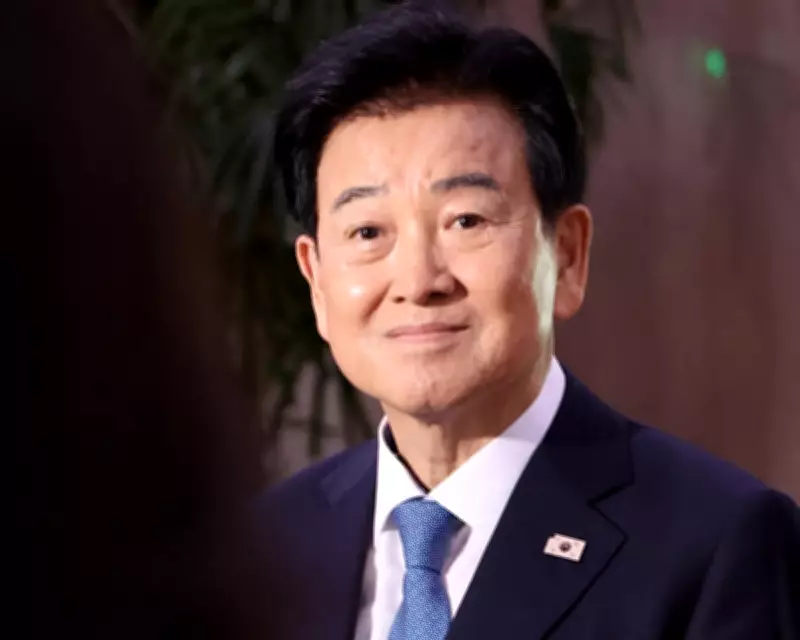
US Restricts Intelligence Sharing with South Korea After Minister's Nuclear Site Remarks
The United States has partially restricted intelligence sharing with South Korea following public remarks by the country's unification minister, Chung Dong-young, who identified a suspected North Korean nuclear site, according to reports in South Korean media. This move has sparked diplomatic tensions between the two allies, with Washington reportedly limiting satellite-gathered intelligence about North Korean technology since early this month.
Minister's Remarks and US Response
In March, Chung Dong-young told lawmakers that North Korea was operating uranium enrichment facilities in Kusong, a north-western area not previously officially confirmed as a nuclear site alongside known facilities at Yongbyon and Kangson. A senior military official informed the state-funded Yonhap news agency that Washington imposed partial restrictions on sharing satellite intelligence, though surveillance of missile activity continues normally and military readiness remains unaffected.
The restrictions followed multiple protests from US officials, who expressed concern that sensitive information had been disclosed without authorisation. No US agency has confirmed the restrictions on record, and the US embassy in Seoul has not commented publicly.

Chung's Defence and Political Backlash
Chung has defended his remarks, stating they were based on publicly available research rather than classified intelligence. He told reporters it was 'deeply regrettable' that his policy explanation was characterised as a leak, citing a 2016 report by a US thinktank and South Korean media coverage as sources. He noted he had mentioned Kusong during his confirmation hearing last year without incident and expressed bewilderment that the issue resurfaced nine months later.
President Lee Jae Myung, whose administration pursues a conciliatory approach towards North Korea, backed his minister. Writing on social media, Lee stated it was a 'clear fact' that Kusong's existence had been widely reported in academic papers and media before Chung's remarks, and any claims of leaking classified US information were wrong.
Broader Alliance Tensions
The restrictions occur amid broader tensions in the US-South Korea alliance. The progressive newspaper Hankyoreh reported that Washington cited several grievances when notifying Seoul of the measures, including pending legislation that would grant Seoul authority over access to the demilitarised zone, currently managed exclusively by the US-led UN command.
Conservative opposition politicians have called for Chung's dismissal, describing his remarks as damaging to the alliance with Washington. The People Power party labelled it a 'clear security disaster'. However, South Korea's unification ministry maintains it sufficiently explained the basis for Chung's remarks to the US, asserting no classified information was involved, and the defence ministry stated close cooperation with the US continues.
Background on Nuclear Programme
The 2016 report by the Institute for Science and International Security, cited by Chung, identified a suspected early centrifuge research facility near Panghyon airbase in the Kusong area but described it as a 'preliminary site identification' requiring further confirmation. North Korea is believed to have significantly expanded its nuclear programme in recent years.
Rafael Grossi, head of the International Atomic Energy Agency, confirmed during a visit to Seoul last week a rapid increase in operations at the Yongbyon reactor, estimating North Korea's nuclear weapons production capabilities at a few dozen warheads.