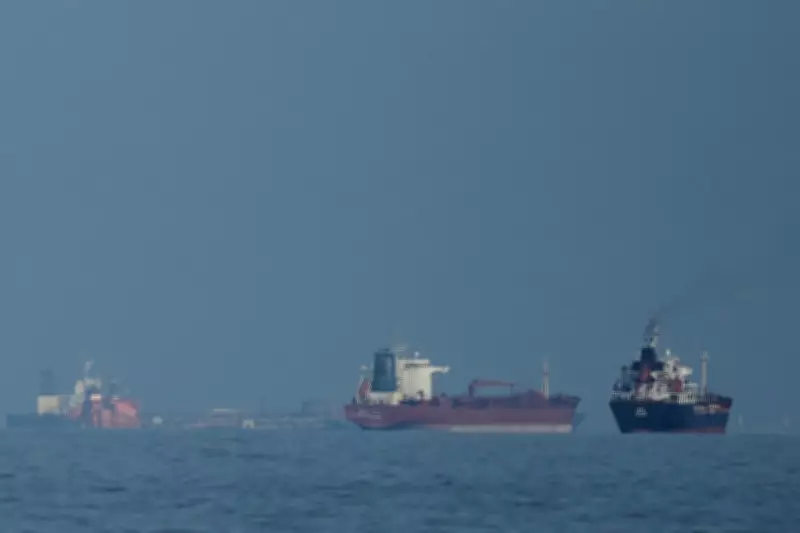
US Naval Blockade on Iran Disrupts Global Shipping, Forces Tankers to Turn Back
The United States Navy has escalated its military actions by imposing a comprehensive sea blockade against Iran, a move that has effectively choked off the flow of key energy supplies through the critical Strait of Hormuz. This development marks a significant intensification in the ongoing conflict, with immediate repercussions for international trade and oil markets.
Blockade Implementation and Economic Pressure
According to a statement released on Wednesday by Admiral Brad Cooper, commander of the U.S. Central Command, the blockade, which commenced on Monday, has been fully implemented. U.S. forces have completely halted economic trade going in and out of Iran by sea, a strategy designed to exert serious pressure on the Iranian economy. The blockade is enforced impartially against all vessels of all nations entering or leaving Iranian coastal areas or ports, while freedom of navigation remains for ships not bound for Iran.
Shipping data from firms like Kpler and Windward indicates that Iran-linked or sanctioned vessels have attempted to leave the Gulf via the Strait of Hormuz, only to stop or turn around. For instance, the Rich Starry tanker, carrying methanol, exited the Persian Gulf but then performed a U-turn and returned. This behavior reflects a fragmented and uneven response to the blockade, with some vessels delaying or reversing course due to the high-risk environment.

Operational Details and Maritime Uncertainty
A U.S. official, speaking anonymously to discuss sensitive operations, explained that the military is intercepting vessels beyond the Strait of Hormuz in the Gulf of Oman. The strategy involves observing ships leave Iranian facilities, clear the strait, and then forcing them to turn around. The U.S. relies on more than just automated tracking beacons (AIS) to identify vessels from Iranian ports, though operational security prevents further detail.
In the first 48 hours of the blockade, no vessels successfully passed U.S. naval forces, with nine complying with orders to return to Iranian ports. Navy warships are prepared to board and use force to ensure compliance. The operating environment remains extremely high risk, with only eight vessels, mostly Iran-linked or sanctioned, transiting the strait on the first full day.
Historical Context and Iranian Countermeasures
Iran had previously blocked the Strait of Hormuz through threats and attacks on shipping, including aerial and undersea drones, which killed 11 crew members and cut off 20% of the world's daily oil consumption. This led to soaring oil prices and inflation warnings. While attacks have dwindled, ship traffic has dropped by over 90%. Iran now vets vessels daring to pass, requiring submission of cargo and crew details to the Islamic Revolutionary Guards Corps and a fee of $1 per barrel of oil or fuel products. U.S. and Israeli vessels are barred, while some from Iran, India, and China have made it through, with India intervening diplomatically.
Economic and Legal Implications
The blockade poses severe economic pressure on Iran, particularly its oil industry. Without exports, storage will fill up, forcing shutdowns of wells that are difficult to restart. Iran also imports gasoline due to limited refinery capacity. According to international law, blockades must not starve civilians, so humanitarian shipments like food and medical supplies are permitted subject to inspections. A grace period allowed ships to leave Iranian ports until 1400 GMT on Monday, adding to the uncertainty for shipowners.
Iranian Response and Future Threats
In response, Commander Ali Abdollahi of Iran's joint military command warned that if the U.S. does not lift the blockade, Iran will completely block exports and imports across the Persian Gulf, Sea of Oman, and Red Sea. He stated that the U.S. action is a prelude to violating the ceasefire and that Iran will act with strength to defend its sovereignty and interests.
This blockade has plunged global shipping into fresh uncertainty, with vessels facing risks of interception even after clearing the strait, and the potential for further escalation looms large.