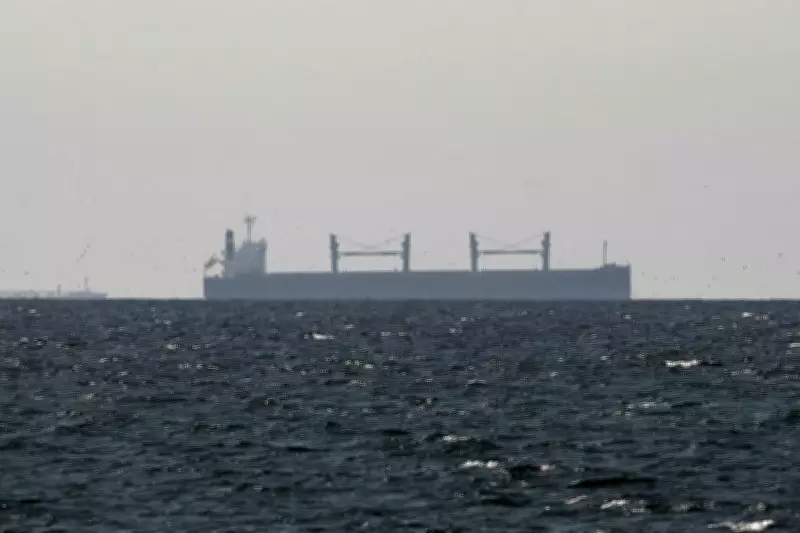
US Implements Naval Blockade on Iranian Ports Amid Escalating Tensions
President Donald Trump has announced that the United States military has commenced a comprehensive blockade of all Iranian ports and coastal areas, a move aimed at pressuring Tehran to open the Strait of Hormuz and accept a deal to conclude the ongoing six-week conflict. The US Central Command issued a formal note to mariners, stating that vessels entering east of the Strait of Hormuz will face "interception, diversion, and capture", regardless of their flag. This blockade encompasses the entirety of the Iranian coastline, including ports and oil terminals, with a grace period for neutral vessels to depart before enforcement begins.
Iranian Response and Diplomatic Warnings
In retaliation, Iran has threatened ports belonging to American allies in the Persian Gulf and the Gulf of Oman. Iranian President Masoud Pezeshkian conveyed to his French counterpart that "threatening the Strait of Hormuz will have widespread consequences for the world", directly referencing Trump's blockade. He attributed the collapse of recent talks in Pakistan to "excessive demands" from the US, asserting that Iran will only continue negotiations within the framework of international law. Similarly, Iranian Foreign Minister Abbas Araghchi informed France's Jean-Noël Barrot that US demands were to blame for the failed peace discussions.
Military Logistics and Humanitarian Exceptions
Enforcing this blockade is expected to demand significant resources from the US Navy, with at least 15 warships anticipated to participate, according to an unidentified official speaking to The Wall Street Journal. Currently, the US has 16 warships stationed in the Middle East, though none are reported to be in the Persian Gulf itself. The blockade will not apply to humanitarian shipments, such as food, medical supplies, and other essential goods, provided they undergo inspection. This measure aims to mitigate civilian impact while maintaining military pressure.

Renewed Negotiations and Nuclear Proposals
Despite the escalating military actions, both nations are considering a second round of in-person negotiations to reach a deal before the ceasefire expires next week. US officials and a diplomat from a mediating country indicated that discussions are underway, with Islamabad, Pakistan, and Geneva, Switzerland, as potential host locations. Iran has reportedly proposed suspending uranium enrichment for up to five years, countering the US insistence on a 20-year halt. US Vice President JD Vance noted that progress was made in Islamabad talks, but Iran refused to provide assurances against seeking nuclear weapons, a key US red line.
Economic and Regional Implications
The blockade has already influenced global markets, with oil prices falling below $100 a barrel as expectations for a diplomatic resolution outweighed supply disruption concerns. Brent crude futures dropped 2.7% to $96.66, while US crude futures fell 3% to $96.13. In regional diplomacy, US Secretary of State Marco Rubio is set to attend talks between Israel and Lebanon, focusing on long-term security and sovereignty issues. Meanwhile, prediction market Polymarket indicates only a 13% chance of a permanent peace deal by April 22, reflecting skepticism amid the ongoing tensions.
Political Statements and Accusations
Vice President Vance accused Iran of "economic terrorism" by disrupting shipping through the Strait of Hormuz, warning that no Iranian ships would be allowed to exit if such activities continue. The White House, through Press Secretary Karoline Leavitt, asserted that Iran's "desperation" for a deal will increase with the naval blockade in effect. Trump reiterated his willingness to engage with Iran, stating he had spoken to "the other side" and they desire a deal, but he will not agree to any arrangement permitting Tehran to possess nuclear weapons.