
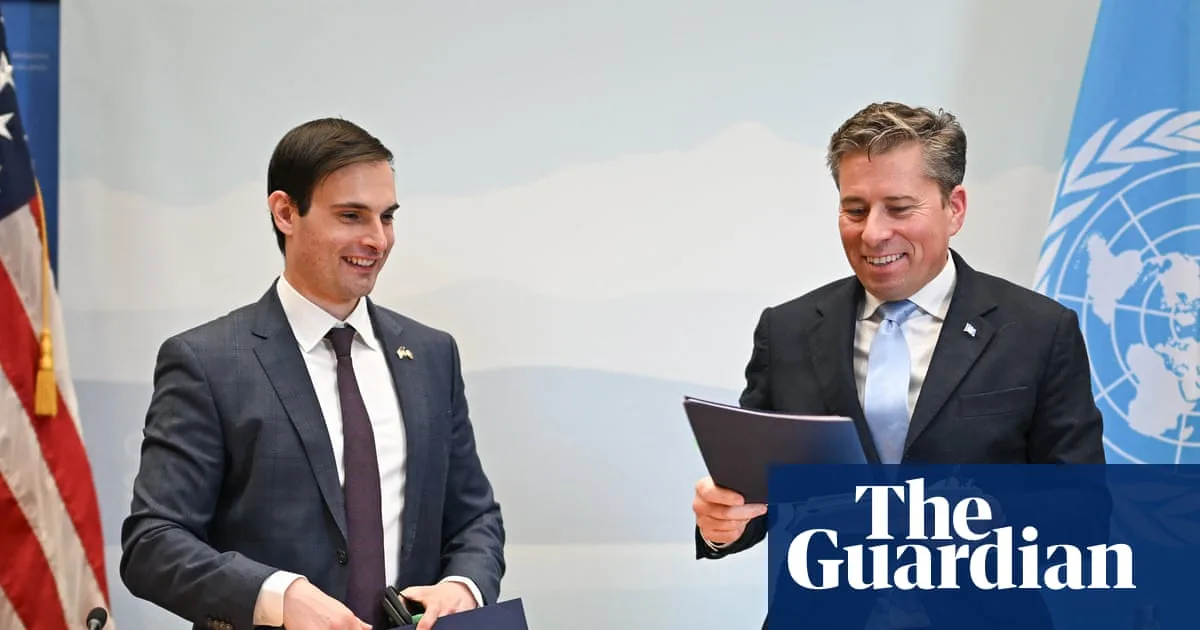
The United States has pledged $2bn (£1.5bn) in humanitarian aid to the United Nations, but with stringent conditions that experts say could shift control over aid distribution to Washington. The US State Department announced the pledge on Tuesday, demanding that the UN must 'adapt, shrink or die' by implementing reforms and eliminating waste. The money is to be channelled through a pooled fund under the UN Office for the Coordination of Humanitarian Affairs (Ocha) rather than allocated to individual agencies.
The aid is earmarked for 17 priority countries chosen by the US, excluding several nations experiencing severe humanitarian crises, such as Afghanistan and Yemen. Themrise Khan, an independent researcher on aid systems, described the approach as 'despicable' and criticised the UN for praising the pledge as generous despite the conditions. 'It points to the fact that the UN system itself is now so subservient to the American system – that it is literally bowing down to just one power,' she said.
The 17 countries include Sudan, Haiti, the Democratic Republic of the Congo, and some Latin American nations – areas where the US has political interests. Ronny Patz, an analyst specialising in UN finances, noted that announcing a selected list in advance shows 'very clear political priorities'. He warned that the conditions could solidify a 'massively shrunk UN humanitarian system', leaving it unable to respond to new crises that are not on the list.
Concerns have also been raised about the amount of funding. Thomas Byrnes of MarketImpact consulting pointed out that the $2bn is significantly less than the $3.38bn provided by the US to the UN in 2025 under the previous administration. He called the pledge a 'carefully staged political announcement that obscures more than it reveals', given concurrent US cuts of $5bn in foreign assistance and a $1.5bn debt to the UN for peacekeeping.
Byrnes suggested that channelling money through Ocha may be an attempt to centralise control and have a single body on which to make demands. Patz echoed this, expressing doubt about whether the money would materialise if the UN fails to meet US expectations to 'cut bloat, remove duplication'. 'This is $2bn promised, but not $2bn given,' he cautioned.




