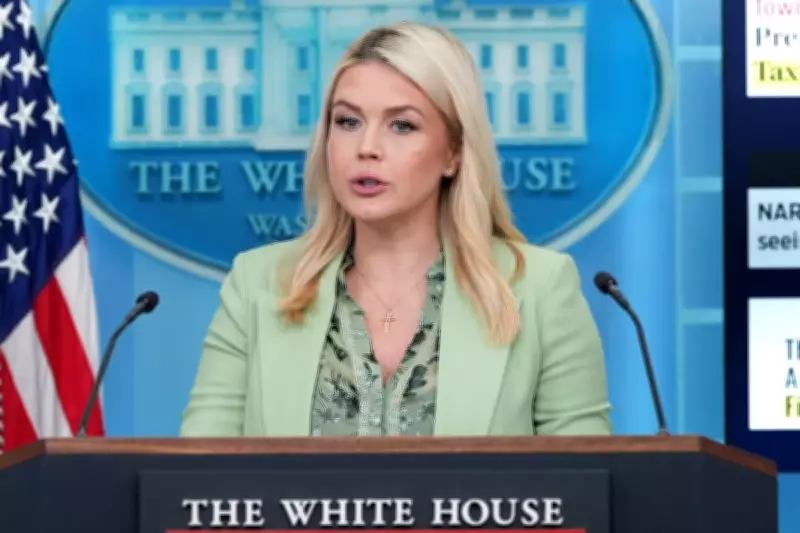
White House Press Secretary Karoline Leavitt has firmly dismissed circulating reports suggesting the United States government has sought to extend the current ceasefire in the ongoing war with Iran. During a Wednesday news briefing, Leavitt stated unequivocally, "That is not true at this moment," emphasising that the administration remains deeply involved in diplomatic negotiations.
Ceasefire Status and Peace Talks
Leavitt described the peace discussions as "productive" and "ongoing," highlighting continued engagement between the parties. However, she clarified that no specific date has been established for a subsequent round of face-to-face talks, indicating that while progress is being made, significant hurdles may still exist before a formal agreement can be reached.
Trump's Announcement on the Strait of Hormuz
Earlier on Wednesday, President Donald Trump made a striking declaration via his Truth Social platform, proclaiming his intention to "permanently open the Strait of Hormuz." This critical maritime chokepoint, through which a substantial portion of the world's oil shipments passes, has been a focal point of regional tensions and military posturing.

In his post, Trump asserted, "China is very happy that I am permanently opening the Strait of Hormuz. I am doing it for them, also - And the World. This situation will never happen again." He further claimed that Chinese President Xi Jinping would give him a "big, fat hug" upon their next meeting, suggesting a personal rapport and mutual benefit from the policy shift.
Geopolitical Implications
The juxtaposition of Leavitt's denial and Trump's announcement creates a complex diplomatic landscape. While the White House downplays immediate ceasefire extensions, the president's vow to open the Strait of Hormuz could signal a broader strategic realignment, potentially easing global trade tensions but also raising questions about regional stability and international law.
Analysts note that permanently opening the strait, if implemented, would require extensive coordination with allied nations and could provoke reactions from Iran and other regional powers. The reference to China adds another layer, hinting at economic motivations behind the move, possibly aimed at bolstering trade routes and fostering Sino-American relations amidst ongoing geopolitical competition.
As the situation develops, observers are closely monitoring both the ceasefire talks and the practical steps toward Trump's strait initiative, with implications for energy markets, international security, and the broader Middle East peace process.