
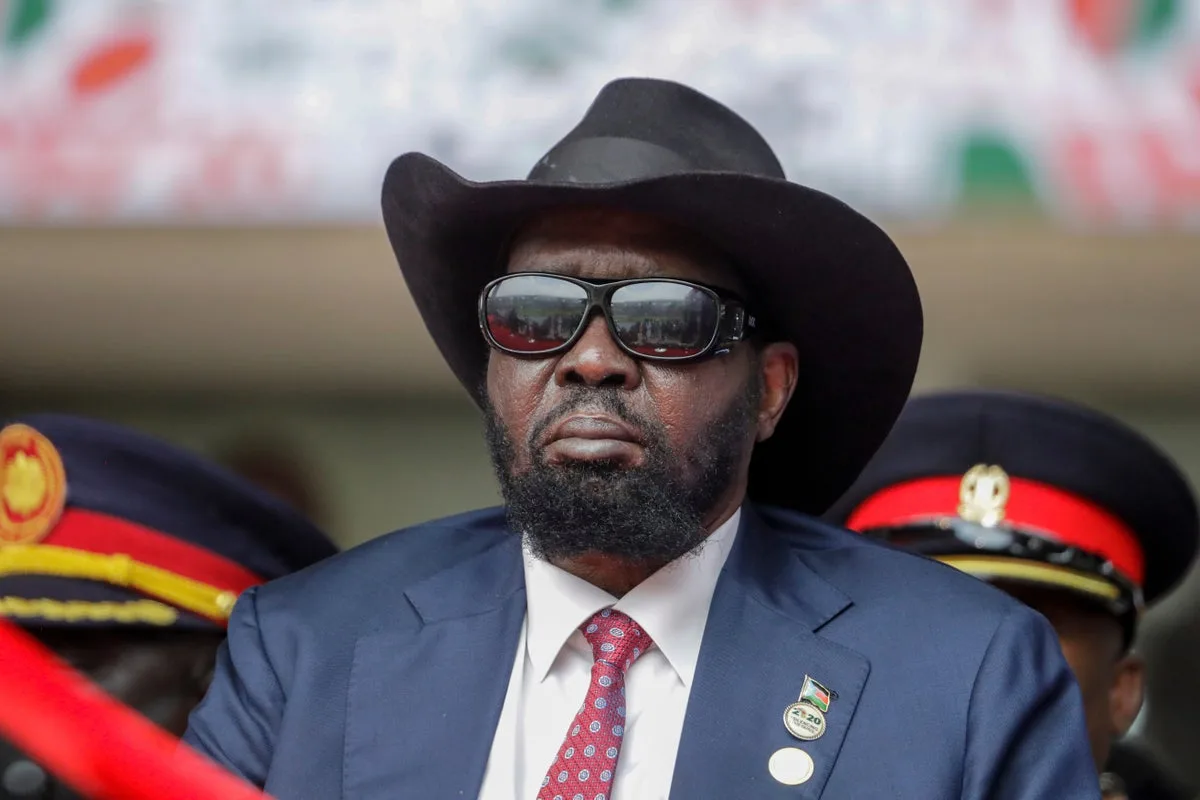
A United Nations inquiry has found that Ugandan troops assisted South Sudan in carrying out airstrikes that killed and severely burned civilians a year ago. The report by the UN Commission on Human Rights in South Sudan stated that joint aerial bombardments 'targeted civilian-populated areas predominantly affecting Nuer communities in opposition-affiliated areas.'
Ugandan forces are deployed in South Sudan to support President Salva Kiir's government against forces loyal to opposition figure Riek Machar, who was suspended as vice president in September. Ugandan military authorities maintain that their troops are in South Sudan at the invitation of the government and under a bilateral security agreement.
The attacks involved the widespread use of 'improvised incendiary devices,' according to the report. During one attack in March 2025 in Wunaliet, witnesses reported that planes dropped 'barrels of liquid that ignited,' engulfing homes and setting civilians alight, including a boy burnt beyond recognition.
Ugandan President Yoweri Museveni's son, General Muhoozi Kainerugaba, who serves as the top military commander, posted on X that Uganda had bombed opposition forces, stating, 'Our air offensive will not stop until Riek Machar makes peace with my uncle Afande Salva.' The post, later deleted, accompanied a video of fiery explosions from an aircraft. Flight tracking data confirmed a Ugandan army turboprop plane circled the area during the bombing.
The report does not specify the exact number of Ugandan operations but notes 'high degrees of planning, operational integration and command-level authorization.' Uganda has denied participating in combat operations in South Sudan and using chemical weapons or barrel bombs. However, Amnesty International and a UN panel of experts have previously stated that Uganda violated a 2018 UN arms embargo by providing military assistance to South Sudan.




