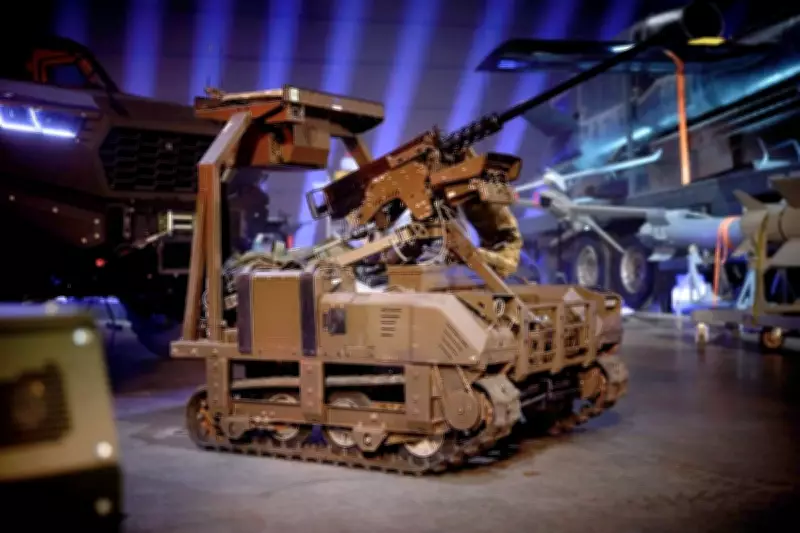
Ukraine's Robot Army Secures Historic Victory as EU Funding Unlocked
In a groundbreaking development in the ongoing conflict, Ukrainian forces have successfully retaken territory using exclusively unmanned robots and drones, marking the first such operation in the war's history. President Volodymyr Zelensky announced that Russian soldiers surrendered when confronted by army robots during an advance conducted without infantry and with no Ukrainian casualties.
Unmanned Systems Revolutionise Battlefield Tactics
"For the first time in the history of this war, an enemy position was taken exclusively by unmanned platforms – ground systems and drones," Zelensky stated in a social media post. The Ukrainian leader revealed that his forces have executed 22,000 missions using unmanned systems over the past three months, potentially saving thousands of lives. "This is about high technology protecting the highest value – human life," he emphasised.
The breakthrough comes as Ukraine deploys robots into what Zelensky described as "the most dangerous areas" of the frontline, demonstrating a significant shift in modern warfare tactics.

Political Shift in Hungary Unlocks Vital EU Support
Simultaneously, a major political development in Hungary promises to transform Ukraine's financial and strategic position. The election defeat of long-serving Prime Minister Viktor Orban has been described by EU Enlargement Commissioner Marta Kos as "a big win for Europe" that could unlock up to €90bn in support for Ukraine.
Hungary under Orban had effectively blocked the substantial funding package, tying its veto to a dispute with Ukraine over a damaged pipeline carrying Russian oil – a move that frustrated other EU leaders. "With the €90 billion, we can cover the financial needs of Ukraine in 2026 and 2027," Kos confirmed during the IMF and World Bank spring meetings.
Hungary's incoming prime minister, Péter Magyar, has indicated he will end Budapest's refusal to allow the EU loan and will urge Russian President Vladimir Putin to end his war. The Kremlin has responded positively, with spokesman Dmitry Peskov stating Moscow is satisfied that Magyar wants "pragmatic dialogue" with Russia.
UK Announces Major Military Support Package
Britain has simultaneously announced significant additional support for Ukraine, with Chancellor Rachel Reeves confirming a £752m payment to Kyiv ahead of a meeting with Ukrainian Prime Minister Yulia Svyrydenko in Washington DC. The payment forms part of a £3.36bn loan intended to fund weaponry including long-range missiles, air defence systems and drones.
"This funding will help deliver the military equipment Ukraine needs as it defends itself against Russia's unprovoked war," Reeves stated. "I am proud that the UK is a leading partner in providing vital support to Ukraine, and we will continue to step up to do more while keeping pressure on Russia."
In a separate development, Defence Secretary John Healey announced the UK's largest ever drone package for Ukraine, comprising 120,000 drones including long-range strike, reconnaissance, logistics and maritime-capable models, many produced by UK-based companies.
EU Membership Prospects and Ongoing Challenges
While the political landscape shows positive developments, German Chancellor Friedrich Merz has tempered expectations regarding Ukraine's immediate European integration. Following meetings with Zelensky in Berlin, Merz announced plans for cooperation on drone and battlefield data technology but cautioned that EU membership "would be a strategically important step, but added that it was not achievable in the immediate term."
Ukraine continues to face significant internal challenges, including a major conscription crisis with an estimated 2 million draft-dodgers and hundreds of thousands absent without leave, according to Defence Minister Mykhailo Fedorov. This comes as pressure mounts elsewhere, with the Trump administration shifting focus from Ukraine to the Middle East conflict and peace talks stalling.
Former Prime Minister Boris Johnson, who recently visited Ukrainian frontlines for a documentary, condemned "delay" and "timidity" in international support, stating: "We are risibly failing to live up to our pledges, and to give them the help they need. The Ukrainians can win and will win."

Technological Advancements and Space Operations
Ukraine's technological capabilities continue to surprise observers, with revelations that the country has conducted two previously undisclosed space-intelligence missions during the war. According to MP Fedir Venislavskyi, operatives launched carrier rockets reaching altitudes of 100 kilometres and 204 kilometres on separate occasions, demonstrating unprecedented capability for a nation in active conflict.
The Kremlin has meanwhile addressed domestic internet restrictions, with spokesman Peskov admitting they have caused disruption but declaring them necessary for security reasons, while suggesting some measures might be temporary.
As Ukraine combines groundbreaking robotic warfare with crucial political and financial support breakthroughs, the conflict enters a potentially transformative phase, though significant challenges remain on both military and diplomatic fronts.