Ukraine's Frontline Position Strengthens as Zelensky Calls for New Peace Negotiations
Ukrainian officials have declared that their military's frontline position is now the strongest it has been in the past year, attributing this development to superior drone warfare capabilities and enhanced air defence systems. This announcement comes alongside renewed calls from President Volodymyr Zelensky for trilateral peace discussions with Russia, despite ongoing geopolitical complexities.
Minimal Russian Gains and Enhanced Ukrainian Defence
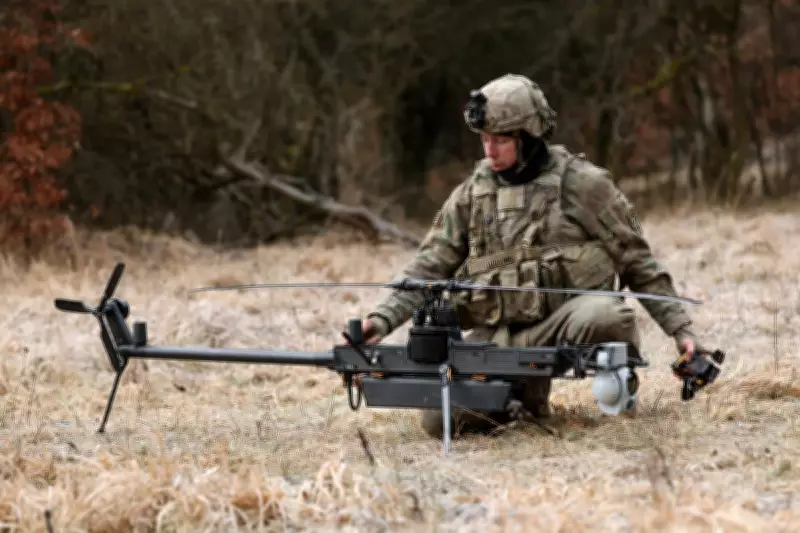
According to a new analysis of data from the Institute for the Study of War, Russia achieved virtually no territorial gains across the frontline during March. This marks the first instance in two and a half years that Moscow has made such negligible progress in the conflict. Ukrainian Foreign Minister Andrii Sybiha emphasised the role of drone technology in countering Russian advantages.
"We have minimised the Russians' advantage in manpower through the use of drones," Sybiha stated. He further explained that the improved battlefield situation is intended to strengthen Ukraine's negotiating position, noting that Ukrainian forces can now intercept up to 90 percent of targets striking their cities.

Zelensky's Push for Peace Talks Amid International Challenges
President Zelensky has reiterated his call for peace negotiations involving Russia, even as US negotiators remain preoccupied with the war in Iran. The Kremlin, however, has rebuffed these overtures, with spokesperson Dmitry Peskov indicating that Vladimir Putin would only meet with Zelensky to finalise an agreed peace deal. Peskov clarified that any meeting must be productive and goal-oriented towards concluding agreements.
In a related diplomatic move, Ukraine has requested Turkey to mediate the conflict and potentially host talks between Zelensky and Putin. Sybiha confirmed that Ukraine is willing to meet at any venue except Belarus or Russia, highlighting Turkey as a specific candidate for facilitating discussions.
Recent Attacks and Civilian Impact
The conflict continues to exact a heavy toll on civilians and infrastructure. In the early hours of Wednesday, a Russian air attack triggered fires in an apartment block in Dnipro, injuring seven people, including two children. Regional governor Oleksandr Ganzha reported that five individuals required hospital treatment.
Additionally, a train driver was killed and another injured in Russian strikes targeting railway infrastructure in the Zaporizhzhia region. Deputy Prime Minister Oleksii Kuleba condemned the attack as "another proof of terrorism," accusing Russia of waging war against peaceful civilians. Drones also struck the main Black Sea port in Odesa, damaging berths, warehouses, and railway facilities.
EU Financial Support and Sanctions
In a significant development, EU ambassadors have approved the disbursement of a promised €90 billion loan to Ukraine, alongside a new package of sanctions against Russia. This decision followed Hungary's removal of its veto, which had been imposed due to disputes over oil transit via the Druzhba pipeline. The loan is crucial for maintaining Ukraine's liquidity through 2026 and 2027.
Zelensky welcomed the unblocking of the funds, describing it as "the right signal under the current circumstances." He stressed that incentives for Russia to end the war would only arise with sufficient support for Ukraine and pressure on Moscow.
Concerns Over US Weapon Supplies
President Zelensky has expressed concerns that a prolonged conflict in Iran could complicate Ukraine's efforts to secure US anti-missile defences. He noted that while supplies have not been disrupted thus far, limited US production capacity poses risks. Ukraine relies on programmes like the PURL initiative to finance weapon purchases, including anti-ballistic missiles for Patriot systems.
"And if the war will continue or a ceasefire is delayed... maybe we will have more risks with anti-ballistics," Zelensky cautioned in an interview with CNN.
The situation remains fluid, with Ukraine leveraging its strengthened military position to advocate for diplomatic solutions, while continuing to defend against ongoing Russian aggression and seeking international support to sustain its war effort.