Ukraine's Frontline Position Declared Strongest in a Year Amid Drone Dominance
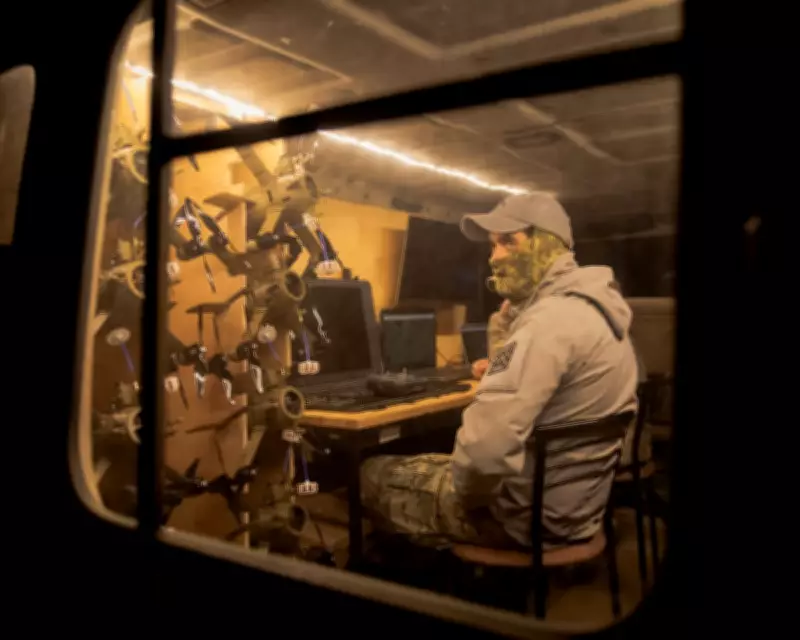
Ukrainian Foreign Minister Andriy Sybiha has asserted that Ukraine's frontline position is currently "the strongest" it has been over the past year, attributing this enhanced stability to superior drone capabilities and improved air defence systems. This assessment comes as analysis from the Institute for the Study of War (ISW) indicates that Russian troops made almost no territorial gains across the frontline in March, marking the first such occurrence in two and a half years of conflict.
Drones Minimise Russian Manpower Advantage
Sybiha emphasised that Ukraine has effectively minimised Russia's advantage in manpower through the strategic deployment of drones. "We have minimised the Russians' advantage in manpower through the use of drones," he stated, adding that the situation on the battlefield is crucial for strengthening Ukraine's negotiating position. He further highlighted that Ukraine's air defence systems can now intercept up to 90% of targets striking its cities, solidifying what he described as the most robust frontline stance in recent memory.
Civilian Casualties and Infrastructure Attacks Continue
Despite the improved military position, civilian areas remain under threat. In Dnipro city, a Russian strike killed two people and wounded eight, including two children aged nine and fourteen, after hitting an apartment building, a shop, and a car. Regional administration head Oleksandr Ganzha reported that one person is still unaccounted for following the attack.

Conversely, in the Russian oil refining city of Syzran, approximately 1,000 kilometres from the Ukrainian border, a woman and child were killed when a Ukrainian drone struck their apartment building. Russian media noted that a Rosneft oil refinery is located on the same street as the damaged structure, underscoring the cross-border nature of the conflict's impact.
Turkey Revives Push for High-Level Talks
Turkey is actively working to revive negotiations between Russia and Ukraine, with President Recep Tayyip Erdoğan's office confirming efforts to bring together leaders Volodymyr Zelenskyy and Vladimir Putin at Kyiv's request. Erdoğan informed NATO head Mark Rutte during a meeting in Ankara that Turkey is "working to revive negotiations and start talks at leaders' level."
Sybiha confirmed Ukraine's push for face-to-face talks, stating that while Turkey has been asked to facilitate, Ukraine would consider any venue outside Russia and Belarus. "We are advocating for a meeting now to bring new momentum to diplomacy," he said. However, Kremlin spokesperson Dmitry Peskov responded that Putin would only meet Zelenskyy "for the purpose of finalising agreements," indicating a potential stalemate in diplomatic efforts.
EU Unblocks Critical Loan After Hungary Lifts Veto
In a significant development, EU member states have reached an agreement to unblock a €90 billion loan for Ukraine, along with a new sanctions package against Moscow, after Hungary lifted its veto. This decision followed Ukraine's resumption of pumping Russian oil to Hungary and Slovakia, which prompted Budapest to withdraw its opposition. Cyprus, holding the rotating EU presidency, stated that ambassadors have agreed to launch written procedures for final approval, with formal signoff expected by Thursday afternoon.
Infrastructure Attacks and Regional Impacts
Ukrainian Deputy Prime Minister Oleksiy Kuleba reported that Russian drones attacked infrastructure in the Black Sea port of Odesa, damaging berths, warehouses, railway infrastructure, port operators' facilities, and a ship. Preliminary reports indicated no injuries, and the port remains operational. Additionally, a Russian drone attack at a sorting yard in the Zaporizhzhia region killed an assistant train driver and hospitalised the driver, highlighting the war's toll on critical transport networks.
As the conflict enters day 1,520, the interplay of military advancements, diplomatic manoeuvres, and humanitarian crises continues to define the ongoing struggle, with Ukraine leveraging technological superiority to bolster its position amid international support and persistent violence.