
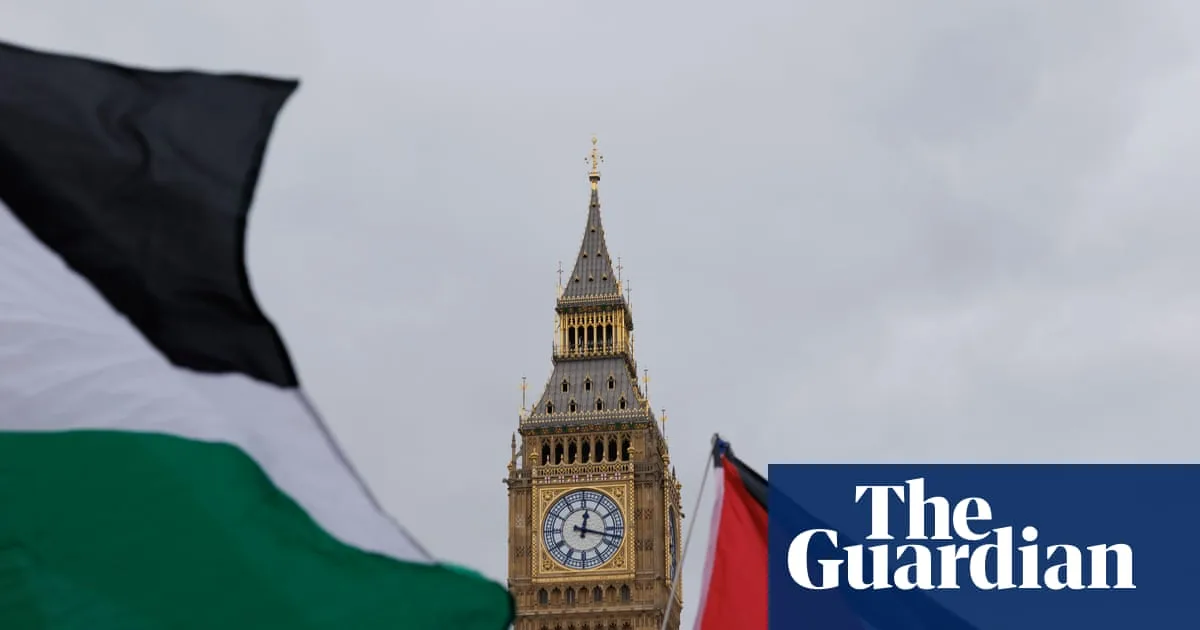
The United Kingdom, alongside Canada, Portugal, and Australia, has formally recognised the state of Palestine, joining 147 other nations. The coordinated action, which will be followed by France, Belgium, and Malta at the United Nations General Assembly, represents a significant rebuke to Israel and the United States over the ongoing assault on Gaza and the annexation of the West Bank.
However, experts caution that the symbolic gesture is unlikely to end the war or create the necessary conditions for a viable Palestinian state. Burcu Ozcelik, a senior research fellow at the Royal United Services Institute, noted that while recognition affirms the intrinsic value of Palestinian sovereignty, its immediate impact on the conflict remains uncertain. There are fears that Israeli Prime Minister Benjamin Netanyahu may respond by accelerating settlement construction in the West Bank.
Recognition is based on the 1933 Montevideo Convention criteria—permanent population, defined territory, diplomatic capacity, and government—even though large parts of Palestine remain occupied and the Palestinian Authority lacks real authority in Gaza. Practically, the Palestinian Authority's mission in London is likely to be upgraded to formal embassy status, but this does not grant Palestine control over borders, trade, or a seat at the UN.
Ozcelik described the decision as another step on a long road to statehood, but emphasised that it will not change the course of the war. The debate over the value of symbolic gestures hinges on future actions, with peace remaining a distant hope.




